Friday, May 8, 2009

Outage, Outstanding, Outsourced, FamilySearch Indexing

Service Outage

FamilySearch Indexing logo The FamilySearch Indexing service experienced a major disruption last week. Tuesday morning volunteers were having problems downloading or submitting batches, and the projects tab did not show any projects. By Wednesday, volunteers reported an inability to log in, thinking their passwords were failing. Thursday morning a notice appeared on the FamilySearch Indexing website, noting the service was back up, but warning that individual batches or entire projects might take up to 48 hours to be fixed.

If you experienced problems uploading a completed batch last week, try again now. If you experience problems with your password when starting the FamilySearch Indexing application, Exit the application and try starting again.

Outstanding: Quarter Billion Records Indexed

FamilySearch International announced that indexing volunteers have reached a "monumental milestone." Volunteers recently keyed the 250 millionth record. The record was part of the Nicaragua Civil Registration indexing project. FamilySearch Indexing uses a process called A/B keying, meaning each record is keyed by two different keyers. Should the results differ, the record is automatically routed to a third keyer for arbitration.

What the rotten luck! According to FamilySearch spokesperson, Paul Nauta, the 250 millionth record was keyed with an error and had to be sent to an arbitrator for correction. Fortunately, the situation became a public relations positive when it was found the two keyers were located in Nicaragua and Guatemala and the arbitrator in Honduras. Said Nauta, “Three volunteers, three countries, one common goal—to provide access to the world’s genealogical records quicker and more economically.”

Of course, I’m kidding about the rotten luck. I’m guessing that it was probably not practical to know which exact record was the 250 millionth, so Nauta had some latitude in picking the one that best communicated his message.

Congratulations, FamilySearch and all the volunteers helping out!

Outsourced Canadian Census

In a sign that the mini-ice age in FamilySearch/Ancestry.com relations might be loosing its icy grip on Canadian records, a 5-May-2009 FamilySearch Indexing announcement noted that the 1916 Canadian Census is now available to all Family History Center (FHC) patrons through www.ancestryinstitution.com

While the 1916 Canadian Census is not on the list of FHC databases, I was able to access it. In fact…

More on the Ancestry FHC Edition later. Stay tuned…

Thursday, May 7, 2009

Too Old for New FamilySearch?

Some interesting thoughts were posted to FHCNET recently about learning the New FamilySearch program.

Joan Raney of North Carolina lamented that a couple in their 70s contacted her, asking how hard New FamilySearch is. "She thinks she is too old to learn."

Laura Scott of Florida responded, "I am 78 and learning every day." With a smile, she added, "[I] have to, as I am forgetting a lot too."

Aurale Huff of Texas, "81 and counting!" praised the new features in New FamilySearch (NFS) that help her submit genealogy for temple work. She counseled, "[You are] never too old if you truly want to learn!" Huff points out that users can use NFS, even if they have no computer, by going to a family history center (FHC). She also points out that NFS has a helper feature that allows others to help you out. Still, she's glad she took the time to learn the new system because "it is such fun to do our own."

For more information about NFS's Helper Feature, see the Ancestry Insider's recent article on the topic.

Wednesday, May 6, 2009

New site features coming to Ancestry.com

Monday night Ancestry.com broadcast a "town meeting" attended by about a thousand people. Mike Ward, Ancestry.com PR guy conducted the session. Tim Sullivan, CEO spoke first, followed by Andrew Wait, Senior Vice President over Ancestry.com; Gary Gibbs, Vice President of U.S. Content; and lastly, Eric Shoup, Vice President of Product Development. These presentations took the first hour, during which Mike gathered questions from participants. During the second hour, the management team fielded a selection of the hundreds of questions submitted. I don’t know if Ancestry.com will post the webinar for rebroadcast. If they do, you can probably view it here.

Of greatest interest to me, Shoup previewed two upcoming website features.

One is an updated record viewing page. Currently, Ancestry.com handled display of record text and record images on separate pages. Later this summer a combined viewer will be launched. Shoup showed us the “mockup” below. I believe he said that its use will be optional, for those that prefer doing things the old way.

A new record viewer

Also coming this summer is a new person page. The person page is what you see when you are working with a person in an Ancestry.com member tree. The main rectangle at the top of the page is called a Person Card and its display maintains context as the different tabs underneath it are selected. Since the page is the most often viewed page on Ancestry.com, it is being re-implemented from the ground up for speed and performance. The page has a stronger focus on sources and incorporates greater contrast for improved readability. Shoup thought the page might be available for some to start testing out in about a month.

A new person page

The mockup also shows the new navigation bar that is launching soon, perhaps today or next week. The bar is expected to look like this:

New Ancestry.com navigation bar

The new navigation bar incorporates drop-down menus. Above the navigation bar, To-Dos and Favorites also incorporate “drop-down” functionality to provide these features without switching pages. For more information, see this page.

This new feature is coming on the heals of a feature that has been months in development: lifespan filtering of search results. For more information, see “Latest on lifespan filtering.”

Stay tuned for more coverage of the Town Hall meeting.

Monday, May 4, 2009

NFS's Helper Feature

Jim Greene, former New FamilySearch (NFS) product manager, recently explained what the Helper function is and why it is present in New FamilySearch.

The helper function was designed to allow all members to participate in new FamilySearch, and not just those who have computers, access to the Internet, or who love technology. There are many many members throughout the world who feel intimidated by the computer, or who have physical constraints that do not allow them to see a computer screen or work with a keyboard. Many others simply cannot ever afford to own a computer or pay for an Internet connection. The Helper function was designed to allow a consultant or even a family member to come into a person's pedigree and act as if they were that person, without (and this is the key) actually being that person or having access to the person's account.

One reason for the Helper feature is auditing and security. According to Greene,

We have placed audit controls into the Helper Function that record BOTH the name of the person you are helping, as the contributor of the data, AND you, the helper, as the submitter of the data. Because you have to login first in order to then help someone we are setting up an audit trail that ultimately both protects the contributor and their data, but also the system as a whole.

There are some things that a helper cannot or should not do. These limitations led some to help others by getting their usernames and passwords and logging in rather than using the Helper feature. Greene condemned this practice in no uncertain terms.

A recent posting stated that it would be better to login as the person than to use the helper function. That is not true and that rumor must be stopped. ... But it seems that rumor...is hard to kill. Registering for someone or logging in using their ID is a major security breach. Bad data, malicious data, and offensive material could be entered by someone who has logged-in for someone else, and we would never know it was not the person to whom the account belonged. We would only know that this ID logged in and contributed this material. And if it was offensive, etc. we would be forced to de-activate the user account and force the person off of the system.

On the other hand, logging in and using the Helper Function protects the individual because not only are both contributor and submitter recorded, but helpers also do not have access to the user's profile, and cannot change passwords or other secure features for the person they are helping. Most helpers are not out to do malicious things to our system. However, the only way you can be sure someone is not stealing your ID and getting away with incorrect behavior is to always use the Helper Function whether you are helping or being helped, and to NEVER share your Login ID or password with anyone. ...

So please insist that anyone helping others, or being helped by others, use the Helper Function....And please help me kill this Urban Legend about the helper causing problems. (Source: "The nFS Helper: Exploding the Urban Legend.")

Anyone with an NFS account can "Sign in to Help Someone Else." You can have a friend, relative, or family history consultant help you. The person helping you will need your name, date of birth, and your "helper access number." To begin with, your helper access number is the last five digits of your Church membership number. But you can change it later.

To sign in to help you, your Helper logs in using their own username and password. Then they click on "Sign in to Help Someone Else," circled in the screen image, below.

Sign in to Help Someone Else

To avoid the misinformation currently circulating about the helper feature, I logged into NFS, I clicked on "Help Center," and I did a search for "help someone else" (including the quotes). Here are some articles I found. (You must be logged into NFS to see these links.)

"Using the New FamilySearch Web Site for Someone Else," A User’s Guide to the New FamilySearch (May 2009) Published 24 April 2009

The new FamilySearch Web site allows you to sign in to help someone else use it. When you do this, you can perform any task except make changes to the user profile of the individual that you are helping.

For example, you can do the following:

  • Add family information
  • Edit and delete family information
  • Print family information
  • Prepare and print a Family Ordinance Request for the person to take to the temple

When you help someone else, the system identifies the individual that you are helping as the contributor of the information and you as the submitter of the information (the user who actually entered the information). This allows others to contact the individual that you helped, not you, to coordinate research.

Note: If the person that you help is not a registered user of the new FamilySearch Web site, then the system cannot display contact information for the person being helped. It does not show the submitter’s contact information either. No contact information will be available for changes made.

 Helping a person who is not registered (105306) Published 11 December 2008 (italics added)

People who have accounts with the new FamilySearch should not use their account to use the Sign in to Help Someone Else feature to grant access to a nonregistered individual. Individuals who are in a temple district that is not live and are not registered need to wait until the new FamilySearch is available in their temple district before accessing the program.

Consultants may use the Sign in to Help Someone Else feature if the person whom they are helping lives in a live temple district, but does not have a computer. If, under those circumstances, the helper creates an FOR for the patron, the patron can have the FOR reprinted by anyone able to access the patron’s information through the new FamilySearch helper feature.

People who have access to the new FamilySearch should never register a person they are helping. Instead, they should walk the patron through the registration process, letting the patron register for himself or herself.

 new FamilySearch: What can a helper do? (100546) Published 31 March 2009

... Caution: There may be unfavorable consequences in the future if you sign in for someone else and make changes to his or her records before he or she is registered. ...

Helpers are unable to:

  • Make changes to the person's profile information.
  • [Request] changes to information from Church membership records.
  • [Request] changes to information from temple records.
  • "Declare this legacy contributor as yourself" for any unregistered person.

 When I submit feedback while signed in as a helper, the feedback shows as being from me, not the helpee (100181)

If you are signed in to the new FamilySearch as a helper and you send feedback from the help center, the feedback is treated as if it were from you (the helper), not from the person you are helping (the helpee). Consequently, any communication sent from Support about your feedback will be sent to you, not to the helpee. Also, any cases generated from your feedback will appear in the help center under your My Cases log.

Greene admits that some of the misinformation about the Helper feature may have come from a Help Center article. Last year, FamilySearch's Don Anderson pointed out a Help Center article that contained a longer list of things not to do when signed in as a Helper. Since that article is no longer present, and is at odds with current Help Center articles, I wonder if this is the article Greene references. Since mailing list postings are archived forever, one should always look to official sources to get current information.

Last weekend Greene made another post reiterating the statement in Help Center Article 105306 that helpers should not perform the registration for a person they are helping.

For security reasons registering for someone else is much more risky and undesirable behavior than helping someone. We want you to use the helper feature for those who cannot or will not register, we do not want you to register for them. If you really want them to be registered so that their contact information shows up, then sit them down at your computer and help them to register, making sure that they write down their user name and password in a safe and secure place that only they can see.

In closing, Greene said, "There is still much mis-information about the helper function out there. Please help me to kill it!!"

Jim, I hope this article helps.

Saturday, May 2, 2009

Happy Old Folks Day!

C R Savage MonumentNot far from the intersection of the Great Salt Lake Principal Meridian and Baseline (Utah’s point of origin) stands a monument with a bust and a couple of plaques.

The plaque on the front reads,

In affectionate remembrance
of
Charles R. Savage
and
in reverential regard for the
old folks whose happiness
he so greatly promoted
through the establishment of
Old Folks Day in Utah

Plaque on reverse side of C R Savage MonumentThe reverse of the monument contains another plaque which gives more details about “Old Folks Day.”

Old Folks Day was inaugurated in Salt Lake City in 1875 by Charles R. Savage, assisted by Edward Hunter, Presiding Bishop of the Church of Jesus Christ of Latter-day Saints and George Goddard, since which time all persons seventy or more years of age have been honored at an annual celebration in nearly every community in Utah. Refreshments and entertainment are free.

You can read historic accounts of Old Folks Day celebrations throughout Utah at the Utah Digital Newspapers website. Search for “Old Folks Day” or simply, “Old Folks.”

A Google News Search for “old folks day” shows that during the final years of the 19th century, several churches in New York state were also practicing the holiday.

Photographs of old folks seem to be part and parcel with Old Folks Day, in Utah at least; Savage was, after all, a photographer by trade. If you have Utah pioneer ancestors who lived past the age of 70, chances are pretty good that you can find them in group photographs taken at the time. Here’s some details from several interesting photographs I came across:

Old Folks from Fairview, Utah Detail from George Edward Anderson, photographer, “A. J. Forth, Fairview [Utah],” The George Edward Anderson Collection (http://contentdm.lib.byu.edu/u?/GEA,4844 : Brigham Young University, Harold B. Lee Library, accessed 1 May 2009), identifier MSS_P_1_17184.jp2.

Colored ribbons indicated age. Medals shown here were for service in Indian wars.
Old Folks Day, Lagoon 1895 Detail from C. R. Savage, photographer,
“Scene during the cakewalk on Old Folks Day- July 6th, 189[8] at the Lagoon, Farmington, Utah,” C. R. Savage Collection (http://content
dm.lib.byu.edu/u?/Savage,1137
: Brigham Young University, Harold B. Lee Library, accessed 1 May 2009), call number MSS P 24 Item 525.

Today, Lagoon is a popular amusement park, perhaps the oldest in the state. (Is that building still standing?)

Read about the Lagoon event in the Deseret News. of 1898. Or read about Old Folks Day 99 years later in the Deseret News.
Old Folks Day, SpanishFork Detail from George Edward Anderson, photographer, “Old Folks Day [Nebo Stake],” The George Edward Anderson Collection (http://contentdm.lib.byu.edu/u?/GEA,2112 : Brigham Young University, Harold B. Lee Library, accessed 1 May 2009), call number MSS P-1 # 13032.

Maybe this is the Payson outing mentioned in the 1892 Deseret News.
Old Folks Day, Castillo Springs Detail from George Edward Anderson, photographer, “Old Fo[l]ks at Dinner,” The George Edward Anderson Collection (https://contentdm.lib.byu.edu/u?/GE
A,10737
:  Brigham Young University, Harold B. Lee Library, accessed 1 May 2009), call number MSS P-1 # 4826.

“Old Folks Day” meant free food, free entertainment, and free transportation. Here, Old Folks feast at Castilla Springs, up Spanish Fork Canyon.
Old Folks Day, Price Detail from George Edward Anderson, photographer, “Old Folks Reunion at Price [Utah],” The George Edward Anderson Collection (http://contentdm.lib.byu.ed
u/u?/GEA,2168
:  Brigham Young University, Harold B. Lee Library, accessed 1 May 2009), call number MSS P-1 # 15697.

Children are included in this photograph from Price. I’ve been told children got the leftovers from the feasts.

In parts of Orem Old Folks Day is celebrated under the name, “Young at Heart.” The Sharon Community Education Recreational Association (SCERA) provides an Annual Free Seniors Movie Day. By golly; that is today. See you there!

Happy Old Folks Day!

Thursday, April 30, 2009

What is NFS?

Dear Ancestry Insider,

Hello, I enjoy your newsletter very much.

Guess I'm out of the loop here but what does this mean, "NFS Rollout News."

Thanks,
Diane in Michigan

Dear Diane,

Thank you for your support and sorry about the lack of context. I'm usually a titch better, but sometimes I forget.

You may be familiar with www.familysearch.org. There is a new version, New FamilySearch (NFS), that has a world pedigree to which anyone can add, correct, and contribute. FamilySearch is rolling NFS out first only to members of the Church of Jesus Christ of Latter-day Saints (which owns FamilySearch). Later it will be rolled out to the general public. Inside the Church, the rollout has been organized by geographic areas called temple districts.

Genealogists inside the Church and out are watching this project with great anticipation, so I try to provide regular rollout updates. To see previous articles about the subject, come to my website,

http://ancestryinsider.blogspot.com

Look for and click on New FamilySearch in the right margin.

Yours,
-- The Ancestry Insider

NFS Rollout News for 28 April 2009

I've got the NFS Red Zone map updated. And there are green dots!!!

New FamilySearch Rollout Map for 23 April 2009

Two temple districts have gone live:

  • Twin Falls Idaho on 14 April 2009.
  • Monticello Utah (that's right, Utah!) on 21 April 2009.

Two temple districts have received their "go live" dates:

  • Manti Utah will go live on 12 May 2009.
  • Vernal Utah will also go live on 12 May 2009.

One temple is in transition, but hasn't received their date yet.

  • Rexburg Idaho is in transition.

Three more temples can print FORs:

  • Logan Utah
  • Salt Lake
  • Jordan River Utah

That leaves Draper, Boise and Mt. Timpanogos as the only temples in the Western world that cannot print FORs. I'll give you two guesses what district I live in.

Draper and Boise are the only temple districts with less than 30 stakes that aren't in transition.

Who will be next? Inquiring minds want to know. Thanks for your hints. Keep them coming at AncestryInsider@gmail.com.

Tuesday, April 28, 2009

Afro-Louisiana History and Genealogy, 1718-1820

Elizabeth Shown Mills' latest QuickSheet, Citing Ancestry.com Databases & Images, illustrates a basic citation template using the "Afro-Louisiana History and Genealogy, 1718-1820 (Slave)" database. Unfortunately, a search of the Ancestry.com catalog shows Ancestry.com doesn't have this title. It's a shame that Mill's has given Ancestry.com such exposure and yet Ancestry.com's practices negate some of the value freely handed to them. Anyone experimenting with the "Basic Templates" example from Mill's QuickSheet will come up empty. Any QuickSheet user intrigued by the title who comes specifically looking for it, may decide the example is hypothetical.

Genealogists familiar with 18th-century Louisiana research will immediately recognize the title as one of a pair of well-known databases by Dr. Gwendolyn Midlo Hall. The stature of Dr. Hall's work may have prompted Mills', herself a specialist in Louisiana research, to highlight this database. A Google search for the title shows the databases are freely available at www.ibiblio.org/laslave . A careful examination of the site shows that the title page has been changed. The beginning year has been changed from 1718 to 1719. The title page now reads, "Afro-Louisiana History and Genealogy, 1719-1820." The remaining pages of the website continue to show 1718:

Inconsistent titles on the Afro-Louisiana History and Genealogy website

Could that be the cause of the missing Ancestry.com database? A catalog search on Ancestry.com for "Afro-Louisiana History and Genealogy" shows the smaller database of free Afro-Louisianans is available on Ancestry.com with the new "1719" title. But the slave database is not.

A catalog search for "Slave," filtered to the 1700s, reveals what might be the missing database. A database called "Louisiana Slave Records, 1719-1820" has the expected size and publication date. Hovering over the title shows the database was updated on the ambiguously formatted date of "2/11/2009."

Date Formatting Best Practices

Since so many American's have European ancestors, most genealogists soon learn that "2/11" means "2 November" in some places. That is why spelling out the month is a genealogical best practice. When a genealogy website displays dates ambiguously, users quietly—or not so quietly—question the organization's competence. One day I will discuss my theories on why Ancestry.com and FamilySearch hire decision makers without genealogical credentials, how the occasional genealogically-incompetent product, feature, or format sneaks out, and the cyclic frustrations experienced by experienced genealogists in these organizations.

This article was supposed to be a review of an Ancestry.com database before it became an editorial against renaming titles. I won't let the non-best-practice date format problem push me even further afield. But the database review is definitely on hold.

Was Lost, Now Found

A couple of paragraphs ago I was about to conclude that we had found the lost database under a new name: "Louisiana Slave Records, 1719-1820." Investigating this database shows in every way that it is "Afro-Louisiana History and Genealogy, 1718-1820," with a new title.

The source information for the Ancestry.com database does not explicitly name the original database. As I write this, the source information states, with my editorial comment inserted between [ and ]:

Hall, Gwendolyn Midlo, comp.. Louisiana Slave Records, 1719-1820 [database on-line]. Provo, UT, USA: The Generations Network, Inc., 2009. Original data: Hall, Gwendolyn Midlo, comp. [We would have expected Hall's title of the database to appear here. But it is missing.] Database downloaded from http://www.ibiblio.org/laslave/, 2003.

The URL gives us the ultimate proof, linking Ancestry.com's "Louisiana Slave Records, 1719-1820" database compiled by Hall with "Afro-Louisiana History and Genealogy, 1718-1820," also compiled by Hall. The missing title further implies that Ancestry.com renamed their copy of the database, because common practice is to drop the title from the "original data" portion of the source citation if it is redundant.

Ancestry.com renamed the database, but failed to notice that it needed to fix the source information accordingly. Since the title is no longer redundant, the source information should be (using their style, not Mills'):

Hall, Gwendolyn Midlo, comp. Louisiana Slave Records, 1719-1820 [database on-line]. Provo, UT, USA: The Generations Network, Inc., 2009. Original data: Hall, Gwendolyn Midlo, comp. Afro-Louisiana History and Genealogy, 1719-1820 (Slave) [database on-line]. Downloaded from http://www.ibiblio.org/laslave/, 2003.

How Invariant, That Title?

I find Ancestry.com's practice of renaming databases to be troublesome. I confess to hold the belief that titles are sacred and shouldn't be touched. That is based on several beliefs:

  • It is easier to identify two copies as being the same record, book, or database if they retain the same title. I believe this reason alone warrants banning the practice of renaming databases in most cases.
  • An author, compiler, or other responsible person has the moral right to choose the name by which her work is known. In this particular case, Gwendolyn Midlo Hall placed her team's work in the public domain for the good of all. While legal, it is a disservice to ignore her title choice.
  • The Ancestry.com card catalog does not support alternate titles, as do the catalogs employed by libraries.
  • Because Ancestry.com renamed an existing database, the example given in Mills' QuickSheet is now invalid. Should she change it to reflect the change on Ancestry.com? What if Ancestry.com decides it was a mistake to change the title and they change it back?
  • Changing a title "breaks" every existing source citation, whether in a publication from someone famous like Elizabeth Shown Mills, or in the genealogy of an ordinary person like you or me.
  • I have been told that Ancestry.com used to try to hide the source of its databases so that subscribers and potential subscribers were more dependent on Ancestry.com. I don't know if that is true. The evidence given is that back in those days Ancestry.com never displayed source information, published a lot of information freely available elsewhere on the net, and always changed the titles of records. True or not, publishing records with titles different than the originals certainly raises suspicions.
  • Neither NARA nor Ancestry.com subscribers appreciated the magnitude of NARA records available on Ancestry.com until Ancestry.com provided a lookup table that provided the corresponding Ancestry.com title for each NARA title present. Now, Ancestry.com is saddled with the expensive and detailed task of keeping the table current.
  • It may be difficult to identify all changes necessitated when renaming a title. The www.ibiblio.org/laslave website is one case in point. The incorrect source information on Ancestry.com for this database is another.

Reasons For Title Changes

There are reasons why titles are changed. How valid these reasons are subject to opinion.

  • Some times an online collection is composed from several, even thousands of individual titles. By necessary, a new title must be composed rather than use one or all of the titles of the individual components.
  • Some times decision makers recognize that a record title preferred by experienced genealogists is unnecessarily complex for beginners. Genealogy is already too intimidating to a potentially larger audience. Anything to make it simpler is justified.
  • Ancestry.com and FamilySearch use database/collection titles as the primary finding aids for helping users find content of interest. (Actually, global name search is probably considered the primary finding method by both organizations.)

FamilySearch's Record Search depends entirely on alphabetically ordering to place related titles together. When the number of Record Search collections was very small, and consisted mostly of census records, a chronological organization worked best. The census date was placed at the beginning of the title. Growth in vital record collections added many collections that couldn't be organized chronologically. Users of my Record Search Collections widget saw the 13 April 2009 update of a large number of collections. I believe some, if not all, of these updates were the result of moving the census date to the end of the title. As a result, collections are now named so that all records for each state are listed together.

Ancestry.com's New Search UI includes a multi-faceted catalog search/browse capability like modern library catalogs. As a result, Ancestry.com titles no longer serve double duty as title and finding aid.

  • Without a card catalog that supports alternate titles, sometimes a collection's alternate name or nickname is included in the title. Examples on Ancestry.com include the Barbour Collection and the Drouin Collection. An example from Record Search is Ellis Island passenger lists.
  • Some collections change over time. Do you make titles as specific as possible so users know what geographies and time periods are currently covered? Or do you use titles that are general enough to avoid frequent title changes as content changes?

For example, the State of Utah releases death certificates for public access after 50 years, so an additional year is made available each year. By naming the Record Search collection "Utah Death Certificates 1904-1956," FamilySearch has made it necessary to rename the collection when new years are added.

On the other hand, the generic titles in Record Search for "England Marriages 1700-1900," "Germany Burials 1500-1900," and "Netherlands Births and Baptisms" make it unnecessary to retitle the collections when new content is added. Each of these collections contains the sum total of all the extraction and indexing projects completed in these areas during the past 30 years and new content will be added as additional FamilySearch Indexing projects are completed. But these titles are likely to elicit complaints from patrons who feel the titles are overly vague, or even deceptive.

  • If I'm not mistaken, in Evidence Explained Elizabeth Shown Mills advises users of Family History Library (FHL) microfilm to compare a record's actual title to that found in the FHL catalog. If the FHL changed the title for the catalog, you should ignore it and use the record's actual title, along with the FHL film number. This is a bit antithetic to the principle of citing what you saw, but the film number can get you to the proper catalog entry and the record's actual title can get you to the original record.

What do you think about title changes? Justified or not? Leave a comment at the Ancestry Insider.

Monday, April 27, 2009

Some Ancestry.com and FamilySearch Videos

Here's a couple of videos to alert you about. The first is called, "Family History  - made simple" and is a product of StuffMadeSimple, an official FamilySearch affiliate.

Another is an Ancestry.com commercial posted by GenealogiaTV. Can you spot the names of several Ancestry.com spokespersons "hidden" in the pedigree?

Friday, April 24, 2009

Book Review: Citing Ancestry.com

As an employee of FamilySearch now and Ancestry.com before, I don't want this column to become a conflict of interest. So I don't use this column to make any money. You won't see advertisements, sponsors, or affiliate links in my newsletters or on my website.

(Affiliate links look just like normal links, but when you click a link to a commercial site and then purchase something, the site owner of the page with the link is paid profit sharing on your purchases. Perhaps you've seen websites that say something like, "support the project, so please use this link whenever you want to buy anything on Amazon.")

In the spirit of transparency and complete disclosure, I have kept you, my readers, and FamilySearch, my employer, informed of anything I think you might consider a conflict of interest. You already know that FamilySearch is my employer, so I am not about to say anything that I think would materially damage my employer, my fellow employees, or good standing. I also accept goods and services from or about FamilySearch or Ancestry.com so that I can provide you information about these two organizations and related topics.

The Evidence! Series

I recently agreed to an invitation from Genealogical Publishing Co. to review Elizabeth Shown Mills' latest addition to the Evidence! series. The Evidence! series began with Mills' 1997 publication of Evidence! Citation & Analysis for the Family Historian. This was followed a decade later by the 885 page Evidence Explained: Citing History Sources from Artifacts to Cyberspace. The first QuickSheet from Mills was the red-rimmed QuickSheet: Citing Online Historical Resources: Evidence! Style.

Evidence!  Evidence Explained  QuickSheet: Citing Online Historical Resources  QuickSheet: Citing Ancestry.com Databases and Images

Now Mills has added QuickSheet: Citing Ancestry.com Databases & Images: Evidence! Style. According to the publisher,

Elizabeth Mills’s fabulous new QuickSheet provides rules and models for citing the myriad databases and images you use on Ancestry.com. With this new QuickSheet, you’ll know instantly how to cite databases that include census records, vital records, passenger lists, city directories, and family trees; and how to cite images that include manuscripts, maps, newspapers, and online books and articles. In QuickSheet: Citing Ancestry.com Databases & Images you’ll find the standards you need for the correct citation of Ancestry sources, as well as help in judging the reliability of those sources.

For most Ancestry.com sources, sample citations are shown here in three styles: Source List Entry, Full Reference Note, and Short Reference Note, each showing you how to deal with author/creator, title, website, URL, date accessed, item type, source of sources, and so forth. Arranged in tabular format under each of these headings, the sample citations are easy to follow and can be applied to your specific needs in citing your sources.

The QuickSheet is a heavily laminated sheet folded to form four pages of standard 8.5 x 11 inch size. After some initial materials, the pages are filled with example citations for Ancestry.com databases of various types.

I found the "Basic Principles" in the introductory material inadequate for a beginner who's forgotten basic citation principles from high school. If you don't know when to use a source list entry, a full reference note, or a subsequent reference note, then you'll need to first review a citation style guide before you use a QuickSheet. And if you don't understand why citations are different for text and images, then you'll need to consult Evidence! or Evidence Explained. There just isn't room to adequately cover these topics in the space available.

Next to the fold of each QuickSheet page is the black band one finds on photocopies made from a book when the binding doesn't allow the page to sit flat on the copy machine. I find these blemishes amateurish, unsightly, and distracting. I can't imagine what the designer was thinking. Fortunately, they do not affect usage of the QuickSheet.

I use one or more of these publications almost daily. I recommend all four publications from the Evidence! series to everyone that does genealogy several times a week and to all libraries and Family History Centers (FHCs). For everyone else, buy or borrow and read Evidence! and the first two chapters of Evidence Explained. Then consider buying one or both QuickSheets for reference.

You'll also want to take a look at your desktop genealogy software. If it doesn't include Evidence!-compatible citation templates, by all means upgrade to a version that does, or switch to another program.

QuickSheet: Citing Ancestry.com Databases & Images: Evidence! Style
8.5" x 11", 4 pp., folded, laminated. 2009.
ISBN 978-0-8063-1794-6
Genealogical Publishing Company
1-800-296-6687 * www.genealogical.com
$7.95 (Maryland and Michigan residents add 6% sales tax)

Tuesday, April 21, 2009

Someone Wanted Me to Go Through the Film Again

It's coincidence, hunch, synchronicity, fortuitous luck, guidance, paranormal, spiritual, karma, ESP, visitation, life-after-death, fate, divinity, genetic memory, providence, intuition, Deity, inspiration, psychic, revelation, subconscious reasoning, numeracy, vision, sixth sense, collective subconscious, dream, reincarnation, educated guess, inner voice, out-of-body journey, chance, non-mechanical reality, portent, omen or "the sheer cussed ... wonder of things."1

We call it Serendipity in Genealogy.

Serendipity in Genealogy

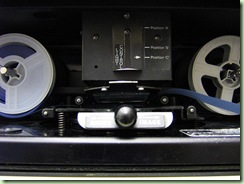
Copyright 2006, Benjamin Crowder. Used by permission. Carolyn Wright2 was working on a microfilm of a Norwegian parish record and things were not going well. New at genealogy, unfamiliar with the Norwegian language, struggling to read the handwriting, slaving to see the faded ink strokes, it was time for Wright to turn the film into the family history center staff worker for return to Salt Lake. Wright said of this moment,

I took the film to the librarian to have her prepare to return it. As I started to hand it to her, I had the most overwhelming feeling I should go through it again. I couldn't resist, the feeling was so strong.

She returned to the microfilm reader, remounted the film, and scanned again for the names of her family. As she reviewed the film, she found an error in her notes. One child, Edvard Emil, had a different birth date than she had written. Wright asked herself,

How could I have copied out a wrong date? I corrected the error, and now sure that I had completed my task, I took the film to the desk. Again, I could not do it. Something, someone, wanted me to go through the film again.

Back to the microfilm reader she went. Back the film went into the reader. And back through the film Wright went. On this third time through, she found Edvard Emil with the original birth date. Something weird was going on. She persevered and located both children with their separate birth dates. Confused, as she was new to genealogy, only later did Wright learn of the practice of giving a later child the same name as a deceased child.

Wright is convinced that it was a loving mother who wanted both her children remembered. Maternal instinct was strong in Wright herself, who was pregnant at the time. She was so moved by the experience that she named her child after the loving mother who wouldn't let Wright return a microfilm until all her children had been identified.


1. Henry Z Jones, Jr., Psychic Roots : Serendipity and Intuition in Genealogy (Baltimore: Genealogical Publishing Co., Inc., 1993), p. 81.

2. Carolyn Wright, "Family History Moment: Two lessons learned," LDS Church News, 14 March 2009, p. 16; online edition available (www.ldschurchnews.com : accessed 19 April 2009).

3. Benjamin Crowder, photographer, "Microfilm Reader," digital photograph, flickr (www.flickr.com : uploaded 15 November 2006, accessed 20 April 2009); some rights reserved.

Monday, April 20, 2009

Loretto "Lou" Dennis Szucs

This is another in a series of encyclopedia-like articles written by the Ancestry Insider. Some serve as extensions to my failing memory while others give me someplace to link to for information that may not be known by all readers.

Loretto "Lou" Dennis Szucs

 Loretto Lou Dennis Szucs A recent Utah Genealogical Association (UGA) press release included this biography of Loretto "Lou" Dennis Szucs.

Loretto Dennis “Lou” Szucs, FUGA, holds a degree in history, and has been involved in genealogical research, teaching, lecturing, and publishing for more than thirty years.  Previously employed by the National Archives, she is currently executive editor and vice president of community relations for The Generations Network.  She has served on many archives and genealogical boards, and was founding secretary of the Federation of Genealogical Societies.  Currently, she serves as a director on the Board of the Federation of Genealogical Societies.

She has edited newsletters and quarterly journals for several genealogical societies, including the Federation of Genealogical Societies’ FORUM.  She authored They Became Americans: Finding Naturalization Records and Ethnic Origins; Chicago and Cook County Sources: A Genealogical and Historical Guide; Ellis Island: Tracing Your Family History Through America’s Gateway; The Archives: A Guide to the National Archives Field Branches (with Sandra Luebking), and Finding Ancestors in U.S. Census Records (with Matthew Wright).

Since 1980, Lou has lectured at numerous genealogy workshops and national conferences.  She has presented at the American Library Association conference and has been interviewed for the Ancestors series, ABC News, CNN News, and most recently on the ABC show, The View.  In 1995, she was awarded the designation of fellow of the Utah Genealogical Association and has received numerous other awards. [Links added by the A.I.]

It was around Szucs dining room table in 1976 that the articles of incorporation for the Federation of Genealogical Societies was signed and rough bylaws were established. She was elected as one of the fledgling organization's first officers. She serves today as one of the organization's directors.

In 2006 Szucs was the first recipient of the International Society of Family History Writers and Editors (ISFHWE) prestigious Myra Vanderpool Gormley Award of Merit. Vice President of Publishing at Ancestry.com at the time, Dick Eastman called her, "highly respected and much loved in the genealogical community."

Earlier this year (2009) UGA honored Szucs as the Utah Genealogical Association (UGA) Silver Tray Recipient for her "untiring efforts as an author, compiler and editor of superior quality genealogical publications such as The Source [A Guidebook of American Genealogy]" (with Sandra Luebking). When initially created in 1973, this award honored scholarly contributions in any aspect of the field of genealogy, but since 1988 has highlighted special contributions in the field of publications.

WorldCat credits Szucs with 37 works in 41 publications in 1 language published between 1977 and 2007 with 5,659 library holdings among members of the WorldCat cataloging system. WorldCat includes Szucs' Family History Made Easy and additional publications not listed above.

Wednesday, April 15, 2009

Top 25 most popular 2009 genealogy blogs

Top 25 genealogy blogs award from ProGenealogists ProGenealogists recently announced their "25 Most Popular Genealogy Blogs for 2009" awards. We are very honored to be part of this group. A glance through the other blogs on the list is truly humbling. It's even more humbling to read ProGenealogists announcement, noting that "a Google search for genealogy blogs currently results in nearly half a million options, with over seven times that number for 'family history' blogs."

I'm not certain how to do a Google search that returns the number of blogs, but to search blog posts, try http://blogsearch.google.com . At the time I wrote this article a search for the word genealogy returned 857,000+ blog posts containing the word genealogy. A search for "family history" (including the quotes), returns 674,000+ posts.

Subscribe to new Google Search results

The search results page contains one of my secrets for uncovering news stories that you won't see on the other genealogy news sites. You can subscribe to the results of your blog search by clicking one of the options in the left margin under the heading, "Subscribe." This will give you an email or news feed of all the new results for your search. That's only 6,600+ articles you'll have to read each day to cover all blog posts with either the phrase "family history" or the word "genealogy."

Better yet, let your favorite genealogy news blogs shift through all those posts while you use the email option, called a Google Alert, to set up a Internet-wide sweep for new information on those ancestors you're trying to find!

First Dog, Bo, showing the president how to use the leashAnd thank goodness the President's choice for new First Pet is done. Several months ago Google changed their search algorithm. My Google alert for FamilySearch started returning results containing "...First Family searches for dog..." To prevent this behavior, include quotes around words you don't want Google to break into separate words.

But I digress...

Measurement Challenges

Choosing the 25 most popular genealogy blogs had special challenges not encountered when measuring the 50 most popular genealogy websites.

"Many people read blog entries through RSS feeds and other means and seldom actually visit the blog's website," according to Kory Meyerink, noted genealogist and vice president at ProGenealogist. Instead of website traffic, ProGenealogist turned to Technorati rankings. Even this alternative proved problematic, as Technorati doesn't include Dick Eastman's popular online blog/newsletters. This led ProGenealogist to include other factors:

Hundreds of genealogy blogs were evaluated based on their overall content, Technorati rating, and industry experience. Due to the ever-changing nature of the blogosphere and the authority basis of Technorati rankings, it is anticipated that this list will change frequently.

When I first started blogging years ago (has it really been that long?) I found my Technorati authority rating changed so erratically, I couldn't stand to follow it. Since I seem to be in widget-mode of late, here's a widget that displays my authority rating in real time:

View Ancestry Insider authority

Like other widgets I've posted lately, it is likely you won't be able to see it (adjacent to "View Ancestry Insider authority") if you read this article in your email or news reader. View this article online (click here) to see the widget.

The Technorati Authority of a blog is a count of the number of other blogs that have posted links to it during the previous six months. Since other winners of the most popular blogs award have increased my authority by posting the list of winners, I'm honored to return the favor. They are:

  1. About.com Genealogy (Kimberly Powell) 
  2. Eastman Online Newsletter* (Dick Eastman)
  3. Genea-Musings (Randy Seaver) 
  4. Creative Gene (Jasia) 
  5. DearMYRTLE (Pat Richely) 
  6. AnceStories (Miriam Midkiff) 
  7. Genealogue (Chris Dunham)
  8. footnoteMaven (Anonymous) 
  9. Genetic Genealogist (Blaine Bettinger) 
  10. Tracing The Tribe: Jewish Genealogy Blog (Schelly Talalay Dardashti) 
  11. GenaBlogie (Craig Manson) 
  12. Olive Tree Genealogy Blog (Lorine McGinnis Schulze) 
  13. Steve’s Genealogy Blog (Stephen J. Danko) 
  14. 24-7 Family History Circle (Juliana Smith)
  15. TransylvanianDutch (John Newmark) 
  16. GenDisasters (Stu Beitler) 
  17. Genealogy Insider @ FamilyTree (Diane Haddad) 
  18. Think Genealogy (Mark Tucker) 
  19. California Genealogical Society and Library Blog (California Genealogical Society) 
  20. The Genealogy Guys (George G. Morgan and Drew Smith) 
  21. CanadaGenealogy, or, 'Jane's Your Aunt' (Diane Rogers) 
  22. Ancestry Insider (Anonymous) 
  23. GenealogyBlog (Leland Meitzler) 
  24. Ancestor Search Blog (Kathi) 
  25. Genealoge (Hugh Watkins)                         /its a tie!/
    Legacy News (Legacy Tree Software)         /its a tie!/

Tuesday, April 14, 2009

Latest Record Search Collections

The table below shows the most recently released or updated FamilySearch Record Search collections, with the most recent at the top. You can click on a collection name to jump right to the collection in Record Search.

This is my 2nd Record Search widget. This widget fulfills two needs unmet by the current Record Search website:

  1. Unlike Ancestry.com, Record Search doesn't have a list showing recent releases.
  2. Unlike the rest of the Internet, Record Search doesn't allow arbitrary selection of text and copy to the clipboard. So like my Collection News widget, my own need to do so drove the development of this Latest Collections widget.

It's OK that I've built widgets that do things beyond FamilySearch's own web clients. That's the point of creating a platform of APIs. Like Yahoo, Google, Amazon, and Microsoft with their cloud platforms, FamilySearch is giving the genealogical community a set of powerful cloud APIs that third-party developers can use to build increasingly powerful applications.

This is cutting edge stuff. It won't be too long before you see increasingly powerful desktop and web-based genealogical applications. Hats off to Gordon Clarke and all the others at FamilySearch making this stuff happen.

Monday, April 13, 2009

You've Seen the Movie, Now Read the List

Leopold Pfefferberg, number 173 on the list, provided this copy to Thomas Keneally Researchers at a state library in Sydney, Australia have found a copy of Schindler's famous list. While there is no single, original list, this copy has special significance. The list was found among the papers of Thomas Keneally, author of Schindler's Ark. Before Keneally wrote this book, Oskar Schindler's heroic story was largely unknown. The book and the story then inspired Steven Spielberg's famous movie. Keneally carried this 13-page copy of the list as he went about doing research for the book. He obtained this copy of a carbon-copy from Leopold Pfefferberg, number 173 on the list, who encouraged Keneally to tell Schindler's story. The carbon copy was produced along with the original in 1944 or 1945, during which time several copies were typed up. Carbon copies were created since the originals were submitted to Nazi officials.

Search JewishGen's transcription of the list for free using either the search engine on JewishGen.org or the search engine on Ancestry.com. Using advanced search capability on JewishGen requires a monetary contribution. Using the free search on Ancestry.com requires registration. Any old account will do: a current subscription, an expired subscription, or a vanilla registration. To register, no credit card is required, but you will need to provide an e-mail address. Alternately, an expired subscription works just fine.

For more information, see

Credit Dick Eastman and his article for alerting me to this story.

Author Thomas Keneally, right, and researcher Dr Olwen Pryke examine his old copy of Schindler's list
Author Thomas Keneally, right, and researcher Dr Olwen Pryke examine his old copy of Schindler's list.

Friday, April 10, 2009

New Website for Utah/Idaho NFS Rollout

FamilySearch has created a new website to facilitate the rollout of New FamilySearch (NFS) to members of the Church of Jesus Christ of Latter-day Saints in Utah and Idaho. An alert member of the Church noticed a change to the registration website for the Church's local Family History Consultants and Church leaders. The right side of the page is now titled, "New FamilySearch Utah and Idaho Release."

Screen shot of the FamilySearch consultant registration page
Click on the screen shots to see larger images.

The new website looks like this:

Screen shot of the new 'The New FamilySearch Web Site Release in Utah and Idaho' website

Criticized for renaming their common pedigree product to "New FamilySearch," I thought smarter branding heads were prevailing when they came out with FamilySearch Family Tree and FamilySearch Record Search. (A discussion of why these names make great brands will have to wait for another article.) Now comes another interesting naming decision. The name of the new FamilySearch website is "The New FamilySearch Web Site Release in Utah & Idaho" website. This leads to interesting sentences such as, "Only stakes who have received an e-mail from FamilySearch Support with instructions to begin their rollout preparations should begin using the New FamilySearch Web Site Release in Utah & Idaho Web site and reporting readiness."

I hesitate to give you the URL for the new website, given this request that you not clog it up with your unnecessary traffic if you haven't yet been invited. You're probably safe poking around a bit on the regular pages, but you ought to avoid the multimedia portions until its your turn.

The home page currently states three temple districts as having received e-mail invitations to begin rollout preparations:

  • Rexburg Idaho (Rexburg? How come none of you told me about Rexburg?)
  • Manti Utah, and
  • Vernal Utah.

The News & Updates page will look familiar to Ancestry Insider readers. It seems the popularity of our rollout news and map have not gone unnoticed. A map. A list of announced go-live dates. What's that saying about the sincerest form of flattery? :-)

When I prepared my Red Zone rollout map, my wife told me that no one would ever comprehend the number of hours I spent crafting it, contorting here, touching up there to increase legibility while keeping the footprint small. FamilySearch took the easy (aka smart) route and provided the map in two sizes, one for size and one for legibility. Nice...

I could have done that... of course...

if I'd thought of it...

and if I didn't love tinkering so much with maps and with graphics...

Here's their NFS rollout news page:

Screen shot of the News and Updates page

Frankly, I always thought it a little odd that FamilySearch didn't upstage me sooner so they could control the messaging and use the popularity of the page to get out important notices.

Oh, well. At least I produced the very first Record Search API widget. Now if I only had time to add a list of the latest collections to it...

Stay tuned...

(And keep those rollout news tips coming! AncestryInsider@gmail.com)

Thursday, April 9, 2009

NFS Rollout News for 8 April 2009

I've updated the New FamilySearch (NFS) rollout map with the last month's changes.

New FamilySearch Rollout Map for 8 April 2009

Here are the districts in transition:

  • Twin Falls Idaho is set to go live in less than a week on 14-Apr-2009!
  • Monticello Utah will go one week later, 21-Apr-2009.
  • Something weird is happening with Vernal Utah. As best we know, they received word before Twin Falls, but we haven't heard when they are going live.
  • Manti Utah received word last weekend that they will be going live in about two months. That would put them live near the beginning of June.
  • While FamilySearch spokesmen have mentioned at recent conferences that districts may go live piecemeal, we've yet to hear any rumors that such is the case for any of the districts above.

I've added another category and color to the map. Pink dots indicate temples that are now equipped to accept Family Ordinance Requests (FORs). According to James W Anderson of FHCNET,

Provo has a FOR reader and card printer.  This because of all the BYU students
that have access and got it before they came here or were members in their home
wards when it rolled out.

There are a sprinkling of other temples across the Red Zone that can handle FORs. As shown on the map, they are Bountiful, St. George, Idaho Falls, Provo, and Ogden.

Anderson also reported hearing at the BYU conference that Idaho Falls received notification that they were going live, only to be un-notified. Those of you with NFS accounts can check out help center document 106609, which confirms that a memo went out on 11 March 2009 informing leaders that the notice so recently received was sent inadvertently. Poor Idaho Falls! We hope you don't become the Las Vegas of this leg of the rollout!

These changes leave just 7 districts still stuck with red dots. Things are getting exciting!

Other NFS News

In other NFS news, Tim Cross has announced that he has received a change in assignment and will no longer serve as Family Tree product manager. Ron Tanner will be taking over. One of Cross's final public comments reversed information we'd previously believed. Apparently, "the rollout [will] continue to move forward [while] we are working hard to add a few more features to the Family Tree necessary before we direct 'new' patrons immediately onto it." Previously, I'd heard that Family Tree would be a pre-requisite to starting up the rollout again.

Remember, you can always see the latest NFS rollout state at "Temple Districts Using New FamilySearch." Thank's to you that are keeping me informed. Hear some new news? Let me know at AncestryInsider@gmail.com.

Wednesday, April 8, 2009

Breaking news: break-in news

A 14 March 2009 break-in to the offices of FamilySearch International may give Salt Lake City police the break they need in solving a spree of burglaries throughout the Salt Lake Valley. Numerous laptop and small electronics thefts have gone unsolved. But the security cameras that serve as window-dressing deterrents at some places of business are apparently live and functioning at FamilySearch, the family history service sponsored by the Church of Jesus Christ of Latter-day Saints. Not only are they functional, the images are highly defined. The video clip below shows an unauthorized individual at FamilySearch and he doesn't appear to be searching for his family history.

Video Courtesy of Salt Lake City Police

One KSL-5 TV newscast reported the footage comes from floor 5 of the Joseph Smith Memorial Building, which the building directory identifies as offices of FamilySearch. For more information, watch this KSL-5 news report.

Video Courtesy of KSL.com

If you can't see the videos in your e-mail or news reader, try clicking here or on the link underneath each video. Anyone with information about this case is asked to call Salt Lake Police at 801-799-INFO. Please reference case #09-47432.

Sunday, April 5, 2009

FamilySearch Record Search News

Explanation

I am playing with some of the information I learned at the FamilySearch Developers Conference. I've included code above to get the Record Search news that is displayed in the little box in Record Search. Unlike Record Search, I allow the text to be selected and copied to your clipboard.

I'm still learning various reasons why it isn't working for most of you. Because I am calling from my website to the Record Search website for information, your browser could get very nervous. Involving two websites can be unsafe if one of the websites is not trustworthy. But since Record Search is trustworthy, I need to figure out how to make browsers happy.

Update 13-Apr-2009

Thank you Logan for help making this widget work with non-Internet Explorer browsers.

Wednesday, April 1, 2009

Ancestry.com announces Ancestry Séance

Ancestry Séance, an April First new service This first day of April, Ancestry.com announced yet another new service to help members investigate their family history: Ancestry Séance. According to company president, Tim Sullivan,

There comes a time in each genealogist's research when ancestral lines hit a dead end. Sometimes it seems an ancestor simply popped into existence. Or available records dry up. What genealogist hasn't thought to themselves, "If I could only talk to this person, I know what I would ask." With Ancestry Séance, now you can!

Ancestry Séance is a service that allows customers to pose a question to an ancestor and get an actual answer back, usually within 48 hours. According to the press release,

Amelia Earhart Imagine the thrill of solving the Amelia Earhart mystery. Think how easy it will be to jump the pond once you know where to find your immigrant's birth town. Learn the true story behind Jimmy Hoffa's disappearance. Choose between the two John Smiths in your ancestor's town. Prove your illegitimate descent from King Charles II of England.

Ancestry.com chief technology officer, Michael Wolfgramm, explained how the technology works.

We employ a sophisticated network of trained and experienced Jamaican psychics. Using the same technology we employ for the World Archives Project, each question is automatically routed to an entire array of psychic specialists in the topic area. Human error is virtually eliminated by a special computer algorithm that employs a statistic model to filter their responses. The system is completely integrated into Ancestry Member Trees, which makes it easy for users and psychics to precisely the target the same individual, eliminating expensive and time-consuming mistargetting.

When asked if genealogists will actually use a system that flies in the face of traditional evidence-based family history, company spokesperson Mike Ward said, "Hey, look how many happy customers we have that depend almost exclusively on customer-submitted family trees with obvious inconsistencies and totally devoid of any sources."

However, critics have already come forward. Said first generation American, Ape Ralph Ools,

This is psycho. Why did Ancestry.com not choose American workers to contact our ancestors? The offshore psychic reader is cheap, that's why. There's no Jamaican psychic can read my ancestry better than an American.

Ward countered, "This move is actually good for genealogy. It's bothered us for a long time that in the Lifestyles category Zodiac websites outperform Genealogy. Sure, Ancestry.com stands to make a lot of money from this move, but we're really doing this for the good of the industry."

seance

Interested customers need to act quickly. This special offer is good today only. Happy April Fools, everyone. Until next year, stay tuned...

Image credit: Cease Fire Studios, "The Seance - 4/31," flickr (www.flickr.com : accessed 29 March 2009); remixed with permission.