Thursday, September 27, 2012

RootsTech 2013 Registration Opens

The Ancestry Insider is an official RootsTech BloggerI’ve accepted an invitation to be an official RootsTech 2013 Blogger. The first order of business is announcing the opening of registration. Here is the announcement from FamilySearch:

RootsTech 2013 Registration is Live with $149 Early-bird Pricing

Registration is now live for the 3rd annual RootsTech conference on March 21-23, 2013 in Salt Lake City, UT. With several thousand attendees each of the first two years, the 2013 conference is shaping up to be the biggest and best yet!

RootsTech, hosted by FamilySearch, offers an opportunity unlike any other to discover the latest family history tools and techniques, connect with experts to help  you in your research, and be inspired in the pursuit of your ancestors.  You will learn to use the  latest technology to get started or accelerate your efforts to find, organize, preserve, and share your family's connections and history.

New in 2013! A full track of Getting Started classes and labs will help those new to family history learn where to start, how to build their family tree, and how to use technology to explore their connections. Learn more.

Register NOW and Save $70 with Early-bird Pricing!

Registration Options

Full 3-Day Pass
Access to everything RootsTech has to offer (250+ classes).        
$219 $149 (Early-bird Pricing)
One-day Pass
Full admission for just one day.
$89
Student 3-Day Pass
Student ID required.
$39
NEW! Getting Started 3-Day Pass
Beginner track with access to over 30 classes.
$49 $39 (Early-bird Pricing)
Getting Started One-Day Pass
A selection of fundamental classes to help get you started.
$19
Developer Day Pass (March 22)
A full-day technology program just for developers. 
$89

Learn more and register at www.rootstech.org.

RootsTech has something for everyone, whether you are an avid genealogist, just getting started, or simply want to discover the latest technologies and solutions to better connect with your family. At RootsTech, come prepared to experience world-class content from speakers all over the country, an exciting exhibitor hall, and great keynote speakers.

Thursday, September 20, 2012

Evidence Explained and the Index Derivative Type

Indexes are nearly the worst genealogical record derivativeWhen it was recently released, I read Elizabeth Shown Mills’s latest online lesson, “QuickLesson 10: Original Records, Image Copies, and Derivatives.” While we often speak of sources as being originals or derivatives, real life is not always that tidy. Mills presents three caveats to consider when classifying a source. One thing that can be done is to distinguish between formats that preserve the original content and those that process the content and the form of the content. Mills lists about 10 of each type.

I want to emphasize the characteristics of one of the derivative types she presents: indexes.

I regard indexes (as they are called on FamilySearch.org) and databases (as they are called on Ancestry.com) as nearly the worst of all derivative types. Indexes are used as finding aids. To that end, publishers apply all sorts of treatments to the information found in the original records. The information originally in the records is interpreted and transformed, and conclusions are drawn. Some of these are made by keyers and indexers. Some are applied en masse by computer algorithms.

  • Names. Name parts are divided into given and surnames, sometimes incorrectly, even swapped. Indexers might be instructed to interpret abbreviations. Keyers and indexers misread names. You should also be aware that to increase findability, publishers standardize names—behind the scenes “Jack” becomes “John” and so forth.
  • Dates. Dates are often assumed to be Gregorian, regardless. Or dates from other calendar systems may be forced into Western Calendar format.
  • Birth Dates. Birth dates may be inferred from age. Birth years calculated this way for a June 1 census are wrong over half of the time.
  • Places. Abbreviations may be interpreted by indexers or computers. Indiana’s “Ia” may become Iowa and its “In” may become India. Place names may be forced into a hierarchy of three jurisdictions (town, county, state for the U.S.) regardless of reality. As with names, publishers standardize place names behind the scenes, sometimes using pick lists, making it impossible to find some records.
  • Race. Race, color, nationality, and ethnicity may be confused, standardized, and reduced to pick lists that exclude and confuse many values.

The next time you use an index, remember these shortcomings. Indexes should be considered finding aids. When available, always view the image. When images are not available, always use the index information to obtain copies of the original record.

The other nine lessons can be found on the website Evidence Explained: Historical Analysis, Citation & Source Usage.

Wednesday, September 19, 2012

Insider Speaking at UGA Conference Saturday

image

The Utah Genealogical Association (UGA) is holding their 2012 Fall Conference this Friday and Saturday, September 21st and 22nd, at the Larry H. Miller Campus of the Salt Lake Community College (9750 South 300 West, Sandy, Utah).

UGA is touting this as a new, family friendly conference.

Bring your family to explore your roots: the Utah Genealogical Association Fall 2012 Conference will be a new kind of event for teens and adults.  Classes, vendors, and activities will involve all experience and interest levels.  Activities will be available for children or grandchildren of conference participants (accompanied by participant)  from 1:00PM until 4:00PM Saturday. …

With a fresh schedule and vendor's activity booths, this will be different than any genealogy conference you've ever seen or attended.

There is a free family history consultant track. Special pricing is available for families and one-day registration is available.

I will be giving two presentations on Saturday. Come by and say hello.

Tuesday, September 18, 2012

Ancestry.com Developing Facebook Application

We're Related app logoDid you know that Ancestry.com bought We’re Related, the Facebook app?

We’re Related was formerly owned by FamilyLink.com, Paul Allen’s company. MyHeritage.com bought most of FamilyLink, but the We’re Related Facebook app was not included. (See “MyHeritage acquires FamilyLink.com and WorldVitalRecords.com!”)

In March 2012, Ancestry.com purchased the We’re Related Facebook app (according to a document Ancestry filed with the Federal government).

A search for “Ancestry” on Facebook revealed that there is also an Ancestry Facebook app. The app offered to help me build my family tree in minutes using my Friends list.

facebook ancestry 02

The app had a hard time building the Insider’s family tree, choosing Drew Smith as my most likely relative. (I knew the Genealogy Insider was a distant cousin, but who knew about Drew?)

The Ancestry app Failed on the Ancestry Insider

I asked a friend with more family than I have to try it out. It was slick. In just a few minutes I… I mean he… had 12 people in my tree. Granted, all were living, but even dead people have to start somewhere. Siblings, spouses, parents, nephews/nieces, aunts/uncles all fell into their proper place with minimal effort.

With the Ancestry Facebook app, I quickly built a tree

Ancestry then asked for missing parents and grandparents. This is important as it allows the Ancestry hinting engine to start finding records of your Ancestors. Ancestry then saved the newly created tree and took me to the regular member tree page.

People added to the tree this way are linked to their Facebook accounts so profile picture changes are reflected in your tree. I could not find a way to add additional people from Facebook once the tree was created. No doubt that will come in the future.

I think this is killer cool technology and look forward to using it more.

Check out http://www.ancestry.com/facebook or www.relatedonfacebook.com, and www.wererelated.com. You must have a Facebook account, must login, and must grant the Ancestry app permission to access information about you and your friends.

Friday, September 14, 2012

Serendipity in Genealogy: Niue Island Disaster

Damaged buildings on the island nation of Niue after Heta “In 2004 a maximum force, category 5 cyclone struck the island nation of Niue. It was miraculous that only two people lost their lives, as the devastation leveled a long coastal area.” Homes perched 90 feet above sea level were crushed and swept away. The island experienced wind gusts up to 200 miles per hour.

“The fury of nature took a heavy toll on trees, buildings, and people on Niue.” Priceless government records were lost. “These valuable documents include[d] 30,000 images of birth, death, and marriage records and an index of Europeans who had immigrated to Niue. The documents also included genealogies of Niue women which are used to determine property rights as well as some other genealogies.”

Spencer J. Condie presents 28 rolls of microfilm to the government of Niue“Years earlier FamilySearch volunteers from the Church of Jesus Christ of Latter-day Saints had meticulously microfilmed many of Niue’s vital records.” Consequently, following the disaster the Church was able to present copies of these missing records to Niue’s government leaders.

That is what we call, “Serendipity in Genealogy.”


Source

FamilySearch. “Niue Island Disaster - FamilySearch Records Preservation.” YouTube. http://www.youtube.com/watch?v=kHgh5D76EjU : accessed 13 September 2012.

Thursday, September 13, 2012

FGS Insider Ketchup

Ancestry Insider KetchupThe Federation of Genealogical Societies annual conference has been over for a week and I have several articles I had hoped to write. Unfortunately, it is time to ketchup…

War of 1812 Pension Digitization Project

The Federation is sponsoring the War of 1812 Pension Digitization Project. So far, there are 298,598 images online. A second camera has been deployed. Over a thousand people have donated and the project has received its first six figure gift. They also have a new brochure.

And pay attention to this: the Illinois State Genealogical Society will match contributions dollar for dollar up through $10,000. Since Ancestry.com is also matching, a gift of $25 becomes $100. Visit the ISGS website to make your contribution.

FGS 2013

The 2013 FGS conference will be in Fort Wayne, Indiana, home of the Allen County Public Library. If you haven’t visited in a while, come see their new facility built in 2007. This library is one of the top genealogy libraries in the country and I’m excited to be visiting it for the first time.

Ephemera

One nice aspect of national conferences is luncheons. I attended one with a presentation by David McDonald. He is the president of the Board for Certification of Genealogists and a Director of the National Genealogical Society. He is also a man of the cloth and it showed. I speak not of his tremendous speaking ability, although that was present. No. I sat at his table and when someone asked for the iced tea, he sprang to his feet, grabbed the pitcher, and proceeded around the table, serving us all.

When he stood for his presentation, he began by saying “I’m not making a scholarly lecture. This is lunch!” He spoke to the subject of ephemera, which he defined as stuff. We listened entertained and moved as he talked of the heirlooms in his family. Many were not recognized as such, such as the 4-inch tall Humpty Dumpty sugar bowl. (Yes, having a great fall was part of the story.)

In the end the moral was simple. We need to label more than photographs. We need to write down an explanation of the stuff in our lives that we’ve received from previous generations and stuff that we wish to be valued by later ones.

“Let me encourage you when you are busy and the internet goes down to go take a look at the top drawer, the jewelry box… and write down what those things mean.”

Wednesday, September 12, 2012

Don Anderson at FGS: We Have the Opportunity

“We have the opportunity to do more,” said Don Anderson, senior vice president of patron and partner services at FamilySearch. Anderson spoke at a luncheon on the closing day of the annual conference of the Federation of Genealogical Societies. He made the comment in the context of the large numbers FamilySearch is producing and what still needs to be done.

FamilySearch has about 607 million images online and are adding about 500 million more a year from its microfilm collection at the Granite Mountain Records Vault. That means at the FGS conference next year FamilySearch will have more than a billion images online. The entire vault will be converted in less than six years. FamilySearch is capturing an additional 75 million a year directly from the field and not available on microfilm. FamilySearch has more than four billion indexed names online. About three billion are in historic records and about a billion are in family trees. FamilySearch has over 300 online training sessions. It has research resources in 28 countries. You can call for help 24x7, toll free from all over the world. There are over 70,000 wiki articles.

“How do we do all this?” he asked. “Nearly all of this is created by volunteers.”

Family history societies have played a large role in this. For the 1940 U.S. Census project, 434 societies helped, indexing in all 50 states.

Many societies saw something in return. “The consortium engaged in significant public relations activities,” indicated Anderson. They engaged a premier public relations firm to increase coverage of the 1940 Census. This resulted in hundreds of stories. In some instances local news media approached local societies in order to put a local face on the story. This increased exposure for societies.

Anderson played a couple of media clips illustrating this. I couldn’t find the video he played from Burbank ABC 7, but I found an article in the L.A. Times mentioning the Southern California Genealogical Society. He showed a news story that ran on St. Louis Public Radio. Ann Carter Fleming of the St. Louis Genealogical Society was one of two guests. (I don’t recall if Anderson played some of the segment or not.)

Anderson warned us before showing one of his slides. “I [show] this at the risk of being discouraging,” he said. “My intent is to be encouraging.” He then showed us the graphic below, comparing the size of the records in the vault versus what has been indexed so far. He compared these to how many new records FamilySearch is capturing each year. Finally, he showed the comparatively small size of the 1940 Census Project.

The amount of records needing to be indexed dwarfs the size of the 1940 Census indexing project 

“We have the opportunity to do more,” said Anderson. “We have the opportunity to accelerate this tremendously.” There are lots of additional members and additional societies that could engage in these efforts.

The U.S. Immigration and Naturalization Community Project. The Italian Indexing Project. Four point four billion records in the Granite Mountain. Additional annual record capture.

“That’s the challenge. That’s the opportunity.”

“Together we can make the world’s records available to the world.”

Tuesday, September 11, 2012

FGS Archives Award to Tuscaloosa Genealogical Society

Records saved by the Tuscaloosa Genealogical Society
Photo credits: Tuscaloosa
Genealogical Society
The FGS Archives award is presented to an organization or an individual in recognition of exceptional contributions in the area of archival access, preservation, or services. In the Keynote session of the Federation of Genealogical Societies conference Thursday morning, FGS Director Mike Hall presented the award to the Tuscaloosa Genealogical Society for their project to preserve fragile, deteriorating county records in Tuscaloosa County, Alabama. They call it the Tuscaloosa County Courthouse 7th Floor Records Project.

According to a July 2007 article in the Tuscaloosa News, genealogist Karen Hunnicutt came upon the records in the attic of the courthouse. They were stored in dirty, leaky conditions with no temperature control. The court intended to destroy them once they were digitized.

The Tuscaloosa Genealogical Society obtained permission in 2007 to take more than 450 county probate books and arranged for a temperature controlled environment in which to store them. Society members have moved them all and have cleaned 415 so far. Seventy have been microfilmed. Fourteen have been indexed with a total of 47,000 entries.

Congratulations, Tuscaloosa for a job well done.

Monday, September 10, 2012

Monday Mailbox: FamilySearch Language Issues

Dear [LDS-WC],

I tried the new Family Tree at familysearch.org. I find it to be inferior to new FamilySearch (nFS). But that's my personal opinion. Maybe I'll get used to it over time.

But there's a problem you might be able to help me with:

As I first started doing my genealogy on nFS a year ago, I quickly found out that it was best to not use nFS in German but rather use the English interface. Besides a few translation issues the help center is real nuisance if you use it in German. Not all articles have been translated into German. And I often spend hours to find a KB article only to find out later that it is only available in English and can only be found if you switch the interface to English before searching. That's why I am doing my genealogy completely in English on nFS.

I have configured my church account accordingly and set the preferred language to English. Everything works just fine - at least in nFS. While trying Family Tree at FS I found out that it is behaving strangely. The outer frame of the website (framed above by "Family Tree -- Learn -- FamilySearch Centers -- Indexing -- Blog") is in English. Also the links to Settings, Help and the Sign Out button is in English. The inner frame, consisting of the actual Family Tree, is in German. I haven't yet found a way to switch it to English.

First I thought it might be that FS sees my German IP address and switches back to German. So I tried an U.S. proxy, connected with an IP address from Chicago (after having deleted all cookies) and still got the German inner frame.

So I'm lost here. Language settings on lds.org and FS/nFS websites have always been a constant nuisance. But at least I always found a way around them and got what I was looking for. Not this time.

Here is a screenshot: http://imageshack.us/photo/my-images/152/42547868.jpg/

So if anybody has any ideas how to get Family Tree in English - please let me know.

Thanks,
Sebastian Buck *

Dear Sebastian,

I spoke to a product manager about your situation. Here’s the scoop:

FamilySearch is working on globalizing headers and footers so they appear in the patron’s language. This should be done soon. Until then, the headers and footers will always be in English.

Family Tree appears in the language of the operating system and browser. If you change the preferred language of your browser and relaunch it, Family Tree should come up in the preferred language. Before November FamilySearch plans to provide a language setting in the footer which will give you a convenient way to switch languages of headers, footers, and Family Tree.

Signed,
The Ancestry Insider

Friday, September 7, 2012

Bashert in Genealogy

It is as though our ancestors want to be found. Uncanny coincidence. Olympian luck. Phenomenal fate. Tremendous intuition. Remarkable miracle. We call It, “Serendipity in Genealogy.”

“Serendipity” is not the right word to describe experiences researching the horrendous events of the Holocaust. Judy Wilkenfeld uses the Yiddish word “bashert” (destiny or fate) to describe the “coincidences” she experiences in her research. Several of these occurred in her search for the fate of her grandmother during the Shoah.

Please read her account in her own words, titled “Evidence” on her Provenance blog. Contrast the fortunate “coincidences” of April 14th with the terrible non-coincidences of July 23rd. Finally read about the discovery and awful reality of the photograph.

Thank you, Judy, for sharing this moving and very personal experience.

Thursday, September 6, 2012

FGS: Chris van der Kuyl, CEO, brightsolid

Chris van der KuylChris van der Kuyl, chief executive officer of brightsolid gave the keynote presentation at this year’s annual conference of the Federation of Genealogical Societies. His presentation was titled, “The Family History Community: A Global Powerhouse for Collaboration.” The history of brightsolid and its web properties is rich in collaboration (but mostly acquisition).

One part of van der Kuyl’s presentation really impressed me. “The real power of technology is when it is unleashed to everyone,” he said. Then he told us a little bit about Jack Andraka, a fifteen year old sensation. Andraka is a high school Freshman in Maryland. He invented a way to test for viruses and antigens using a specially prepared strip of paper. His pancreatic cancer test costs $3. That is 27,000 times less expensive than existing tests.

brightsolid was founded in 1995 as Scotland Online and changed its name to brightsolid in 2008. It is wholly owned by DC Thomson, which is a family owned publisher of newspapers and magazines. Brightsolid has two units: brightsolid online publishing and brighsolid online technology. Its online publishing unit has a dizzying array of websites:

  • Friends Reunited – A British social networking website. Acquired in 2010.
  • Genes Reunited – Launched as a sister site to Friends Reunited. Acquired in 2010 with Friends Reunited.
  • findmypast.co.uk – Founded in 2003 as 1837online.com. Published complete England & Wales BMD. Acquired in 2007.
  • findmypast.com.au – Australian Find My Past. Acquired it from World Vital Records in 2010. Originally WorldVitalRecords.com.au.
  • findmypast.ie – Launched in May 2011 as a joint venture with Eneclann.
  • 1911Census.co.uk – Launched in 2009 in partnership with The National Archives. Funded the project and operates it as a revenue-sharing partnership.
  • 1901censusonline.com – England & Wales censuses from 1841 to 1901. Founded by Qinetiq. Bought by Friends Reunited in 2005. Acquired it in 2010 with Friends Reunited.
  • ancestorsonboard.com – Launched in 2006 by findmypast.co.uk. They acquired it the following year.
  • ScotlandsPeople.gov.uk – Launched in 2002 as a partnership with the National Records of Scotland, the Court of the Lord Lyon, and brightsolid.
  • British Newspaper Archive – Launched in November 2011 as a partnership with the British Library. When Dennis Brimhall visited brighsolid’s office, they tried typing in the name of one of his ancestors and up he came as the first hit. (How many of us wish that would happen for us?)
  • censusrecords.com – I don’t recall when they launched this. It was this year or last. It is a small, pay-as-you-go site specializing in the U.S. census.
  • findmypast.com – Launched in July 2012 for an American audience. They are offering a Pioneer Membership for $4.95 a month. The offer runs through September 9th. They acquired the 1940 census as part of the 1940 U.S. census community project. “It has been an absolute privilege to be a partner on this project,” he said. They are negotiating several key partnerships to make them more competitive with the major U.S. players.

Countering Ancestry.co.uk sponsored “Who Do You Think You Are,” brightsolid is sponsoring “FInd My Past the TV Show.” The show connects ordinary people to a significant event in the past.

imageVan der Kuyl’s background is video games and brightsolid is working on one to draw in younger genealogists. “Family House” allows players to populate a house with related people. I think it allows you to furnish the house and set the appearance of the people.

(I don’t know if it is related, but brightsolid has posted a video of a different concept, “Your Family Story,” on YouTube: http://www.youtube.com/watch?v=wbxc6f_Yy_k.)

Van der Kuyl reviewed brightsolid’s values. (Also available as a YouTube video: http://www.youtube.com/watch?v=x6d51uN9M50.) “Our mission is to surpass your expectation,” he said.

“It’s about value creation, not just profit making.”

Wednesday, September 5, 2012

FGS: Librarian’s Day

Librarians Day, Kim Harrison, DSC01224
Librarian’s Day at FGS Conference
Photo credit: Kim Harrison
I’ve mentioned that Wednesday, the first day of the FGS conference, has a special audience: genealogical society officers. Well this year (and most years) the first day of the conference was also Librarians Day. As you are doubtlessly aware, many libraries have genealogy collections. Librarians day is designed for librarians, archivists, and other information professionals serving family history researchers.

I wasn’t able to attend the entire day, but the program looked great. The opening keynote was Dr. Edwin C. Bridges, director of the Alabama Department of Archives and History, who spoke about “Is Alabama History as Rich and Interesting as Greek or Roman History?” Laura Caldwell Anderson, archivist for the Birmingham Civil Rights Institute; Jim Baggett, head of the Department of Archives and Manuscripts at the Birmingham Public Library; and Elizabeth Crabtree Wells, special collections librarian and archivist at Samford University, discussed Birmingham resources for librarians and their patrons.

The luncheon speaker was William J. Forsyth, directory of product management for ProQuest. ProQuest is the Librarian’s Day sponsor and sells a variety of subscription services to libraries, including Ancestry Library Edition. (I sometimes wonder if FamilySearch.org would get more attention from libraries if ProQuest offered a FamilySearch Library Edition. But I digress…)

In the afternoon Amy Johnson Crow spoke to the topic of “The Importance of Your Genealogy Collection’s Website.” Crow is a genealogical content manager at Archives.com.

“It is not enough to have a website,” she said. “You have to have a good website.” Crow went on to quote Voltaire: “Don’t let the perfect be the enemy of the good” and warned participants, “I never said you had to have a perfect website.” Crow also advised tat attendees provide great content and site navigation. “Content is like chocolate,” she said. It has to be rich and it has to be satisfying. “Whatever content you have, it has to be good. It has to be meaningful.” She offered the Ohio Obituary Index as an example. The Rutherford B. Hayes Presidential Center (not a NARA presidential library) offers this index of 2.1 million obituaries. The index gives enough information for users to identify an ancestor. Then it gives a link allowing users to order a copy of the obituary. The index has brought the Hayes Center a tremendous amount of traffic and attention.

Curt Witcher addresses librarians at 2012 FGS conferenceCurt B. Witcher, the Genealogy Center manager at the Allen County Public Library in Fort Wayne, Indiana, spoke to the topic, “Sources and Resources: Mining the Gold from Genealogical & Historical Serials.” (Private message to Curt: Sorry about the lousy photograph. I’m a terrible photographer.)

Periodicals contain hidden sources, locality-specific tips, and all kinds of history. “Doing the history eliminates the mystery,” says Witcher. Long bibliographies contain unmined gold. If an article about a topic contains a long bibliography, look through it for other potential sources. “I think it is really exciting for our customers to pull together records about a locale,” he said. “Where does history live? Down at the locale.” There are several ways to find articles of interest. The Allen County Library’s Periodical Source Index (PERSI) is a large subject index to articles written in genealogy and history periodicals. “I think subject indexes have a place alongside every-name indexes,” he said. PERSI is available on HeritageQuest and Ancestry.com.

If you’re a librarian and wish to attend Librarian’s Day, they are scheduled before ALA, NGS and FGS conferences.

Tuesday, September 4, 2012

Record Access in a Post 9/11 World

David Rencher spoke at a luncheon of this year’s annual conference of the Federation of Genealogical Societies. He opened his remarks telling the story of the 2001 conference. It was the organization’s 25th anniversary. It was the Tuesday morning before the conference opened. The celebration was ready, the cake, the balloons, the door prizes.

“Then suddenly, on a beautiful promising sunny day,” said Rencher, “our lives changed as a nation and as a genealogical community.” It was the 11th of September.

“Little did we know at the time the transforming effect that single event would have on our access to genealogical records,” he said. Legislators joined in a bi-partisan effort to restrict access to records. Identity theft also became commonplace and genealogical databases quickly became a target of legislators.

The genealogical community has an organization to help fight these trends: the Records Preservation and Access Committee (RPAC). You may feel at times that RPAC is not doing all it can, but sometimes over reacting hurts a cause. RPAC takes thoughtful and effectual action.

Arizona vital records website
Arizona has published many
vital records online
Genealogists have experienced wins and losses since 9/11. Arizona’s online vital records is a big win. Pennsylvania is a big win where previously restricted vitals have been transferred to the state archives and can be published. The Social Security Death Index (SSDI) is in danger of being limited or being eliminated altogether. Representative Jason Chafetz of Utah is working to curtail the work of the National Historical Publications and Records Commission (NHPRC).

RPAC is monitoring these situations and acting according to reason and effectiveness. RPAC is seeking a state liaisons from each state to help it monitor and coordinate its efforts. In one existing state the representative advised RPAC to take no action, since congressmen respond best to citizens within their own state. In that particular instance, efforts at the state level successfully saved public access to a set of historical records.

Friday, August 31, 2012

FGS: FamilySearch Key Messages

Paul Nauta addresses bloggers at FGS conferenceAt a preconference blogger dinner, FamilySearch’s spokesperson, Paul Nauta, presented FamilySearch’s key messages for the Federation of Genealogical Societies annual conference.

The big news is a $100 discount for RootsTech 2013. You should be aware that the RootsTech audience has been expanded to include new users, so if you’ve stayed away because it is too technical, you should reconsider. From now through the end of the week, you can get the $119 price by going to http://www.RootsTech.org/insider and using registration code “blog119.” We were told that this price will be the best offered. Registration without this insider opportunity will not come until sometime next month.

FamilySearch would like attendees to be aware of the amount of Alabama content recently released on FamilySearch.org. To see for yourself, go to https://www.familysearch.org/search/collection/list and type “Alabama” in the search box. (Private message to FamilySearch: It would sure be nice if you supported a parameter that preloaded the search box, such as ?search=Alabama.) The FamilySearch mission is to “Provide easy access to records to help individuals identify their ancestors and link families.”

FamilySearch would like attendees to know about the growing research assistance available free to anyone. FamilySearch now has over 500 online courses. These show the presenter and slides simultaneously. The research wiki now contains over 66,000 articles. Live help is available, as well as Facebook and Skype groups. Go to http://FamilySearch.org/learn.

Nauta shared some of the same facts and statistics presented by Rod DeGiulio at the BYU Conference. (See “Rod DeGiulio: All About Records.”) He mentioned that FamilySearch does not have permission to publish all its microfilm in the Granite Mountain Record Vault. Some contracts don’t allow it, but FamilySearch is trying to negotiate permission for those films. Ninety percent of FamilySearch’s record coverage priority belongs to the countries shown in the map below:

Map showing 90% of FamilySearch record priority

About one-third of FamilySearch’s camera operators are senior volunteers. FamilySearch would like to invite members of the public to volunteer since they want to expand camera operations as their microfilm scanning winds down. Interested parties should contact TomlinsonKL@familysearch.org. No special skills are necessary. You may be able to work from home or travel abroad.

FamilySearch would like conference attendees to know about the just completed 1940 census community indexing project. About 165,000 people participated. To understand how many that is, FamilySearch spokesperson, Michael Judson, said this is enough to fill the 2012 Olympic stadium twice. Four-hundred and thirty-four family history societies participated. They collectively indexed 15 million record and arbitrated 7. Society accuracy measured 98%, a little higher than average. Two-hundred twenty-three of those societies have transitioned to the next project.

The Ancestry Insider Indexing HistoryThe next community project is indexing U.S. Immigration and Naturalization records. About 2 million records have already been indexed by 50,000 volunteers. The goal for 2012 is 30 million records. This is a considerably larger project than 1940. While the 1940 census consisted of 132 million names, this project contains 500 million. Attendees can visit the project booth and have a picture taken of them standing in front of a dock, representing immigration.

What is coming in the future?

FamilySearch is planning to add book checkout for its copyrighted book collection. Just like checking out a physical book from a library, the system will allow users to checkout an electronic copy.

FamilySearch will add the ability to correct mistakes in indexed information.

FamilySearch will release Family Tree. Family Tree is supposed to be source-centric to move towards a more accurate pedigree. Family Tree is “A place to hold the best genealogy, freely available to all, and preserved for future generations.”

Finally, FamilySearch deputy chief genealogical officer Michael Hall gave a short report on citation progress on FamilySearch.org. He provided a handout that I will cover in detail in a separate article.

FamilySearch Citation Report Card

DSC01056At the FamilySearch Blogger Dinner of this year’s annual Federation of Genealogical Societies conference, FamilySearch spokesperson, Michael Hall presented a report card of sorts on FamilySearch’s citations.

I have to give a big conflict of interest here. I serve as an advisor to those implementing citations at FamilySearch. I’m partly responsible for what’s good and what’s bad. I also have to maintain good working relationships. But while I can’t give an unbiased view of FamilySearch’s citations, I am in a position to understand why certain decisions were made.

Hall’s presentation was augmented by this handout:

Introduction

FamilySearch adheres to the principles of “Evidence Style” as presented in Elizabeth Shown Mills’s book Evidence Explained: Citing History Sources from Artifacts to Cyberspace and in associated reference sheets such as QuickSheet: Citing Online Historical Resources: Evidence! Style and QuickSheet: Citing Ancestry.com Databases and Images: Evidence! Style. Applying these principles can result in differences between FamilySearch citations and similar examples in these reference works. Some of the differences are operational and some are strategic.

Evidence Explained is used because it is the only citation guide that supports derivatives and covers the many kinds of manuscripts used by genealogists. Other citation styles could be considered, but none support derivative sources and none cover all the different kinds of sources used by genealogists. An MLA style guide, for example, is not going to tell you which citation elements are necessary to locate a birth certificate created at the county level and filed at a state archive. Elizabeth Shown Mills took an existing style guide, Chicago, and extended it to meet the needs of genealogists.

Derivative Sources

Genealogists depend on derivatives of manuscript sources. Derivatives are copies of various sorts such as transcriptions, abstractions, and microfilm or digital images. Genealogists can seldom visit the churches and archives housing the many manuscript sources they use. Consequently, they must depend on derivatives.

A genealogical citation, therefore, should specify the location of both the online derivative and the offline original. A complete citation basically combines a citation for an online derivative and one for the offline original. The two are joined using the word “citing.” Any information already found in the citation to the derivative is dropped from the citation to the original.

For example (with “citing” bolded),

        1. "United States Census, 1790," index and images, FamilySearch (https://familysearch.org/pal:/
MM9.1.1/XHKG-MTH : accessed 07 Aug 2012), Paul Raymond, Richmond, Berkshire, Massachusetts; citing p. 503, NARA microfilm publication M637, roll 4.

Collections, Records, and Images

FamilySearch needs to provide users with citations to its record collections, records, and images.

Collection citations are displayed on collection pages. Up until recently they have been stored in the FamilySearch Research Wiki and have cited the offline original but not the online derivative. Today (or very soon, if not already) they are stored in a secure location and cite both the online and offline sources. Some of these citations need improvement, which FamilySearch will do over time.

Sample record citations are presented in the Research Wiki, and for a long time no citations were displayed on record detail pages. FamilySearch began displaying citations to the online derivatives on the record pages several months ago. Today, for our most popular collections, FamilySearch cites both the online derivatives and the offline originals. Over time, FamilySearch will make this improvement to additional collections.

FamilySearch is not yet displaying image citations, and we have no progress to report at this time regarding such an effort.

Multiple Archives

Collections composed of records from multiple archives are difficult to cite. Collection citations in the wiki cited something generic like “County courthouses in Ohio,” rather than attempting to list all the counties in Ohio. Such citations have little value. While users need to know the coverage of record collections, it is impractical to list dozens or hundreds of archives in collection citations. Of necessity, coverage information must be handled elsewhere. In such cases FamilySearch follows the Evidence Style practice of citing just the online derivative.

While a collection may contain records from multiple archives, each record comes from a single archive, and the record citation can specify it. Unfortunately, our current technology does not allow FamilySearch to do so. However, we can include the FHL microfilm number. Using the film number, researchers can look up the archive in the FamilySearch catalog. Developing the technology to do the lookup automatically is expensive and will take a considerable amount of time, but this functionality should be available at some point in the future.

Conclusion

FamilySearch has made considerable progress in our goal to present users with complete, genealogically sound citations for collections and records. Additional work is needed for images and for citations to collections with records from multiple archives.


This leaves plenty of questions to be answered. I may answer some of the larger ones.

Thursday, August 30, 2012

Become That Dynamic Destination

DSC01063“Family history is a destination,” said D. Joshua Taylor, business development manager for brightsolid. “It’s all about the destination.” Taylor was speaking in the opening plenary session at the annual conference of the Federation of Genealogical Societies (FGS). The conference began Wednesday morning in Birmingham, Alabama. The first day of the conference is targeted to society officers. Taylor posed a question to them, “What kind of destination is your society?” If your society looks like a roach infested motel from the outside, prospective members won’t recognize what’s inside.

“It’s all about being a part of your community,” said Taylor. You should add value to your community. Become involved with the chamber of commerce, the tourist bureau, local hotels, local restaurants even. When they have questions about cemeteries or local history, they should come to you. Offer your services to local travel agents. Participate in community bake sales. Become involved with local charities.

“We need to shift our thinking. How can we invest in the community to show that we have value,” asked Taylor. “It’s a two way street between you and your community.” When the local television station needs information about family history, they should come to you. When it comes to family history, you should own your community. Offer your services to the local county clerk. When they are being bothered by an overly assertive genealogist, they can send him to you.

“Societies that have made themselves essential to their community will find themselves involved by that community.” You know things that others don’t. You have records that others don’t.

Society success is not your membership size, your seminar attendance, or to balance your budget. Society success is fulfilling your mission.

“Become that dynamic destination.”


The Federation of Genealogical Societies annual conference continues through Saturday. If you’re in the Birmingham area, come on by.

Also check out the new FGS website at http://www.fgs.org/.

Wednesday, August 29, 2012

Ancestry.com Free Census Weekend, Time Machine

The Ancestry.com 1940 time machineJust in time for the Labor Day weekend, Ancestry.com is offering its entire U.S. census collection for free through September 3rd. The 25 collections, consisting of  713 million records, are:

  • 1790-1940 United States Federal Census collections
  • 1850 U.S. Federal Census – Slave Schedules
  • 1860 U.S. Federal Census – Slave Schedules
  • 1890 Veterans Schedules
  • Non-Population Schedules 1850-1880
  • U.S. Enumeration District Maps and Descriptions, 1940
  • U.S. Federal Census – 1880 Schedules of Defective, Dependent, and Delinquent Classes
  • U.S. Federal Census Mortality Schedules, 1850-1885
  • U.S. IRS Tax Assessment Lists, 1862-1918
  • U.S., Indian Census Rolls, 1885-1940

Additionally, Ancestry has created a time-machine of sorts. Answer a few multiple choice questions and Ancestry will create a personalized video of the life you would have led 72 years ago. Access the Ancestry.com 1940 Time Machine on their website.

Finally, Ancestry has provided a handy chart indicating what information was collected in each census year. Click on the thumbnail below for a full-sized image.

What You'll Learn in the Census, Year by Year

FamilySearch Announces Post-1940 Community Project

Immigrants at Ellis IslandFamilySearch recently issued this announcement:

North American Indexing Volunteers Invited to Join New US Immigration & Naturalization Community Project

More than 160,000 volunteer indexers made the 1940 U.S. Census available for searching in just five months. The project was an unprecedented success that dramatically illustrated what the genealogical community can accomplish when united in a common cause.

Now many volunteers are turning their attention to the U.S. Immigration & Naturalization Community Project, an indexing effort to make passenger lists, naturalization records, and other immigration related records freely searchable online. Hundreds of thousands of North American volunteers are expected to contribute over the next 18-24 months, focusing initially on passenger lists from the major US ports.

Individuals, societies and other groups that want to participate should visit familysearch.org/immigration to learn more.

Tuesday, August 28, 2012

FTM Lucky 13

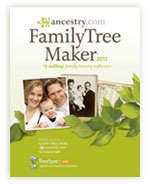
Ancestry.com Family Tree Maker 2012For owners of Family Tree Maker (FTM) 2012, 2013 is proving to be a very lucky year. Ancestry.com recently announced that they will not be releasing an FTM 2013. This means owners of FTM 2012 will have another year during which they can receive free updates.

“We have decided to make several key updates to the existing software, and give those updates away for free,” said Ancestry spokesperson, Matthew Deighton. “We will be working hard this year to improve the current product and you will see these bonus features throughout the year.”

According to Ancestry, numerous new features have already been added to FTM 2012:

  • Numerous enhancements to TreeSync so syncing your tree to Ancestry.com is faster and more reliable
  • A new Family View Report that displays a person’s ancestors, spouse, and children together (similar to the Family View in the People workspace)
  • A new Undocumented Facts Report that lists people’s facts that have no source documentation
  • The ability to merge info from multiple versions of the same fact
  • New source templates for the 1940 U.S. census and improved support for city directories
  • Dozens of report enhancements including performance improvements and new options in the relationship chart, family group sheet, Individual Report, Notes Report, Data Errors Report, Outline Descendant Report, Media Item Report, photo albums, Media Usage Report, Documented Facts Report, and calendar

Owners of previous versions can qualify for the free updates by first upgrading to FTM 2012.

Monday, August 27, 2012

Ancestry.com Finalizes Archives.com Purchase

Ancestry.com finalizes Archives.com purchaseAncestry.com recently announced it had finalized its acquisition of Archives.com for approximately $100 million in cash and assumed liabilities.

Archives.com is a great addition to the Ancestry.com family,” said Tim Sullivan, President and CEO of Ancestry.com. “It is a fast-growing business that has expanded the addressable family history market through a simple and affordable approach.”

More than 440,000 subscribers pay about $39.95 a year for a subscription. Archives.com was launched barely more than two and one-half years ago. During that time it has accumulated over 2.3 billion historical records according to its website. The records known to have been obtained from FamilySearch account for over one billion of these: 500 million public family tree records and over 500 million U.S. census records.

Archives.com’s other largest holdings are also available on other sites. From England and Wales, BMD records account for nearly 300 million of their records and census transcripts contain another 160 million. Living people records contain 200 million and NewspaperARCHIVE contributes another 100. The Social Security Death Index is the next largest collection, at 90 million.

Multiple price points is a tried and true method of marketing. Witness three drink sizes at McDonalds. Ancestry.com plans to operate Archives.com separately, retaining its brand and website, keeping it as a lower priced offering to its more robust Ancestry.com property.