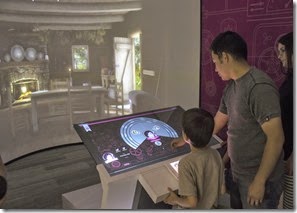
Showing posts with label Family History Centers. Show all posts

Tuesday, March 14, 2017

Future of Family History Center Microfilm

Microfilm readers and cabinets at the Riverton FamilySearch Center. Photograph by the Ancestry Insider.FamilySearch Family History Center staff are increasingly having hard times keeping their microfilm readers operational. Parts are becoming hard to obtain. On a Yahoo discussion group, one staff member reported using O rings from a local machine shop to replace belts. Another staffer reported being quite concerned last October when FamilySearch support indicated that “Film ordering will be going away eventually and now is a great time to start removing unneeded readers.” This startled her because she understood it would be decades before all the microfilms that could be digitized would be posted on FamilySearch. Another staffer reported hearing at RootsTech that only 7% of the records had been digitized. Another reported that some microfilm would never be digitized because of “copyright.” (It’s actually not a copyright issue, but other legal impediments.)

Steve Fox, manager of cataloging and metadata services at FamilySearch International, stepped in to clarify the situation. Steve said the 7% number is incorrect. You’ll recall my report from RootsTech that FamilySearch executives said 50% of the vault has been scanned.

Steve said, “The more critical issue is that raw microfilm used for making copies for distribution is no longer available at an affordable cost. In fact, it will soon be unavailable at any cost.” He said, “I can’t give an exact time frame, but microfilm circulation will go away in the near future, regardless.”

He acknowledged the “copyright” issues and said, “Creative solutions to these issues are in review.”

Steve went on to disclose that some films have been digitized that are not available in historical record collections. These contain 100s of millions of images and are accessible only through the FamilySearch catalog. Including the images available through historical record collections, there are nearly 2 billion images accessible through the catalog. To access images through the catalog, look up a film as you usually would. Then look for a camera icon in the column to the right of the film number. Click the camera icon to access the images. “Images viewed this way are not structured like the browse collections, but mimic the microfilm roll experience,” Steve said. “If something is on Item 3, you need to scroll down through the thumbnails looking for Item 3, like cranking through a roll of film.”

Images accessed through the catalog are subject to the same conditions as those in historical record collections. Some require that you login. Some will require that you be at a FamilySearch family history center, or even the Salt Lake library.

Wednesday, January 11, 2017

FamilySearch Reviews 2016 Accomplishments – Part 2

This is a continuation of yesterday’s article. FamilySearch recently published a review of their 2016 accomplishments. Here is the information plus commentary and a comparison with their 2015 figures.

FamilySearch 2016 accomplishments relative to: HelpHelp

“In 2016, FamilySearch added a Help Others feature to guide consultants and more experienced genealogists in assisting others. People seeking help provide their username and a helper number that allow helpers to look online at their records, find opportunities for research, and help guide that research,” wrote FamilySearch’s Diane Sagers.

Facts and figures:

  • 15 million volunteer service hours. This is up from 12 million in 2015.
  • 11 million of those hours contributed by indexers. Up from 9 million.
  • 315,000 volunteer indexers. Up from 304,000.
  • 3.7 million hours contributed by service missionaries. Up from 3.
  • 4,807 service missionaries. Up quite a bit from 3,850.
  • 4,960 FamilySearch Centers. Formerly called family history centers. Up from 4,891.
  • 103 new centers this year. My math says the difference between 4,891 and 4,960 is 69, but there were centers that closed as well. The Layton FamilySearch Center alone replaced 48 family history centers (according to a 27 November 2016 article in The Davis Clipper).
  • 3,108 centers outside the U.S. This is up 244 from 2,864 the previous year. This is wonderful news. Some countries of the world don’t allow FamilySearch to loan microfilm. Researchers in those countries can now access records in their centers that aren’t available otherwise.
  • 1,852 centers in the U.S. This is down 175 from 2,027. This is discouraging since many records on FamilySearch.org are only available to the general public in FamilySearch centers.

FamilySearch 2016 accomplishments relative to: Discovery ExperiencesDiscovery Experiences

In 2016, FamilySearch opened a new FamilySearch Center in Layton, Utah; broke ground for a large FamilySearch library in St. George, Utah, that will include discovery experience stations when it opens in 2017; and began remodeling the first floor of the Salt Lake family history library to include discovery experiences.

Facts and figures:

  • 375,000 RootsTech Attendees. [Fine print: Includes in-person, online, and local Family Discovery Day events.] This is up 75,000 from RootsTech 2015.
  • 133 million FamilySearch.org visits. In 2015 they reported 291,000 visits per day, which yields 106 million visits. (Techie comment: If I am not mistaken, FamilySearch uses the Adobe Omniture definition of a visit: If a person views a sequence of pages, that counts as a visit. If they take a break of more than 30 minutes, it counts as a new visit. If they visit for more than 12 hours, it counts as a new visit.)
  • 7.4 million registered users.

FamilySearch 2016 accomplishments relative to: MemoriesMemories

“Family history is about stories; it is more than dates and facts,” said Steve Rockwood, CEO of FamilySearch. FamilySearch added the memories gallery view, added user-to-user messaging, and has the ability to make audio recordings.

Facts and figures:

  • 5.6 million memories [stories, photographs, documents, and audio recordings] added in 2016. Last year FamilySearch reported a total of 10.3 million memories, so the total must be about 16 million. 
  • 4.7 million photos added. Added to the 9 million total last year, FamilySearch.org now has 14.5 million.
  • 521,000 documents added. These are documents that users have scanned and uploaded to FamilySearch.org. They now have 1.6 million total. I hope everyone is scanning and uploading your home sources (birth, marriage, death, and military discharge certificates; funeral programs; newspaper announcements; Bible pages; etc.). Don’t have a scanner? Use your cell phone camera.
  • 362,000 stories added. With 747,000 last year, FamilySearch now reports having 1.1 million.
  • 50,000 audio recordings added. FamilySearch reports the total is now 92,000 recordings. That is disappointing. Tom Jones has said, “What should be our first priority is to do what future generations cannot do.” (Jessica Murray, “Answering the Big Genealogy Puzzle With Tom Jones,” Ancestry [Blog] [http://blogs.ancestry.com : 25 August 2014].) Recording elderly relatives is one of those things.

For more information see “FamilySearch 2016 Year in Review” on the FamilySearch Blog and “FamilySearch 2016: Connecting families across generations” on the Deseret News website.

Monday, November 21, 2016

Monday Mailbox: Film at 11:00

The Ancestry Insider's Monday MailboxMy comments about the Layton FamilySearch Center and microfilm elicited some good feedback.

Dear Ancestry Insider,

I work at the Ogden FamilySearch Center and we have some books and readers and film and fiche. Come on up!

Janice Nusbaum

Dear Janice,

That is good news. There is so much that is only available on film. I’m glad to hear it.

Signed,
---The Ancestry Insider

Dear Ancestry Insider,

I am a FHC Director and was told not too long ago that there will be no film use within 3 or 4 years. I was told this because I was inquiring about returning films that were viewable online.

Signed,
Unknown

Dear Ancestry Insider,

They've (FamilySearch?) said they will never put all the films online?? Is that because of contract restrictions or some other reason?

Signed,
Marilyn Cranford

Dear Marilyn,

There are several reasons why some images will never be available online: contracts, laws, relationships, and strategies.

In the distant past many companies did business over a handshake. If FamilySearch/GSU operated that way, it is conceivable they have films for which they have no written contract. In the past when written contracts became the norm, companies didn’t foresee technology growth; FamilySearch has said publicly that most of its contracts did not foresee distribution via any medium besides microfilm. If FamilySearch wishes to publish these films, they will have to negotiate contracts with many record custodians and many of them won’t do so.

Laws increasingly limit what can be published. Open publication (which the Internet does) is a very different animal than closed distribution (which is what you do when you order a film to view at a FamilySearch family history center). So while some films can remain in limited distribution, they can’t be published publicly on the Internet. This trend is likely to get worse.

An article in the FamilySearch Wiki documents another scenario. FamilySearch had published some images of vital records. The contract with the record custodian was revised such that FamilySearch depublished the images in exchange for rights to obtain and publish additional indexes. Apparently, FamilySearch is willing to forego publishing microfilm that it has rights to publish if doing so can buy a continued working relationship with a record custodian.

Strategy comes into play. Some films are duplicates. Some films were not filmed by FamilySearch/Genealogical Society of Utah. I predict that FamilySearch will not digitize some films because decision makers will decide they would rather spend the money elsewhere. For example, how valuable are Soundex census indexes? Are the costs justified for the few discoveries that will result? Or would you rather have high-value vital records from your ancestral country? How valuable are the road commissioners’ ledger books? They’ll never be digitally indexed by humans. Looking at the public numbers, FamilySearch has slowed publication of unindexed images. Does that mean that low-value, hard to index films might never be published? 

Signed,
---The Ancestry Insider

Dear Ancestry Insider,

Would you be willing to give our Family History Center a plug? We have a VERY LARGE collection of microfilms for the Chicago and Cook County Vital Records.  Instead of writing to Cook County, spending $15, and waiting 6 weeks, or not getting what you want at all for your $15, you can spend 5 minutes and get that birth, marriage, or death certificate for FREE.

Signed,
Donna Roginski

Wilmette Family History Center   
2727 Lake Ave., Wilmette, Illinois
www.wilmettefhc.org

Scheduling Notice. The Center will be closed November 22 through November 26 for Thanksgiving. We wish you a happy Thanksgiving, and resume normal operation on the 29th.

Dear Donna,

This is a timely reminder of why getting rid of microfilm will be a painful process. Consider yourself plugged.

Signed,
---The Ancestry Insider

Monday, November 7, 2016

Monday Mailbox: Layton,

The Ancestry Insider's Monday MailboxDear Readers,

I received several replies to my inquiry about the size of the Layton FamilySearch Center’s microfilm collection. Here are some:

Dear Ancestry Insider,

On the new center's "Resources" page they say “This is a computer-only center and does not order microfilm,” and “There are no printed materials or books available in this facility.”

Geolover

Dear Ancestry Insider,

I toured the new center today. They have NO physical books. They say that is why it is not called a Library. All digital.

Thank your for sharing so much with us.

Janice Nusbaum

Dear Readers,

Wow. I don’t know how much to read into this. Patrons at the Layton center, 23 miles north of the Salt Lake Family History Library, will have to drive down to see film while patrons at the Riverton center, 23 miles south of the library, have their own film collection. I guess it makes sense that as more and more of the Family History Library’s book and microfilm collections go online, the less need there is for physical books and films. FamilySearch recently said publicly that they have 299,822 books in their digital collection. I don’t know that they’ve ever said how many films they have digitized. Certainly it is more than the 23,000 rolls at the Riverton center. Someone should ask them. But since they’ve said they will never put all the films online, you’d think they would still have a film reader or two. Wow.

Signed,
The Ancestry Insider

Thursday, November 3, 2016

Layton FamilySearch Center Open House

Layton FamilySearch CenterFamilySearch has announced the opening of a new FamilySearch center in Layton, Utah. The goal of the center is to provide a fun, family oriented experience to learn about who you are and where you came from, with interactive displays, a children's area, two recording rooms, and 140 computers, 60 of which have touch-screen monitors.

They are having an open house today through Saturday. The hours of the open house are

  • Today (Nov. 3), 1-9 p.m.
  • Friday (Nov. 4) and Saturday (Nov. 5) from 9 a.m. to 9 p.m.

The center is located at 915 W Gordon Ave., Layton, UT 84041-4811. Please enter the parking lot on the north side of the building and continue to parking areas on the south side. Overflow parking is available on the north side of the Deseret Industries building.

imageAccording to information provided by FamilySearch, the center includes experiences debuted in the FamilySearch Discovery Center in Salt Lake:

Your visit will be as unique as you are. Learn about the meaning of your name, what happened the year you were born, and other fun facts. See where your family came from, view photos of family members, and read their stories—all on 55-inch touch-screen monitors. Data used for the interactive experiences is drawn from FamilySearch.org [Family Tree] and selected partners.

This state-of-the-art FamilySearch Center with 13,979 square feet has casual seating and collaboration areas, making it easy for families and youth groups to work together on laptops, iPads, or other mobile devices. The center and its resources are open to the public at no charge (a small fee is required for printing and making photocopies). If the usual family history center model is used, the library is staffed with volunteers with differing areas of research expertise. I recommend inquiring to find the best experts in your area of interest. I assume the center replaces multiple, smaller centers in the area. I wonder how large their microfilm collection is. Riverton has 23,000 rolls. Anybody out there know?

For more information, visit the event’s Facebook page or the center’s website at familysearch.org/fhc/layton.

Monday, November 23, 2015

Monday Mailbox: When an FHC is Not an FHC

The Ancestry Insider's Monday MailboxDear Ancestry Insider,

Recently, a search of the FamilySearch Book Catalog of digital images resulted in the "restricted Image" pop-up message which directed me to a Family History Center to view these images. So I visited the FHC in the Mid-County Library at Port Charlotte, FL. I have used this FHC in the past to order film from FamilySearch & the Library of Virginia.I started with the local volunteer who knew knew nothing about the FamilySearch site, except that film could be ordered by someone else at the library. Next, I spoke to the library film ordering expert; however, she knew nothing about the digitized book access capability at FamilySearch. So I gave them a demo and we received the same "restricted image" pop-up that I had received at my home. Both she & I agreed that the FS server probably was not recognizing their FHC IP address, but she said she would look into the situation. A week has past & I have not heard from the library.

I searched the FS site for some help. By browsing around, I found a document called the "Family History Center Affiliate Agreement" in a section about how libraries could become FHCs. This document clearly states that "restricted images" are not accessible at affiliate FHCs. So I sent all of this conflicting story (including cut & pasted images of the pop-up & Affilliate doc) to the FamilySearch Help center. I have not received a response, but I can no longer find the "Family History Center Affiliate Agreement" at FS.

This conflicting information from FS is quite tedious & frustrating. That I have not received a reply from the Help center is very surprising to me, but I really have only one interest. That interest is this: Should my local FHC be able to access "restricted images"or not? If the answer is no, why does the pop-up direct me to go to a FHC to see these images?

Signed,
Dave Woody

Dear Dave,

Among many genealogists, “Family History Center,” refers specifically to a family history center owned by the Church of Jesus Christ of Latter-day Saints. This is especially true of employees and volunteers of FamilySearch. These are different from public and institutional libraries who have established an affiliate relationship with FamilySearch (AKA the Genealogical Society of Utah) giving them film-loaning privilege. These public libraries are not considered “Family History Centers,” even though it is possible to rent films there from the Salt Lake City Family History Library.

A topic in the FamilySearch.org help system mentions the document you referred to, and answers the question you had:

The authorized agent of a public facility is sent the Genealogical Society of Utah Affiliate Library Agreement. … Patrons of approved affiliate organizations can order unrestricted microfilm and microfiche on loan to view at the affiliate organization. Books and CDs do not circulate from the Family History Library in Salt Lake City, Utah. Access to additional family history websites is not part of the affiliate agreement. Additional access to restricted images on FamilySearch.org is not part of the agreement.

(See “Public Libraries, Archives, or Genealogical Societies Requesting Affiliate Status,” FamilySearch [http://familysearch.org : accessed 22 November 2015], search help system for “affiliated libraries.”)

I recently learned that FamilySearch does not officially claim the name “Family History Center” as a trademark. I guess it is because the U.S. Patent and Trademark Office will not allow trademarks of such generic phrases. In officially reviewed communications, FamilySearch does not use “Family History Centers” (uppercase) as a proper noun, but “family history centers” (lowercase) as a common noun. Unfortunately, that leaves Church owned family history centers without a name that distinguishes them from family history centers owned by other organizations. FamilySearch should create a new name and use it throughout its products, to prevent the confusion you’ve experienced.

Signed,
---The Ancestry Insider

Wednesday, October 14, 2015

Riverton, Utah Seminar to Address Using Family History to Help the Incarcerated

The Riverton, Utah FamilySearch LibraryI received this press release from FamilySearch:

Riverton, Utah (October 1, 2015)—The Riverton FamilySearch Library has announced a free family discovery day and seminar on Saturday, October 17, from 9:00 a.m. to 12:20 p.m. Dr. Paul J. McCarty will be the keynote speaker at the seminar. He will focus on how those who are incarcerated or are in self-inflicted prisons resulting from choices or circumstances can share in the blessings, protection, and healing that come from seeking after their kindred dead or getting involved in indexing. The family discovery day is for families and youth (8 years and older) and will include fun activities to engage the entire family in family history. Registration is not required.

9:00–10:00—Keynote Speaker

Paul McCarty is currently the transition director for LDS Correctional Services, Region 3. For the past eight years, he has worked with the Utah Department of Corrections prisons and jails in successful offender release and behavior change programs. He is an adjunct professor of abnormal psychology and marriage and family studies at Brigham Young University and is a principal in the Granite School District. 

Following the keynote presentation from 9:00 to 10:00 a.m., two blocks of four classes each are offered that cover topics of interest for all levels of family history enthusiasts.

10:10–11:10 a.m. Choose one of the following four classes:

  • “Deciphering Handwriting” by Colleen Stutz
  • “Like a Game: Family History for Youth” by Jimmy Zimmerman
  • “How to Puzzilla” by Bill Harten
  • “Grandpa Is on My iPod: Sharing Your Family History with Your Family Using Social Networking” by Janet Hovorka

11:20 a.m.–12:20 p.m. Choose one of the following four classes: 

  • “Interactive Timelines: Using Freeware and File Naming” by Don Snow and Linda Westover
  • “Power Apps for FamilySearch” by Jimmy Zimmerman
  • “Successful Ways to Conduct British Research” by Joni Kesler
  • “Family Links: Easy Interactive Online Activities to Explore Your History Together” by Janet Hovorka

The Riverton FamilySearch Library is also hosting a family discovery day in conjunction with the monthly seminar. Families will participate in fun activities used in family history. Youth and adults of all ages are invited.

9:00 a.m.–12:20 p.m.

  • Replace a Face
  • Story Room
  • From Your Smartphone Straight to Family Tree with Memories
  • Discover Your Pioneer Ancestors
  • Fan Charts, the Year You Were Born, Pedigrees, and Family Group Sheets
  • What Does Your Last Name Mean?

Class and activity changes are shown on the library website at FamilySearch.org/fhc/riverton.

Registration is not required for the free seminar and family discovery day. The Riverton FamilySearch Library is located in the Riverton Office Building at 3740 West Market Center Drive (13175 South), Riverton, Utah, 1-801-240-9601. 

About FamilySearch

FamilySearch International is the largest genealogy organization in the world. Millions of people use FamilySearch records, resources, and services to learn more about their family history. To help in this great pursuit, FamilySearch and its predecessors have been actively gathering, preserving, and sharing genealogical records worldwide for over 100 years. FamilySearch is a nonprofit organization sponsored by The Church of Jesus Christ of Latter-day Saints. Patrons may access FamilySearch services and resources free online at FamilySearch.org or through over 4,800 family history centers in 132 countries, including the renowned Family History Library in Salt Lake City.

Media Contacts:

Brad and Pat Jensen
Directors, Riverton FamilySearch Library
1-801-240-9625
bejensen@ldschurch.org
pjensen@familysearch.org

© 2015 by Intellectual Reserve, Inc. All rights reserved. A service provided by The Church of Jesus Christ of Latter-day Saints.

Wednesday, February 11, 2015

FamilySearch Opens First Discovery Center at #RootsTech/#FGS2015 (#RTATEAM)

Last night I was treated to an advanced showing of a FamilySearch Discover Center—a new type of family history center. “The Family Discovery Center offers…families simple yet powerful in-person experiences to discover their heritage and have their hearts turned to their ancestors,” said Merrill White. White, a FamilySearch spokesperson, made the remarks at the FGS conference in 2013. (See “Über Cool Family History Center of the Future Shown at FGS 2013.”) This first Discovery Center is a test facility located in a room adjacent to the FamilySearch Center on the first floor of the Joseph Smith Memorial Building. FamilySearch is testing and refining the concept here.

I visited the center with several other social media writers. The hope is that entire families will be their chief audience, although youth groups are welcome, too. Upon arrival, I was given (translate: loaned) an iPad with custom software and magnets for docking at various stations. The experience is designed to be personalized for each visitor. That personalization began with a prompt to login to my FamilySearch account and take a selfie. The iPad remembered as I visited each station, accumulating facts and photos to help me remember my visit.

Several stations have large touchscreen displays next to the docking station. At one station, the screens presented interesting, but generic facts about my given name, my surname, and my birth year.

FamilySearch Discovery Center - Station 2? Discovery Center Name Frequency

Another station tapped into FamilySearch Family Tree to get information about my ancestors. This station was phenomenal. It showed migration patterns, percentages of national origin, photos, and stories. If you have a richly populated tree on Family Tree, this station is fantastic. Navigation was easy, for the most part, although two-hand gestures took me some getting used to. (And the software kept wanting to flip my head upside down. That might have been just me. Non-cartoon characters didn’t seem to have that problem.)

FamilySearch Discovery Center - Ethnicity pie chartFamilySearch Discovery Center
FamilySearch Discovery Center - Migration Map

They called another station “the time machine.” The station projects on image of the inside of a 19th century home onto a large, curved screen. I brought up my fan chart on the large, starship worthy console and clicked on an ancestor. The image animated, showing year-by-year how the room would have looked, until it reached the birth year of my ancestor. (In the photo, below-left, the console obstructs half the screen. Sorry about that. To steady my hands, I had to rest the camera on the console.) I clicked on the photo count for my ancestor and the station projected them onto the big screen.

FamilySearch Discovery Center - Time Machine
FamilySearch Discovery Center - Time Machine 

FamilySearch Discovery Center - Time Machine

This station would be pretty cool if the operation was more intuitive and if it didn’t suffer from an unresponsive interface. It took me five minutes to stumble upon the best way to use the station. And I had a hard time getting it to reliably respond to my touches.

The period-costume photography booth was a hoot. The camera takes a picture of your face and superimposes it on a figure in period/cultural dress. The booth has but three walls, allowing your family to gawk and laugh at you as you put your face onto a gladiator, a Maori warrior, or a mariachi musician.

FamilySearch Discovery Center - Photo in historic costume FamilySearch Discovery Center - Photo in historic costume 
FamilySearch Discovery Center - Photo in historic costume

I didn’t try the personal or family video recording booths.

FamilySearch Discovery Center - Video Recording Booth

At the conclusion of the visit, we docked our iPads in front of a large tree. The station projected our facts and photos onto the tree.

FamilySearch Discovery Center - Photo Tree
(Oops. Paul, Pat, and Gordon: I forgot to ask. May I have permission to publish your photos? :-)

After I returned my iPad, the Discovery Center emailed those same images to my inbox.

Email and attachments from the FamilySearch Discovery Center

I admit I was dubious when discovery centers were announced at FGS two years ago. It sounded really expensive to develop. Some of what they hoped to do didn’t seem feasible. For visitors without a tree, I thought the experience would be lame. I thought about the many museums I’d visited with broken technology. (I gather it is really costly to maintain exhibits based on technical gadgetry. In three or four years, the manufacturer has moved on to new things and you can’t get parts or support. After a few years, the gadgets break down so frequently, museum owners leave them to rot.) And I thought a visit would have little ability to spread the genealogy bug.

I was glad to see survey questions on the iPads, before and after our visit. FamilySearch appears intent on measuring the effect of these discovery centers to see if they are worth the expense. I don’t know if they will, but since a full-experience includes logging into your FamilySearch account, FamilySearch could compare your degree of involvement before and after the visit. They can see if the centers are increasing engagement in family history. I’m glad to see that FamilySearch isn’t rushing into this blindly.

I remember as a little boy, our cub scout pack got up very early and made the long trip to the big city. How the city folk must have gawked at a gaggle of little guys stumbling on and off escalators, having never seen one before in our entire lives! We visited a planetarium. With wonder and awe my eight year old eyes saw scientific gadgets and gizmos. That was a defining moment in my life. It determined my hobbies, my jobs, my merit badges, my school classes, my grades, my major, my degree, and my profession. Big doors swing on little hinges.

I still have my doubts, but I hope FamilySearch can make this work.


FamilySearch is officially announcing the centers at 2:00 pm this afternoon. For more information, visit familysearch.org/discoverycenter. For a two minute promo, see “FamilySearch Discovery Centers - Discover Your Story” on the FamilySearch YouTube channel.

Monday, June 16, 2014

Monday Mailbox: FamilySearch Partnerships and Effect on Family History Centers

The Ancestry Insider's Monday MailboxDear Ancestry Insider,

This week I received notice that LDS FamilySearch users now have the ability to subscribe to Ancestry.com at no cost.  This no-cost policy apparently at least two other subscription-based services as well.  What does this mean for the future of the Family History Center? 

And, do you know the motivation behind the change?
Thanks!

Bob

Dear Bob,

As far as I know, the agreements with Ancestry.com, FindMyPast and MyHeritage don't change the future of Family History Centers, other than the fact that these three websites will be available to the general public at the centers.

FamilySearch and the three companies have announced the reasons for the change. (See “FamilySearch Gives Further Details on Partnerships.”) Basically, the accounts are part of wider scoped agreements for a variety of exchanges and joint projects. FamilySearch is providing record and image collections for the partners to publish on their websites. Partners are providing record and image collections to FamilySearch through subscription access to LDS members and family history centers for public access. FamilySearch might scan microfilms from their vault, photograph new documents in the field, or index new collections. Partners might provide new indexes or images to FamilySearch. 

Signed,
---The Ancestry Insider

Wednesday, February 5, 2014

FamilySearch Gives Further Details on Partnerships

FamilySearch commercial partnershipsFamilySearch has announced further details and motivation behind its recent partnership deals. In recent months FamilySearch partnerships have been announced with Ancestry.com (see “Ancestry.com Announces Extensive Partnership with FamilySearch” and “More Information on Ancestry.com/FamilySearch Agreement”), FamilyMyPast.com (see “FamilySearch/FindMyPast Announce Agreement”), and MyHeritage.com (See “MyHeritage Announces Partnership With FamilySearch”).

In the agreements the partners were given rights to publish record collections from FamilySearch.org. “Working with individual industry leaders such as Ancestry.com, Archives.com, findmypast, Fold3, and MyHeritage will also increase and broaden access to the records FamilySearch has already published online,” said the announcement. Publication of these records on multiple websites removes barriers to family history research. The records on Ancestry.com and FindMyPast.com are available free to the general public in the 4,715 local FamilySearch-owned family history centers worldwide. “They will be available…free on Ancestry.com, findmypast.com, or MyHeritage.com to members of The Church of Jesus Christ of Latter-day Saints,” FamilySearch said. “Additional details regarding expanded records access will be announced sometime in 2014.”

FamilySearch clarified that not all of its records will be shared with partners. They said that contractual obligations prevent it from sharing some of its records and indexes with partners or with the general public. (I’ve written before about restricted record access. See “FamilySearch Image Restrictions.”)

The agreements included partnerships in acquiring, indexing, and publishing new record collections. “This collaboration will carve centuries off the time needed to increase access to the world’s historical records,” FamilySearch said. These collaborations will bring more financial investment than the nonprofit community alone can provide. In addition to the 5.3 billion records already obtained by FamilySearch, there are an additional 70 billion records FamilySearch would like to acquire worldwide, according to a graphic accompanying the announcement. Ten billion of those are from the Americas and Europe. The graphic also said that FamilySearch Family Tree contains about one billion people and that another 27 billion born since 1500 A.D. still need to be identified and added.

image“For the top countries with the highest online research demand, using our existing resources and volunteers, it will take up to 300 years to index the 5.3 billion records that we already have,” Dennis Brimhall, FamilySearch CEO, said. “We can do significantly better by working together with other organizations and as a community.” A graphic accompanying the announcement said that collaboration would reduce that to 20 to 30 years.

Some users may view it as a downside that the indexes produced by these commercial organizations is generally done by offshore indexers. I think that is offset by accelerated access to the bulk of the records. FamillySearch.org already includes records indexed by other organizations. Most users have already come across records from Fold3 and FindMyPast with those annoying links to websites that require payment to view the images. According to FamilySearch wiki articles about their record collections, there are other indexes obtained from third parties.

FamilySearch said in April that volunteers hit the milestone of one billion records indexed with its current indexing program. This week’s announcement said that, including the earlier extraction program, volunteers had indexed over three billion records.

FamilySearch said these partnerships are but first installments removing barriers to family history research. “FamilySearch plans to involve many other interested organizations that will provide records, tools, and other resources to allow more people to build, preserve, and share their family trees online.”

To read the original announcement, see “FamilySearch Works to Put the World’s Historical Records Online in One Generation.”

Thursday, August 22, 2013

Über Cool Family History Center of the Future Shown at #FGS2013

“Everything I’m going to share with you is top secret,” warned D. Merrill White of FamilySearch. White was a luncheon speaker Thursday at the 2013 annual conference of the Federation of Genealogical Societies. His presentation was titled “Discovering the FamilySearch Family History Library of Tomorrow.” He warned that at the end of the presentation we would see a flash of light and all we would remember is that there was good chocolate cake.

Fortunately, I’m a fast typer!

Family history centers are designed mostly for researchers and that’s mostly who uses them. The average patron age is over 50 and families and youth don’t feel welcome. “It’s very rare that you see anyone younger than that age in a family history center,” said White. Centers receive 2.5 million annual visits, which sounds really good until you realize there are 4,600 centers.

White has pushed for years for change and recently he got permission to make some. He calls it, “Family Discovery Centers.”

“So what I’m going to walk you through today are some prototypes of things we are thinking about doing throughout the world,” said White. “We’re going to start with a prototype in Seattle, Washington.”

“We are looking at locations with the New England Historic and Genealogical Society, the Museum of the American Revolution in Philadelphia, with the British Library in London, and of course Salt Lake. The mother ship has to have one of these,” he said. “But it’s also something we want to do in our existing family history centers.”

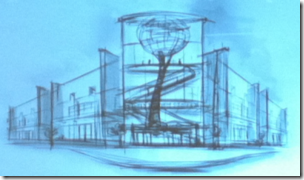
The Family History Library todayThe FHL as it might someday look
How the Family History Library might look as a Family Discovery Center

“We’re still preserving what we do well at, and that’s giving you access to records and expertise. We still know that that’s vital,” said White. “But how can we get more people involved?”   

The Family Discovery Center mission statement is, “The Family Discovery Center offers individuals and families simple yet powerful in-person experiences to discover their heritage and have their hearts turned to their ancestors.”

FamilySearch learned from the Museum of Tolerance that such a center has several key aspects. It has to be sensory. It has to be emotional, having humorous or touching stories about real people. It needs to be personal—let you learn about yourself through your ancestors. It needs to be motivational; the experience must invite you to take action.

They’ve been testing prototypes in focus groups finding out what works and what people want. They have held focus groups in New York, Seattle, Salt Lake City, and several international locations. “Now we’re getting to the point that, well, now we’ve got to go build one,” he said.

FamilySearch picked a meeting house of the Church of Jesus Christ of Latter-day Saints (LDS) next to the Seattle Temple in Bellevue, Washington. The building already has available space and they wanted to test in a meeting house. They also wanted to test in a smaller location outside Utah.

White showed us a floor plan of the center. Then he did a virtual walk-through, stopping at each station. For each station he explained the experience and showed a video demonstrating the technologies that could be employed.

Floor plan of the Seattle Family Discovery Center

A patron’s virtual guide through the center might be an app on a tablet device that ties directly into their FamilySearch account. “As they’re going through the experience, they’re finding things they like,” said White. “They’re recording things they enjoyed. It’s [being] preserving into a book about them and about their story that they can continue to work on the next time they come, or at home through the website.”

You’ll bring this device to each of the stations. Not only will it record your experiences, it will help drive and personalize them.

“One of the things we’re excited about we’re calling the ‘community wall,’” said White. The wall, a large touchscreen monitor, would have different content for each center, reflecting the locale, its history, and the activities of previous patrons. Patrons can share, even after returning home, photos, recipes, and so forth. You can interact using the touch screen or the tablet. “We want people in the area to share things. It’s their wall.”

There is a station they call the “story center for children.” It’s an interactive pop-up 3-D storybook. The book sits in front of a computer monitor and there’s a camera above you that watches you and the book. Everything you do in the book affects what is shown on the screen. White showed a cool video illustrating the technology, but I can’t find a copy. Here is a video that illustrates the same technology. (It is called augmented reality.)

There would be a bank of monitors where you would be able to learn things about yourself: “Tell me about my name. Tell me about the year I was born. How common is my surname? Where is it predominantly located? What countries?” For those who have already entered some of their tree into FamilySearch, FamilySearch will look at it and tell them things. “Did you know you have ancestors from Seattle?” Or, “Did you know these types of things about your surname?” If they don’t have anything in their tree, this is also where they could start to fill out their pedigree as part of the experience. “Tell us a little bit about yourself, your mother, your father.”

What if you could dress up like any of your ancestors and take your picture anywhere in the world? We jokingly call this station, “Take Your Ancestor on Vacation.”

One room is called “the Time Machine.” It is like the holodeck of Star Trek. (The technology goes by various names, such as immersive environment.) It uses projectors to project on the ceiling, walls, floors, and white objects in the room. They hope to be able to take people to places, such as an old blacksmith shop to learn what it was like to be a blacksmith in the 1850s, or how did one location change from 1830 to 1880 and so on. You could move about by touching a panel. It could recommend things to you based on your pedigree. I found the video he showed us showing what a 3-D room looks like.

There will also be “Story Booths,” the oral history studios I mentioned the other day. “We’re really excited about families being able to come in and talk with one another,” he said. “Perhaps one time it is your son’s day. So you bring in Bobby and everyone sits down together as a family and they all share stories about Bobby. And now that [recording] is Bobby’s.”

“We’re giving you a lot of fun things to do, but we also want to integrate into the entire experience, that as they do things, they start to learn in a very subtle way some research methodologies. ‘How do we get this information?’ ‘All that comes from records.’ They start to see that records help tell these stories. “That’s what we gently push to them as they get ready to do some searching on their own ancestors,” he said.

There is still the area of the center where people can sit down and research on the computers. “Now they’re coming in again, engaging with records, adding them to their tree, and learning more about their ancestors and themselves, and wanting to continue to share and preserve this story when they go home.”

The tree is the climax of the Family Discovery Center experienceThe climax area is a tree. Here families and individuals who have gone through the experience can come and dock their iPads and look at everything they’ve experienced on a grand scale, on the ceiling and on the tree, where they can move things around and display their pedigree as they like.

“This is your sneak peak into the Discovery Center in Seattle, Washington. And we’re going to continue to prototype and test, but our next real big thing is, we’re going to go and build this and see what we can learn from it as we look to build more of these and create a much more immersive experience.”

Wow! That was a bright flash of light! Now what was I saying? Oh, right. Merrill, Project Chocolate Cake (wink, wink) “tastes” great.

Tuesday, August 20, 2013

New Family History Library Concepts, Director

Diane L. Loosle is the new director of the Salt Lake City Family History LibraryThe Salt Lake City Family History Library has a new director and new concepts are coming for the library and FamilySearch family history centers.

These were two of the topics covered in the FamilySearch blogger dinner and briefing held Tuesday night before the start of the Federation of Genealogical Societies (FGS) 2013 annual conference.

Diane C. Loosle is the new director of the Family History Library. “Not only is she the first female director of the library, she is one of the most qualified and capable to ever serve in this position,” said Don Anderson, FamilySearch Senior Vice President.

Loosle says one of her top priorities is to take the Family History Library and its 4,700 family history centers and make them discovery centers for people of all ages. “We need to offer fun experiences and activities for the entire family that will increase love, appreciation, and understanding of their ancestors,” said Loosle.

“The Family History Library and our centers…will be more youth and family oriented,” she said. “They’ll be multimedia rich and interactive and try and introduce people to family history and discovering their story in a really fun and engaging way.”

Paul Nauta, FamilySearch public affairs manager, said we’ll hear FamilySearch talking about “heart turning experiences.”

Example floor plan of a Family History Discovery CenterNauta showed an example floor plan for a “Family History Discovery Center.”

“We will, in the next 12 months, launch probably three if not five of these very interactive discovery centers,” he said. “We can’t tell you where. Stay tuned.” (As I recall, those who attended the BYU conference heard Dennis Brimhall mention two possible locations.)

One feature of discovery centers is an oral history studio, according to Nauta. Patrons reserve the studio for one hour to interview a relative or recite their own history. They pay $8, which covers the price of the flash drive they receive with the recorded interview. FamilySearch does not keep a copy of the interview, but provides the capability as a service. They are working on site features that would allow future interviews to be saved onto the FamilySearch website.

Three oral history studios are already in operation. According to the FamilySearch wiki, one is in San Diego, one is in Riverton, Utah, and one is in Logan, Utah.

Another new service of family history centers will be photo scanning, said Nauta. Agreements have already been made with equipment providers to supply scanners. The scanners will digitize a stack of differently-sized photos and upload them to your FamilySearch account. You can then go back, tag the people, and attach them to Family Tree.

“You can’t attract a younger audience and offer the same experiences,” said Loosle.

Diane Loosle is a 19-year veteran of FamilySearch. She began her career as a research consultant, then led patron services initiatives, the development of the FamilySearch Wiki, and free training content on FamilySearch.org. She is an accredited genealogist and holds an MBA.

According to Nauta, more information about discovery centers will be given later in the week in a presentation by Merrill White. You can bet I’ll be there to cover the presentation for you. Stay tuned.

Wednesday, July 31, 2013

Not Just a Chart, But a Heart

Dennis Brimhall, president of FamilySearch, International“We may rattle your bones a little bit, those of you who are family history consultants,” said Dennis Brimhall. Brimhall was the Wednesday keynote speaker at the 2013 Brigham Young University Conference on Family History and Genealogy.

Brimhall is the managing director of the Family History Department of the Church of Jesus Christ of Latter-day Saints and CEO and president of FamilySearch, International. He also serves as an Area Seventy for the Church. Prior to coming to FamilySearch he spent his career in hospital administration. He explained that the Family History Department and FamilySearch, International are the same thing. His business card is a Church business card on one side and a FamilySearch business card on the other.

“To those of you who come from other faiths,” said Brimhall, “we recognize that you’re in a different culture here.” Indeed, much of Brimhall’s presentation was addressed to Church members or the Church’s family history consultants. (There are 70,000 of them worldwide.)

“We’re here to help people turn their hearts,” Brimhall said. We’ve not been successful in turning hearts of as many people as we need to be, he said.

“We have to start them with the heart and they’ll get to the chart later on,” he said. Too often we started them with the chart and lost them before turning their heart.

We’ve done some remarkable things, said Brimhall. FamilySearch has 4,700 family history centers in 129 countries. They’ve published 2.9 billion searchable names and are adding 1.7 million daily. They have 237 camera teams worldwide and hope to grow that to 500 by the end of next year. (They are looking for missionary volunteers who would like to spend some time doing this.) They are digitizing the microfilm in the vault and think they’ll be done in five to seven years.

“If you think of all of that, the question comes on occasion, ‘How well are we doing?’” said Brimhall. “How many Church members are using it if they are paying for it?” While 25% of adult Church members have registered, only 8% have returned to FamilySearch.org in the past 12 months.

Brimhall quoted a saying, “Every organization is perfectly designed to get the results it gets.If we keep doing what we have been doing, we'll keep getting what we've always gotten… The definition of lunacy is to keep doing what you've always done and expect different results.” (He seems to have been quoting Paul Batalden of the Dartmouth Medical School.) He said we will not improve over the 8% unless we change what we’re doing.

Brimhall related several changes that FamilySearch is making.

A significant portion of Church members do not have access to computers. Just as members don’t need to have a computer to pay their tithing, so also members should not need a computer to gather information about their ancestors. FamilySearch has developed a “wonderful little booklet” (the same mentioned by Elder Packer yesterday) that will be available in 22 languages by the end of August. It starts by soliciting stories. This lets people get engaged without a computer. You can then take the booklet to a family history consultant who can put it into FamilySearch.org for you.

“We’re well on our way and it will be distributed primarily in countries outside the U.S. where computers are not available,” said Brimhall.

The next change is to family history centers and libraries. “We want to change the library from a computer lab to where the first thing you do—not for the seasoned users who go right to the computers—they can have a discovering experience where they can discover themselves,” said Brimhall. Let them learn about themselves and then get them to build their family history. The transitioning of family history centers will occur over time.

Another change is to rethink what a family history consultant is. “The consultant of the future may be different than the consultant of the past,” he said. He showed us a video clip featuring Julene Davidson, a 17 year old family history consultant in New Mexico. Before showing the clip he asked us to see how Davidson defined her role. (Watch the clip below.)


(To watch the video on the LDS Church website, click this link. Underneath the video window, click on the video titled “Discovery Through Stories.”)

Davidson felt her job was to get people excited about family history, said Brimhall. The research and the learning and the charts follow. Consultants must retrain themselves on how they can get people excited in addition to helping them with names, dates, and places.

FamilySearch has changed the FamilySearch.org website to make it more engaging to new people. Brimhall joked that we, genealogists, would come and use the website no matter what. The design is to attract those who haven’t visited before. The new features have been very successful. Family Tree contains 950 million names and 41,686 new names are added daily. Names added by the general public (as opposed to Church members) account for 27%. Users have contributed over 700,000 photographs and 5,000 more are added daily. There are over 60,000 stories and 500 are added each day.

Photographs and stories are a great way to engage family members and can be shared via email or other social media. “Kids are incapable of not clicking a link,” he joked. I could never get them through the front door [to the website], but I can get them through the side door, he said. Then we’ll move them from there to doing research.

Another change is to make family history a bigger part of Church culture. FamilySearch has found that wards who implement any five of seven key actions will double the number of members participating. They are:

  • Leaders Guide a core part of the ward plan
  • Youth called as family history consultants
  • At least three family history consultants
  • Youth provide 50% of names they take to the temple
  • Consultants assigned to assist members
  • Consultants assigned to assist new converts
  • Consultants meet regularly with priesthood leaders

Another change is partnerships. FamilySearch knows it can’t do it all. We have started efforts to make all our records available on other sites and all their records available on our, said Brimhall.

In closing Brimhall said that “we have learned that we need to champion the things that affect the heart in addition to those that affect the chart.”

Monday, November 12, 2012

Free Census Guide

imageAncestry.com recently ran a promotion billing itself as the “Home of the U.S. Census, 1790-1940.” (See http://www.ancestry.com/census.) What do you think? Are they?

Along with this promotion Ancestry is offering a free seven page PDF census guide, “Follow Your Family Using Census Records.” I think the offer was to subscribers only, as it presupposes access to Ancestry.com, but I think anyone can click the link and get the booklet.

The 1940 census is free for (I can’t remember how long) on Ancestry.com, although you’ll need to sign up for a free account. Ancestry.com indexes and images can be used for free at many libraries and at FamilySearch family history centers (FHCs).

All the census indexes are available for free on FamilySearch.org, with or without a free account. Images are another story. According to the FamilySearch.org website, images to U.S. censuses are available as indicated below.

Census Via link to a subscription Website At a FHC To members of a supporting organization* Free to everyone
United States Census, 1790 Ancestry.com X X  
United States Census, 1800 Ancestry.com X X  
United States Census, 1810 Ancestry.com X X  
United States Census, 1820 Ancestry.com X X  
United States Census, 1830 Ancestry.com X X  
United States Census, 1840 Ancestry.com X X  
United States Census, 1850       X
United States Census, 1860 Fold3.com      
United States Census, 1870       X
United States Census, 1880 Ancestry.com X X  
United States Census, 1890 Ancestry.com X X  
United States Census, 1900       X
United States Census, 1910 Ancestry.com X X  
United States Census, 1920 Ancestry.com X X  
United States Census, 1930 Ancestry.com X X  
United States Census, 1940       X

I have got to say I don’t understand. All the images were produced by FamilySearch. FamilySearch has the most awesome census indexing volunteers in all the world who could have chunked out free indexes to all the pre-1900 censuses in just a few months. (Actually, they did. They did the A key and the arbitration. Ancestry provided the B key.) Yet FamilySearch users can’t freely see many of FamilySearch’s own images.

Yup. Ancestry.com really is “Home of the U.S. Census.”


* FamilySearch is fully supported by the Church of Jesus Christ of Latter-day Saints.

Tuesday, August 23, 2011

Beyond the Walls of Your FHC

“We should not confine ourselves to the brick and mortar walls of our family history center,” said Art Johnson in his session at the 2011 BYU Family History Conference. Family history center staff members and family history consults should reach out to enrich the world. Johnson manages FamilySearch support. (That’s 1-866-406-1830 and support@familysearch.org, if you were wondering.)

FamilySearch is doing their part to reach out.

“The idea is to provide to the community help where they want it,” said Johnson. With so many people on Facebook and other social websites, it is natural to have a presence on each.

Facebook

Illinois Genealogy FamilySearch Research Community New York Genealogy FamilySearch Research Community

FamilySearch is reaching out on Facebook where they’ve currently established research communities for nine states

and 6 countries

Research community pages join existing Facebook pages:

While FamilySearch is creating Facebook pages, family history centers (FHCs) are encouraged to create pages in the FamilySearch Wiki rather than establishing their own Facebook presence.

Skype

FamilySearch is also reaching out on Skype, where they’ve created a number of Skype chats for genealogical research.

Join a FamilySearch sponsored Skype genealogy research community

Johnson said that FamilySearch doesn’t make it a policy to run the communities, but to enable their existence.

I’m not familiar with Skype but it appears there is no way to search for group chats. Apparently, you must contact a creator or host who adds you to the group. Instructions on joining one of the FamilySearch Skype chats are found in the FamilySearch Wiki article, “Join a Skype Research Community.”

Twitter

FamilySearch is also reaching out via Twitter, where it posts news items using the username @FS_News.

FamilySearch is on Twitter

YouTube

FamilySearch recently announced a newly redeveloped YouTube channel.

FamilySearch YouTube channel

And You

Staff members at smaller family history centers often find themselves with no patrons to help. Johnson encouraged family history consults to reach out and help via these social networking websites as well as FamilySearch’s own Forums and Wiki.

There is a mistaken idea that we as centers, as consultants, are not supposed to interact with societies. Not true! We have different purposes but we can help one another.

“Take an opportunity to turn your work inside out,” said Johnson. “Become more extraverted in helping others.”