Thursday, February 12, 2015

#RootsTech and #FGS2015 Opening Session (#RTATEAM)

Computer crashed.

Backup malfunctioned.

All my notes gone.

You’re stuck with some general impressions—and lots of screen captures.

Welcome to RootsTech

This is RootsTech. I do remember that, despite my bad memory and despite the loss of my notes.
Who Inspires You? RootsTech 2015 videoThe session started with a video titled “Who Inspires You?” Watch it yourself on YouTube.
Celebrating Families Across GenerationsThe theme this year is “Celebrating Families Across Generations.”
Preserve the PensionsJosh Taylor, president of the Federation of Genealogical Societies took a quick minute. He was accompanied by his costars of The Genealogy Roadshow, Mary Tedesco, and Kenyatta Berry. They gave a progress report on the Preserve the Pensions project. If you aren’t aware of this project, you should be.
Mary Tedesco, Josh Taylor, and Kenyatta Berry at FGS/RootsTech

Taylor’s comments mirrored the introduction on the project website:

The Pension Records from the War of 1812 are among the most requested documents at the National Archives. Unfortunately, these fragile documents are in urgent need of digitization. In support of this monumental task of digitizing 7.2 million pages, Ancestry.com has provided a dollar for dollar matching grant, so every dollar you contribute will make four more pages accessible and free for everyone.

He reported that they have broken the 50% milestone! Visit the Preserve the Pensions website to donate.

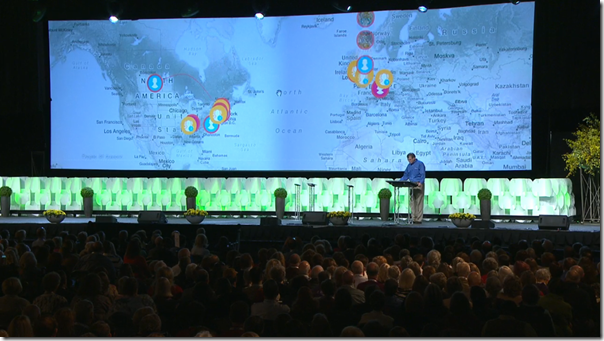
Dennis Brimhall shows map of RootsTech affiliated family history fairsFamilySearch CEO, Dennis Brimhall gave the first of three keynote addresses. He announced that as of this morning the number of RootsTech registrations was 21,927. All states are represented this year except for West Virginia. Every year there has been one missing, but it has never been the same. The number of vendors in the exhibit hall is up to 170. After the conference, RootsTech-associated family history fairs are held around the world. Last year, 1,183 such events were held. Below is a photo of a fair held in Nigeria.
RootsTech affiliated family history fair in Nigeria

Sonia Meza Morales with Captain Jack StarlingDennis gave a report on the FamilySearch initiative to index obituaries. Last year, Captain Jack Starling joined him onstage to introduced the initiative. This year Dennis reported that volunteers had indexed 100 million names. He said that Captain Starling would be proud. There were 319,000 indexers. On average, they indexed 1.3 million names every day.

Dennis said that FamilySearch is working with partners to digitize, index, and publish new record collections. These collaborations produce more records, more quickly. FamilySearch is currently partnering with Ancestry.com on the following projects. (Thanks, Randy, for the list.)

  • Canadian census records (pre-1911)
  • U.S. probate records
  • U.S. homesteader records
  • Northampton parish records
  • New York State Archives records
  • Virginia vital records
  • WWII draft records
  • 80 million Mexican vital records

With FindMyPast, FamilySearch is doing

  • English parish records
  • U.K. airmen service records
  • U.S. passenger lists
  • U.S. Revolutionary War pension files
  • U.S. Civil War pension indexes
  • Irish Poverty Relief Fund records

MyHeritage and FamilySearch are partnering on

  • U.K. census records
  • Finnish confirmation records
  • Swedish household names
  • Dutch records
  • U.S. passenger lists

Dennis announced two new partners: the New England Historic Genealogical Society (NEHGS) and family.me.

He next demonstrated the new Discovery Center experience, which he called, the “Museum of Me.”

The Museum of Me

Because I’ve already written about the Salt Lake Discovery Center, I’ll relate Dennis’s experience through pictures.

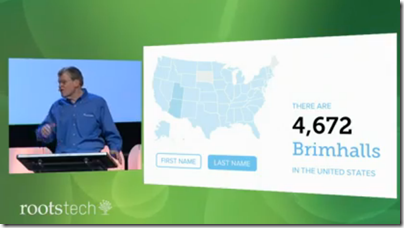
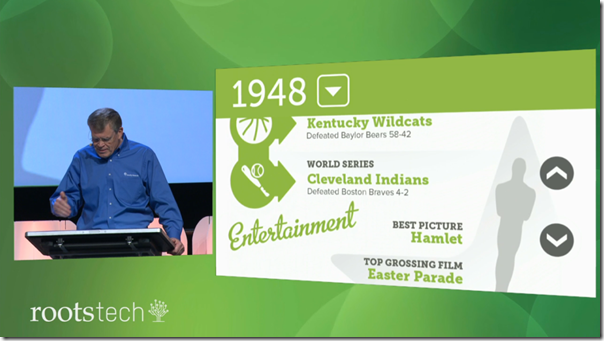
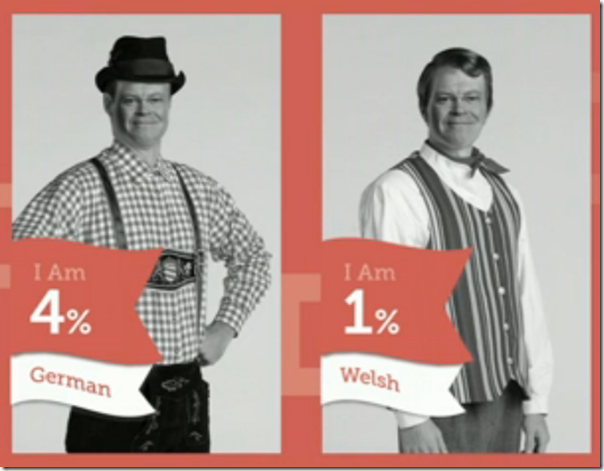
 Dennis Brimhall visits a Discovery Center where he takes a selfie Dennis Brimhall visits a Discovery Center where he takes a second selfie Dennis Brimhall visits a Discovery Center where he learns the meaning of his name Dennis Brimhall visits a Discovery Center where he learns the meaning of his name Dennis Brimhall visits a Discovery Center and sees the distribution of his name Dennis Brimhall visits a Discovery Center and sees the distribution of his name Dennis Brimhall visits a Discovery Center and learns interesting facts about his birth year Dennis Brimhall visits a Discovery Center and learns interesting facts about his birth year Dennis Brimhall demonstrates a visit to a Discovery Center at RootsTech Dennis Brimhall visits a Discovery Center and finds a picture of his Father's Purple Heart medal Dennis Brimhall visits a Discovery Center and learns his national origins Dennis Brimhall visits a Discovery Center and learns his national origins Dennis Brimhall visits a Discovery Center and, just for fun, dresses up like a Roman soldier

That is the “Museum of Me.” Well, actually, it’s the museum of Dennis Brimhall. To build your own museum, bring your family to the Salt Lake Discovery Center. (To make an appointment, visit https://familysearch.org/discoverycenter.) FamilySearch will open a discovery center in Philadelphia. They are looking for a place in London. And they will soon open a small center in Seattle.

Whew. I bet you’re glad I lost me notes. How much longer could that have been? Well, the loss of my notes actually will affect the rest of my report.

Introducing Instant Discoveries by MyHeritageDennis was followed by Mike Mallin, chief product officer for MyHeritage. During his presentation, Dennis had shared a video commercial produced by MyHeritage. (See “Introducing Instant Discoveries™ by MyHeritage” on YouTube.)

Tan Le was the final keynote at RootsTech's opening sessionThe final keynote of the opening session was Tan Le. She told a story of hardship, heartbreak, fortitude, survival, and triumph. She escaped Vietnam with her mother as a small girl. Her earliest memory was the stark and frightening escape on a boat. The boat became a metaphor of strength acquired through adversity and perseverance.

Watch the video when it is posted on RootsTech.org.

That’s it for the first keynote. See you tomorrow.

GEDCOM Replacement is Here (#RootsTech #RTATEAM)

GEDCOM XAt RootsTech two years ago, Ryan Heaton of FamilySearch talked about a GEDCOM replacement: GEDCOM X. (See “Ryan Heaton: A New GEDCOM.”) Today, GEDCOM X is a reality. Heaton’s presentation this year was titled “The Ecosystem of Genealogical Data Exchange.” I believe they recorded it; you’ll probably be able to view it yourself at some point. A warning is warranted, however. This was an Innovator’s Summit session. The target audience for the presentation was software engineers.

Heaton spoke of a genealogical ecosystem of information exchange. Family Group Sheets and other forms imposed structure on the exchange of genealogical data. Computer programs enforced it. Now we use the Internet and data types are tightly defined.

The elements of a genealogical data ecosystem are

  • records
  • persons
  • relationships
  • sources
  • citations
  • analyses (How did I make this inference? What makes me believe this information is true?)
  • Research (For example, what are the to do items in my research plan?)

The actors are

  • Systems
  • Users

He talked about information flow between users and systems. By user he meant a desktop genealogy tree management program like Ancestral Quest, Legacy, or RootsMagic. By system he meant an online tree manager. The information flow can be from:

  • User to user. This exchange has been done with GEDCOM or proprietary file formats of the desktop genealogy tree managers. Users can generally import the proprietary data files of competitive tree managers, but generally can’t export in competitors’ formats. There can also be data loss. There is limited exchange capability of citation metadata; elements or formatting are often lost. Internationalization of character sets are sometimes mishandled.
  • System to/from user. This is done with publicly facing interfaces (APIs).
  • System to system. This is usually done using bulk exchange formats.

User-to-User

There are reasons inhibiting user-to-user exchange. There is no specification commonly used by desktop tree managers to exchange citation metadata. Tree management software vendors lack incentive to make it easy for you to move to their competitors. This includes FamilySearch, who doesn’t necessarily want you to download all your data in one step.

System-to-user

Many desktop managers have the capability to exchange data with online tree systems. The desktop managers use APIs that allow desktop programs to talk to online tree managers like FamilySearch’s Family Tree, and MyHeritage’s tree.

The FamilySearch API conforms to GEDCOM X. A significant number of partners are using GEDCOM X to talk with the FamilySearch Family Tree. (I think his point here is that desktop tree managers know the API and could use it to exchange with each other if they chose to.)

System-to-system

Companies sometimes strike business deals to share their data. A non-genealogical example is Open Archives. OAI-PHM and A2A. FamilySearch has also done bulk data exchanges with Ancestry.com, MyHeritage, and findmypast. FamilySearch gives them a big atom feed that transfers GEDCOM X data sets.

What inhibits genealogical dataflow?

  • Security
  • Budget constraints
  • Data loss
  • Feature mismatches
  • Lack of well-established specifications
  • User reluctance to share
  • Programmer awareness

Heaton ran out of time before he could talk about GEDCOM X directly. But I think his message was that GEDCOM X is here. It is alive. If vendors use it to exchange data with FamilySearch, but not with each other.

Wednesday, February 11, 2015

Inside Look at Ancestry.com’s Product Development (#RootsTech #RTATEAM)

image
Chris Bradford

Josh Penrod
Josh Penrod

Kendall Hulet
Kendall Hulet
Ancestry.com presented a session at RootsTech Innovator’s Summit titled “Inside look at Ancestry.com’s Innovation and Product Development.” Three members of Ancestry.com’s management team made the presentation: Chris Bradford, vice president of product engineering, Kendall Hulet, vice president of product management for AncestryDNA, and Josh Penrod, senior director of user experience. The presentation was geared to Innovator Summit attendees: software engineers and entrepreneurs. “We wanted to talk about how we innovate and how we do product development at ancestry,” said Hulet.

Hulet noticed that experienced users came to Ancestry.com day after day and reentered the same searches time after time. Plus, they wouldn’t enter enough information for Ancestry.com’s search engine to find many of the matching records. At the same time, Penrod noticed that new users came to Ancestry.com and typed in their own names, then left when they found nothing.

Commiserating together, they wondered how to solve these problems. Then they had an idea. Respond to visitor’s natural instinct to enter their own name by having them build their own tree. If they allowed users to create a user tree, they would work past themselves, and they would provide enough data about ancestor to do a good search. That’s how we came up with the idea of member trees and shaky leaves, said Hulet.

They now have

  • 60 million trees created
  • 7 billion profiles created
  • 5 billion hints accepted
  • 3 billion records attached

The three presenters emphasized that there needs to be a common vision among their three teams: engineering, product management, and UX (user interface) design. “If you only remember one thing from this presentation, getting to a shared vision is the most important thing.” The shared vision needs to include what they are solving and who they are solving it for, said Hulet.

To better communicate who they are solving it for, the team creates personas—market types—that describe the archetypical customer. They give the persona a name so they feel a greater connection to that customer segment. An audience member asked if they could share more. They declined; they felt that information confidential. But I’ve seen this done enough times, let me sketch one out:

Nelly Newcomer is a forty-something married female. She’s well educated and has a career. She has expendable income, but little free time. Her parents are both alive, but aging. She has one sibling and no children. She’s not the scrapbooking type, but enjoys looking through old photo albums with her parents and reminiscing. She’s seen part of an episode of Who Do You Think You Are and was intrigued with the idea of learning more about her ancestors.

It takes a lot of interaction with customers to understand their needs. You have to get your product ideas out in front of your customers. Ancestry.com product managers have been known to get in line at Starbucks, strike up a conversation with the person next to them, and offer to buy their coffee if they will sit down and review an idea. (They said in Salt Lake City they might frequent cookie shops instead of Starbucks. That’s not to say we don’t have them in Utah. I walked two blocks to McDonalds this morning and passed three Starbucks. I heard Jay Leno say once that Starbucks was proliferating so much, they had started putting Starbucks in the parking lots of other Starbucks. But I digress…)

The rest of the presentation consisted of different ways and products that Ancestry.com uses to watch and learn from their customers. They fly all over the place. They use software to remotely watch the computer screens of website users. They have popups that ask users if they would be willing to participate in some testing. If they are willing, the survey gathers some demographic information that Ancestry.com can use in the future to determine who to contact.

They have “listening labs” without prescribed agendas. A notice on the site invites a user to participate. If willing, Ancestry.com calls them immediately and asks them what they’re hoping to do on the site that day. Then Ancestry.com just watches them work, perhaps asking a question now and then. “We do these every Friday,” Penrod said. Sometimes the CEO sits in. If he sees an obvious problem, you know you’re going to get a “we should fix that” assignment. These sessions are also great bonding exercises for teams when the team watches together and sees failures in the features they are responsible for.

In the question and answer segment, someone asked that if Ancestry.com was so interested in learning from their customers, why wasn’t there a feedback link somewhere on their site. They explained that Ancestry.com has millions of customer interactions and that if they had a feedback link, they would not be able to review all the submissions. It’s a bad idea to ask for input and that you don’t actually read.

They admitted that they don’t always get it right. But from all they said, it is apparent that they try.

Ancestry.com Releases 2015 Product Plan at #FGS2015/#RootsTech

imageWednesday afternoon I received the following press release about Ancestry.com’s 2015 product and publication plans.


Ancestry Announces 2015 Product and Content Lineup

Industry Leader Talks Innovation and New Collections At Annual RootsTech Conference

(PROVO, Utah) – February 11, 2015 – Ancestry, the world's leading family history service, is ushering in the next generation of family history, with the debut of an updated story centric website, groundbreaking advancements in AncestryDNA that will revolutionize how people discover their ancestors, and the anticipated addition of nearly 1 billion new records to the largest collection of historical records online in 2015.

“We’re incredibly excited about all the amazing things we have in store for our members this year,” said Tim Sullivan, CEO of Ancestry. “In 2015, we’ll be launching some of the most innovative new features and services in our company’s history. We think these additions are going to make Ancestry an even more powerful resource for our existing users, while also making family history easier, more accessible, and more fun for those just getting started. We’re also proud of our commitment to continue investing in new content. Our 2015 content roadmap will be anchored by our expected fall release of more than 170 million Probate and Wills images, one of the most exciting, engaging, and interesting content collections we’ve ever published.”

Over the next year, Ancestry will introduce breakthrough features and compelling content – made possible by powerful advancements in science and technology – that will give you an easier, richer and more engaging way to discover and tell your family story, and make your family history journey easy and engaging, through a highly customized, relevant and historically rich experience rooted in discovery and storytelling.

Major Product Developments

  • A new and improved Ancestry website will make it easier for anyone to discover and tell the rich, unique story of their family, through new features and site enhancements that will reinvent the ways Ancestry members create and showcase their family story. The new site experience is currently in limited Beta and will be demonstrated at RootsTech On Friday, Feb. 13 at 1:00 pm MT (Room 151) as well as at the Ancestry booth. Visitors to the Ancestry booth will be able to opt in to participate in the Beta.
  • Ancestry mobile will introduce a full search feature in the iOS app that will empower users to access 15 billion historical records and hints anytime, anywhere in the native app environment. The intuitive interface will make both simple and advanced searches easier, while the presentation of search results will also help you quickly identify and prioritize the most important results, making search less complicated.  The Ancestry mobile team will showcase version 1 search in the Ancestry booth and discuss search and other mobile features in length during an FGS class, “Ancestry’s Mobile World,” on Saturday, Feb. 14 at 1:00 pm MT.
  • Ancestry will also remain committed to providing the best in educational resources with the launch of Ancestry Academy in April. The new resource will offer how-to tutorials and historical guidance to help experts and novices alike. Released as a limited Beta this week, Ancestry Academy will be showcased via demo in the Exhibit Hall on Friday, Feb 13 at 3 pm MT. Those interested in participating in this Beta should stop by the Ancestry booth for more information.

Continued Growth for AncestryDNA

  • With a database of over 700,000 genotyped members, AncestryDNA has generated over one billion cousin connections to date. In 2015, we project this database to grow to exceed well over one million genotyped members, resulting in even more and higher quality cousin matches.
  • Following the successful launch of AncestryDNA in the UK, we will soon be bringing the service to our members in Australia and Canada, and in doing so, will connect the major English-speaking migrations and globally connect families like never before.
  • Building on DNA Circles, in 2015 we will launch a new experience that will use the latest genetic technology to discover new ancestors without the customer having to search records or build a family tree.  This new feature will transform how family history research is done by providing valuable hints to help experienced genealogist looking to break through brick walls, as well as open family history to a whole new segment of the population. Through this new experience, AncestryDNA customers will be able to discover new ancestors as far back as the 1700’s by connecting into existing DNA Circles.

Ancestry Around the World

  • Last winter, Ancestry expanded the availability of Archives.com to users in the UK, and just last month in Australia and Canada.
  • Later this year, Ancestry will announce resources for users in Germany and Mexico. With more than 58 million Americans claiming sole or partial German heritage* and an estimated 34 million residents of Mexican origin** the new sites will give nearly 100 million people in the US alone, the ability to learn more about their family’s story.

New Record Collections

  • This fall Ancestry will release more than 170 million name-searchable images of million Probate and Wills records. The most comprehensive collections of its kind, these records will provide access to almost all wills probated in the United States from the mid 19th century to 2000– an unprecedented treasure trove of information to better inform familial narratives.
  • This spring, Ancestry will release the comprehensive service records collection for the Australian Imperial Forces – the main expeditionary force of the Australian Army during World War 1. Made available in time for Australia’s 100-year commemoration of its entrance into the war, the historical records will help honor the brave men and women that served.
  • Also in 2015, Ancestry will make available in the UK, a variety of content collections including WWI War Diaries, Parish Baptism Marriage and Burial Registers, and a collection of Francis Frith historic photos gathered from over 7,000 individual cities, towns, and villages across the UK from 1860-1960.

Professional Research, Award Winning Television and You

  • With more than 150 years of combined research experience, Ancestry’s professional research group, AncestryProGenealogists, has helped people trace their family trees and connect with the past for more than 15 years. The team has grown to become the largest service of its kind, supporting research for the Emmy Nominated Show “Who Do You Think You Are?.” AncestryProGenealogists will continue to grow and help solve family mysteries, break down brick walls, and discover the stories that tell you who you are and where you came from.
  • Ancestry will also continue showcasing family history around the world, through shows like Who Do You Think You Are?, Genealogy Roadshow, Finding Your Roots, and Long Lost Family.

“Your family story is a universe that is always expanding,” said Sullivan. “With new products and even more records, Ancestry will provide the most unique, personable, and engaging family history experience on the planet.”

To learn more about how Ancestry is transforming family history, visit the Ancestry booth at the RootsTech Conference in Salt Lake City, Utah from February 11-14, 2015.

###

* 1990 U.S. Census
** Pew Research Center 2013

About Ancestry.com

Ancestry.com is the world's largest online family history resource with more than 2 million paying subscribers across all its websites. More than 15 billion records have been added, and users have created more than 60 million family trees to the core Ancestry websites, including its flagship site www.ancestry.com and its affiliated international websites. Ancestry.com offers a suite of online family history brands, including Archives.com, Fold3.com, Newspapers.com, as well as the AncestryDNA product, sold by its subsidiary, Ancestry.com DNA, LLC, all of which along with its core Ancestry websites, are all designed to empower people to discover, preserve and share their family history.

Forward-Looking Statements

This press release contains forward-looking statements. Forward-looking statements involve a number of risks and uncertainties that could cause actual results to differ materially from those anticipated by these forward-looking statements. Such risks and uncertainties include a variety of factors, some of which are beyond the company’s control. In particular, such risks and uncertainties include the company's ability to add tools and features and provide value to satisfy customer demand and its ability to acquire content and make it available online. Information concerning additional factors that could cause events or results to differ materially is contained under the caption “Risk Factors” in the Quarterly Report on Form 10-Q for Ancestry.com LLC for the period ended September 30, 2014, which was filed with the Securities and Exchange Commission on November 3, 2014, and in discussions in other of the company’s Securities and Exchange Commission filings. These forward-looking statements should not be relied upon as representing our views as of any subsequent date and we assume no obligation to publicly update or revise these forward-looking statements.

Contact


Matt Deighton
(801) 705-7834
mdeighton@ancestry.com


Speaking of Ancestry.com’s product plans, it’s public knowledge now, so I can share that Ancestry.com just lost their chief product officer, Eric Shoup. Eric has moved on after being with Ancestry.com for over six years. I admired him a lot. He will be missed.

Ancestry.com’s Scott Sorensen Addresses #InnovatorSummit @ #RootsTech (#RTATEAM)

“It’s a really exciting time to be in the family history business,” said Scott Sorensen at the opening keynote of the RootsTech Innovator’s Summit. “We’re all working on a piece of the same puzzle,” he said. “It’s the same with technology.” Sorensen is the chief technology officer (CTO) at Ancestry.com where he directs 400 engineers. He gave a short presentation prior to the main speaker.

He’s been at Ancestry.com for 13 years. In that time, he’s seen a lot of changes. That’s back when the website looked like this:

The appearance of Ancestry.com in 2002

Sorensen talked about three technologies.

1. Mobile platforms. Sorensen said when he started at Ancestry.com he owned a flip phone. Today, with smart phones and family history apps he can do his family history anywhere. A lot of family history opportunities are location-specific. When at your aunt’s house, you want to access your genealogy and capture documents she has.

2. Handwriting recognition. When Sorensen started at Ancestry.com, speech recognition was where handwriting recognition is now. Last summer Ancestry.com sponsored a competition at the 13th International Conference on Document Analysis and Recognition. (See “Competition as Collaboration – Ancestry.com Handwriting Recognition Competition .”) They are hoping to do it again this year.

Handwritten document sample provided to contestents

Basic algorithms are working, but the developers are working out edge cases.

3. DNA Science. When Sorensen started at Ancestry.com, it cost a couple of million dollars to sequence a person’s complete genome. (Wow! Did I write that down right? I’m pretty sure I did.) Today it can be done in less than a thousand dollars.

Ancestry.com is innovating in the DNA space, but that has required deliberate effort. Ancestry.com has grown to have 1,400 employees around the world. Large companies have a hard time innovating like small companies do. They separated the team so they could act like a startup. They were unconstrained. They had lots of early interaction with real customers.

The result is something Ancestry.com calls DNA Circles. DNA Circles find groups of people with common DNA and a common ancestor, as shown by their Ancestry Member Trees. This group is called a DNA Circle. Ancestry.com can then place people that share that same DNA into the circle, even if they don’t have a tree or haven’t previously done any genealogy. This can quickly connect a customer with a wealth of stories, photos, and records.

DNA Circles can quickly connect a prospective genealogy with his ancestors

I’m going to skip reporting on the main speaker to give me more time to write about Ancestry.com and FamilySearch. (Sorry, Nathan.) His presentation was titled “How to Apply the Innovator’s Method to Increase Your Success and Decrease Your Risk.” I think his presentation was based on his book, so if you’re really interested see The Innovator’s Method (Harvard Business Review Press, September 2014).

By the way, the guy who introduced Scott (sorry, I didn’t catch your name) mentioned something interesting: Google Genomics. For more information, see https://cloud.google.com/genomics/.

FamilySearch Opens First Discovery Center at #RootsTech/#FGS2015 (#RTATEAM)

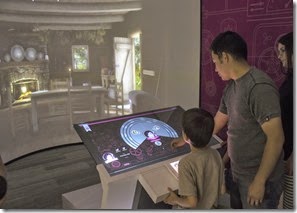
Last night I was treated to an advanced showing of a FamilySearch Discover Center—a new type of family history center. “The Family Discovery Center offers…families simple yet powerful in-person experiences to discover their heritage and have their hearts turned to their ancestors,” said Merrill White. White, a FamilySearch spokesperson, made the remarks at the FGS conference in 2013. (See “Über Cool Family History Center of the Future Shown at FGS 2013.”) This first Discovery Center is a test facility located in a room adjacent to the FamilySearch Center on the first floor of the Joseph Smith Memorial Building. FamilySearch is testing and refining the concept here.

I visited the center with several other social media writers. The hope is that entire families will be their chief audience, although youth groups are welcome, too. Upon arrival, I was given (translate: loaned) an iPad with custom software and magnets for docking at various stations. The experience is designed to be personalized for each visitor. That personalization began with a prompt to login to my FamilySearch account and take a selfie. The iPad remembered as I visited each station, accumulating facts and photos to help me remember my visit.

Several stations have large touchscreen displays next to the docking station. At one station, the screens presented interesting, but generic facts about my given name, my surname, and my birth year.

FamilySearch Discovery Center - Station 2? Discovery Center Name Frequency

Another station tapped into FamilySearch Family Tree to get information about my ancestors. This station was phenomenal. It showed migration patterns, percentages of national origin, photos, and stories. If you have a richly populated tree on Family Tree, this station is fantastic. Navigation was easy, for the most part, although two-hand gestures took me some getting used to. (And the software kept wanting to flip my head upside down. That might have been just me. Non-cartoon characters didn’t seem to have that problem.)

FamilySearch Discovery Center - Ethnicity pie chartFamilySearch Discovery Center
FamilySearch Discovery Center - Migration Map

They called another station “the time machine.” The station projects on image of the inside of a 19th century home onto a large, curved screen. I brought up my fan chart on the large, starship worthy console and clicked on an ancestor. The image animated, showing year-by-year how the room would have looked, until it reached the birth year of my ancestor. (In the photo, below-left, the console obstructs half the screen. Sorry about that. To steady my hands, I had to rest the camera on the console.) I clicked on the photo count for my ancestor and the station projected them onto the big screen.

FamilySearch Discovery Center - Time Machine
FamilySearch Discovery Center - Time Machine 

FamilySearch Discovery Center - Time Machine

This station would be pretty cool if the operation was more intuitive and if it didn’t suffer from an unresponsive interface. It took me five minutes to stumble upon the best way to use the station. And I had a hard time getting it to reliably respond to my touches.

The period-costume photography booth was a hoot. The camera takes a picture of your face and superimposes it on a figure in period/cultural dress. The booth has but three walls, allowing your family to gawk and laugh at you as you put your face onto a gladiator, a Maori warrior, or a mariachi musician.

FamilySearch Discovery Center - Photo in historic costume FamilySearch Discovery Center - Photo in historic costume 
FamilySearch Discovery Center - Photo in historic costume

I didn’t try the personal or family video recording booths.

FamilySearch Discovery Center - Video Recording Booth

At the conclusion of the visit, we docked our iPads in front of a large tree. The station projected our facts and photos onto the tree.

FamilySearch Discovery Center - Photo Tree
(Oops. Paul, Pat, and Gordon: I forgot to ask. May I have permission to publish your photos? :-)

After I returned my iPad, the Discovery Center emailed those same images to my inbox.

Email and attachments from the FamilySearch Discovery Center

I admit I was dubious when discovery centers were announced at FGS two years ago. It sounded really expensive to develop. Some of what they hoped to do didn’t seem feasible. For visitors without a tree, I thought the experience would be lame. I thought about the many museums I’d visited with broken technology. (I gather it is really costly to maintain exhibits based on technical gadgetry. In three or four years, the manufacturer has moved on to new things and you can’t get parts or support. After a few years, the gadgets break down so frequently, museum owners leave them to rot.) And I thought a visit would have little ability to spread the genealogy bug.

I was glad to see survey questions on the iPads, before and after our visit. FamilySearch appears intent on measuring the effect of these discovery centers to see if they are worth the expense. I don’t know if they will, but since a full-experience includes logging into your FamilySearch account, FamilySearch could compare your degree of involvement before and after the visit. They can see if the centers are increasing engagement in family history. I’m glad to see that FamilySearch isn’t rushing into this blindly.

I remember as a little boy, our cub scout pack got up very early and made the long trip to the big city. How the city folk must have gawked at a gaggle of little guys stumbling on and off escalators, having never seen one before in our entire lives! We visited a planetarium. With wonder and awe my eight year old eyes saw scientific gadgets and gizmos. That was a defining moment in my life. It determined my hobbies, my jobs, my merit badges, my school classes, my grades, my major, my degree, and my profession. Big doors swing on little hinges.

I still have my doubts, but I hope FamilySearch can make this work.


FamilySearch is officially announcing the centers at 2:00 pm this afternoon. For more information, visit familysearch.org/discoverycenter. For a two minute promo, see “FamilySearch Discovery Centers - Discover Your Story” on the FamilySearch YouTube channel.

Watch #RootsTech Free, Online (#RTATeam)

RootsTech: Celebrating Families Across GenerationsRootsTech is striving to be a family conference, said FamilySearch spokesperson, Paul Nauta. Strengthening the family is at its core.

Speaking of families, they say raising a child takes a village? Well RootsTech is going to be a bit bigger. Nauta says they are expecting 9,000 to 10,000 paid registrants. And just to clarify, that does not include FGS attendees. Ratchet that up on Saturday. For Family Discovery Day they are expecting an additional 13,000 to 20,000 people! Another 50,000 to 125,000 are expected to watch keynotes and select sessions online. Now that’s a village.

You can be part of that last group. Show up on the RootsTech.org home page on Thursday morning and you can watch keynotes and select sessions online—for free. To watch Family Discovery Day sessions on Saturday, go to www.lds.org. (The Family Discovery Day track is for members of the Church of Jesus Christ of Latter-day Saints.)

The Ancestry Insider is an official RootsTech ambassadorWondering what #RTATeam means in today’s headline? That’s the tag used by official RootsTech Ambassadors. Follow it if you wish to pick out posts by the RootsTech ambassador team.

The White House on Tuesday, #RootsTech and #FGS2015 on Friday (#RTATEAM)

imageJenna Bush Hager, who reported from the White House earlier this week, will be in Salt Lake City on Friday. That morning she will present the RootsTech/FGS keynote along with her mother, Laura Bush. Laura, too, knows the White House well, but she hasn’t been there as recently as her daughter.

Unfortunately, it looks like they won’t allow their talks to be streamed. I don’t know if you can still buy a day pass, but if you want to see them, that’s your best bet.

Speaking of streaming: you can watch the other keynotes, as well as select sessions, on RootsTech.org. Visit the Streaming Schedule online to see what will be available.

Broadcasts start with the keynote, Thursday morning. I think you visit the RootsTech.org homepage to see the broadcasts.

Tuesday, February 10, 2015

Ancestry.com Revamping Website

Last Wednesday I published an announcement from Ancestry.com saying that they are undertaking a groundbreaking initiative to improve their website. The site will have a fresh, new user interface. According to Ancestry.com,

You’ll find a simplified site that’s easier to use and puts the focus on what’s most important— your family story. And it’s been designed to work well on your tablet and smart phone so you can enjoy Ancestry no matter where you are.

Ancestry.com's new LifeStory is coming soonLifeStory is a dramatic addition to Member Tree person pages. It seems to have replaced *Story View. A header sits at the top with name, portrait, and life span (see number 1 in the screen capture to the right). The page is organized in chronological order, with a timeline running down the left of the page (number 2). Beneath the header is a short narrative of the vital events of the person’s life (number 3). Such narratives are pooh-poohed by genealogists as cookie cutter. The two I checked both suffer from run-on sentences. Beneath the narrative is a succinct pedigree (which I forgot to number). Beneath that is a map marking the locations of the person’s vital events (number 4).

Each fact from the old fact page (which is still available by clicking a link in the header) is displayed with white background in its proper chronology (number 5). Optionally, LifeStory can display vital events from the person’s immediate family. I like that, but it can be turned off.

LifeStory displays possibly pertinent historical events (number 6). These Historical Insights are presented as hints and can be reviewed and accepted, or ignored and hidden. I saw several while poking about. There was an extremely bad blizzard that affected Utah which I didn’t know about. Nor was I aware of the Yankee-Pennamite War that may have affected my ancestors living in Little Britain, Pennsylvania. Click Review and LifeStory displays a bunch of additional information about the event, including paintings, photographs, and documents. I assume this is the same information available via the Ancestry Mobile App. (See “Ancestry.com Releases Historical Insights.”)

LifeStory displays attached media files at their respective dates in the timeline. (I didn’t show an example in the screen capture.)

The new website design includes an enhanced message center. It looks nice. In my first experience, I didn’t find a way to drag and drop messages into folders like I could in the old design. Here’s my wish list for the message center: I’d like to be able to forward a message to another Ancestry.com user. My family shares an Ancestry.com Member Tree, but it is in my name. I receive all the messages about persons in the tree, even if it is a sibling working that part of our ancestry. Ancestry.com provides no easy way to forward messages so that my sibling can respond directly to the message. I also wish I could forward a message to a regular email address, perhaps by launching the message in my regular email program.

Ancestry.com indicated that one of the improvements coming in this initiative is a new media gallery. I was under the impression that it was already present, but I was unable to locate it. This is sorely needed. I have nearly 1,500 media files on Ancestry.com. Some were uploaded in bulk and aren’t attached to anyone. I need to find those and link them. The media gallery needs to allow me to sort the photos and stories in different ways: title, place, date, name of one of the attached persons, upload date, or filename. It would also be nice to have an every field search. Ancestry.com, I hope you’re listening.

Come by the Ancestry.com booth at the RootsTech Expo Hall to see the new website design in action. And to be considered to participate in the beta, visit http://home.ancestry.com/beta.

Speaking of Ancestry.com listening, they issued an appeal to RootsTech attendees, concluding with an e-mail address for those not attending:

Ancestry depends on user input to help mold the future generation of [our] offerings. A range of opportunities are being planned here at RootsTech for participants to share their impressions of upcoming Ancestry features across multiple products.  These will include both focus groups and individual interviews during the conference.

[We] are looking for subscribers of all levels of expertise, membership tenure, and tree size. To be considered, please fill out the following online questionnaire and members of Ancestry’s User Research team will reach out to you for scheduling. Incentives will include a 6 month subscription extension to your membership, or a $50 Amazon gift card for an hour of your time. Research sessions will take place Thursday through Saturday in the Hilton across from the conference center.

Please access the [questionnaire] here: http://ancestry.az1.qualtrics.com/SE/?SID=SV_3lv4vGiz9N9Qh1P

Please reach out to Ancestry directly if you have any concerns: User-Research@ancestry.com

RootsTech is upon us. See you there!

Saturday, February 7, 2015

Ancestry.com UK Collection Free Through February 8th

The Ancestry.com UK Collection is free through 8 February 2015This is a special weekend edition of the Ancestry Insider. This free offer from Ancestry.com expires Sunday night, 8 February 2015, and I thought you’d want to hear about.

To access the free records, visit www.ancestry.com/cs/free-access. According to that page, “*Access to the records in the featured collections will be free until February 8, 2015 at 11:59 p.m. ET. After the free access period ends, you will only be able to view the records in the featured collections using an Ancestry.com World Explorer paid membership. To see a full list of the records in the featured collections please click here.

The list is too substantial to include here, but it includes the England and Scotland census collection, civil registration indexes for Ireland (1864-1958), civil registration indexes for England & Wales (1837-2005), select births and christenings, select marriages, and select deaths and burials.

Friday, February 6, 2015

DNA Serendipity in Michigan

This week’s story of serendipity is for members of the Church of Jesus Christ of Latter-day Saints. While all are welcome to read it, it only seems miraculous if you believe the Church is led by prophecy and revelation.

Christopher Burton, a member of the Church living in Utah, related a story of serendipity and DNA.

imageMore than 20 years after I returned home from serving in the Michigan Lansing Mission, my neighbor invited me to take a DNA test offered by the family history company he worked for. I had been adopted and had no idea of my biological ancestry. As far as I knew, my children were the only blood relatives I had ever seen, so the invitation appealed to me.[1]

Read his story on pages 70-72 of the January 2015 Ensign (a publication for members of the Church).

If you don’t have a printed copy, download a PDF here. (25.2 MB)


Sources

     1.  Christopher Burton, “Why Michigan?” Ensign, January 2015, 70-2.
     The pull quote image is taken from the same source.

Thursday, February 5, 2015

Ancestry.com Featured on the Discovery Channel

The Discovery Channel's "Treding Today" highlights Ancestry.comElectric Productions recently produced a piece for Ancestry.com and broadcast it in their “Trending Today” show on the Discovery Channel. According to Ancestry.com,

[The] episode…includes an exclusive "behind the scenes" look at the technology involved in our AncestryDNA product. [In a YouTube clip,] hear from AncestryDNA team members, Ken Chahine, Sr. Vice President & General Manager, along with Cathy Ball, Vice President of Geonomics & Bioinformatics on the science of genetic genealogy.

Ancestry.com spokesperson, Jennifer Utley, gave some company background and numbers. Ancestry.com started in 1983 as a publishing company. Since 1996, when they published their first records online, Ancestry.com has put 14 billion records online. They add about two million records each day. They have 30 scanning facilities throughout the world. Ancestry.com has 60 million family trees. They have more than 2.7 million subscribers. Catherine Ball, a vice president at AncestryDNA, talked about their DNA offering. She said AncestryDNA tests examine 700,000 regions, called single nucleotide polymorphisms (SNPs), throughout your genome.

Watch the seven minute video clip, “Trending Today Ep:12/16/14 Highlighting Incredible Innovators Across America,” on the Ancestry YouTube Channel.

Wednesday, February 4, 2015

Late Breaking News: Ancestry.com to Release Enhanced Website

Ancestry.com issued the following statement this morning:

Over the past year, we have been conducting extensive research and testing to gather user feedback on our existing Ancestry website and to identify critical pain points. As a result, we have been working on a groundbreaking initiative to evolve the Ancestry website to meet the needs of our users. We will introduce a new and improved Ancestry experience that makes it easier for anyone to discover and tell the rich, unique story of their family. 

The improved Ancestry website includes:

  • A new LifeStory view to transform your ancestors’ facts and events into engaging, unique stories
  • A new, intuitive, modern look to streamline your work flows and make your family story the focus
  • Historical Insights to discover significant historical events that your ancestors may have experienced
  • A new Facts View to make it easier to validate facts with sources, and edit and review facts contextually
  • A new Media Gallery where you can consolidate all your media in one place

We will be showcasing the Ancestry beta at RootsTech, Feb. 12-14. Visitors to the Ancestry booth will be able to opt in to participate in the beta.

For those not at RootsTech who would like to be invited to the beta, visit this link to request to be on the waitlist:

http://home.ancestry.com/beta

We will be inviting new participants off the waitlist to join the beta over the next few months.


I’ll have more to say about this next week, when I have a weekend to write up a column.

Insider Ketchup—RootsTech/FGS

Ancestry Insider KetchupWith no time over the weekend, and a bunch of RootsTech and FGS conference news, I’m way behind. Time to ketchup…
Innovator’s Challenge to Aware $25,000

RootsTech has announced the eight semifinalists for the Innovator’s Challenge. The Challenge is to encourage innovation in the creation of new family history apps, websites, and technology. These eight were chosen from 51 entries. There will be $25,000 awarded to the finalists. The cash is offered by MyHeritage (a platinum sponsor), Grow Utah Ventures, Hero Partners, IPOP Foundation, Sprint, STG, and the Utah Technology Council. RootsTech attendees can attend the live finals and vote for the People’s Choice award.

For the names and technology innovations of the semifinalists, see “Announcing the Eight Semifinalists for the $25,000 RootsTech Innovator Challenge,” on the FamilySearch blog.

FGS Luncheons Opened to RootsTech Attendees

The FGS luncheons are now open for purchase on the RootsTech.org website. FGS lunches are $29. Seating is limited. The scheduled lunches are

Wednesday (Feb. 11)

  • Sponsor: FGS
    Speakers: FGS Leadership
    Topic: The State of Our Societies - 2015 Update

Thursday (Feb. 12)

  • Sponsored by NGS
    Speaker: Diane Florence Gravel, CG
    Topic: Biblical Breakthrough! How I came to Love the NGS Online Bible Collection
  • Sponsored by GSG & ISFHWE
    Speaker: Warren Bittner, CG, MS
    Topic: Tales Grandma Didn't Tell

Friday (Feb. 13)

  • Sponsored by Board for Certification of Genealogists
    Sponsored Lunch Speaker: J. Mark Lowe, CG, FUGA BIA
    Topic: What Did You Do When You Were A Kid? or Strategies for Gathering Family Stories
  • Sponsored by New York Genealogical and Biographical Society
    Speaker: Pamela Weisberger
    Topic: Holly Golightly Was a Nice Jewish Girl: Our Ancestors Reinvented

Saturday (Feb. 14)

  • Sponsored by Association of Professional Genealogists
    Speaker: CeCe Moore
    Topic: DNA Discoveries: Hidden African Ancestry and Jefferson’s Blood

Photo Scanning and Audio Recording

In the Expo Hall, FamilySearch has a “Family Discovery Zone.” It includes:

  • a photo scanning area
  • a recording booth
  • telephone call recording

FamilySearch is also offering family history book scanning. (You must own the copyright, or have permission from the copyright holder.)

E-Z Photo Scan (booth 1343) is also offering a free photo scanning service. You can learn more on their blog. (See “New Photo Scan Kiosk to Help Scan 100,000 Photos at RootsTech 2015.”)

ACK!!! I’m out of time. See you next week at RootsTech and FGS!

Monday, February 2, 2015

Insider Ketchup–-Ancestry.com

Ancestry Insider KetchupI was on the road last weekend. I had little time. There were several news items about Ancestry.com that I wanted to write about. Time to ketchup…

AncestryDNA Available

AncestryDNA testing is now available in the United Kingdom and Ireland. One of the advantages this brings to American researchers is the possibility of jumping the pond. Since autosomal DNA matching is only effective for recent generations, this works if you have dead ends that occur in the mid- to late-1800s. As the pool of testers increases in the UK and Ireland, your chances of finding a cousin that didn’t immigrate gets better and better. The current size of the American pool has grown to more than 700,000. For more information, read “Get Ready To Meet Your European Cousins with AncestryDNA” on the Ancestry.com blog or read the press release on the Ancestry.com corporate website.

Ancestry YouTube Channel

FamilySearch isn’t the only publisher with an extensive set of learning videos. The Ancestry YouTube Channel contains many. According to Ancestry.com,

t Ancestry, we work hard to provide you with the best educational tools available through our Learning Center and our Social Media networks. One of our most popular destinations is our YouTube channel where there are hundreds of videos available to view free, on demand.

For a five minute introduction, view “Exploring the Ancestry YouTube Channel” on the Ancestry YouTube Channel.

Ancestry.com Announces New Corporate Headquarters

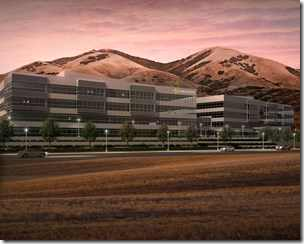
Architect's rendition of new Ancestry.com headquartersLast week, Ancestry.com announced that they will build a new corporate headquarters in Lehi, Utah. The area in Lehi has become very popular among local businesses. It is situated at the far north end of Utah Valley, which makes it easier to draw employees from both the Salt Lake and Utah valleys. It is closer to the freeway than Ancestry.com’s current office. And it cuts travel time to the Salt Lake City International Airport by 15 minutes. MyHeritage, who used to have an office across the street from Ancestry.com’s Provo headquarters, previously made the move to Lehi.

For more information, see the press release on the Ancestry.com corporate website.

Ancestry iOS App Upgrade

The latest update to the Ancestry iOS App, version 6.3, offers some improvements to the process of attaching records to your tree. Titled “Smart Matching,” the App now uses the same algorithms as the web version when searching for possible matches. When attaching a record to a person in your tree, new facts are automatically selected for copying into your tree. Conflicting facts do not replace the values in the tree, although you can make that happen. New people are not automatically added to your tree, although you can make that happen, also. The record comparison screen shows the information side-by-side and highlights differences. Tap a record icon to see the full record. Tap a person’s name to see full information from the tree.

For more information, read “Better Tools on Ancestry iOS App for Saving Records” on the Ancestry.com Blog.