Thursday, July 14, 2016

History’s Future Depends on You - #TheWorldsRecords

FamilySearch Worldwide Indexing Event 2016I received the following announcement from FamilySearch:

From July 15-17, [2016] FamilySearch International and supporting organizations are coordinating the single largest gathering of volunteers online from around the world to help in the noble effort to save, and increase access to, the world’s genealogically significant historical records. With a target of 75,000 online volunteers for the weekend event and a stretch goal of more than 200,000, you and your network of friends and colleagues can make a real difference. Remember, every historic record tells the unique story of someone’s ancestor and helps make a personal connection. Until that record is easily discoverable online, that ancestor’s story and their place in the family tree, remains untold.

Please visit https://familysearch.org/worldsrecords for information on the world indexing event and how you can participate this weekend.

If you’ve ever used the historical records on FamilySearch.org, now’s your chance to pay back other volunteers who made that possible. If you haven’t, now’s your chance to pay it forward. Index some records you think others—or even yourself—will find helpful. If nothing else, check out the cute, interactive animation found on https://familysearch.org/worldsrecords. Look down the page for this graphic:

FamilySearch 2016 Indexing Event: History's future depends on you!

Wednesday, July 13, 2016

FamilySearch Family Tree Outage Minimal

FamilySearch Family Tree Now Overshadows NFSThe scheduled outage and system upgrade of FamilySearch on 27 June 2016 seems to have gone smoothly. The upgrade is an attempt to prevent performance problems. The upgrade provides “a new technology that should provide better scaling with traffic,” said FamilySearch’s Joe Martel. “That means as more people use the site it shouldn't bog down.” If the upgrade was successful, Sunday afternoon system failures should be a thing of the past.

The upgrade included breaking the synchronization link between FamilySearch Family Tree and the archaic New FamilySearch (NFS), said Ron Tanner, Family Tree product manager. The most touted benefits of the break are the ability to merge IOUSes (“Individuals of Unusual Size”) and the cessation of stupid data changes attributed to the FamilySearch or LDS Membership accounts.

Joe said that another benefit of the new system is that FamilySearch will be able to improve and enhance features faster.

“The cutover was a HUGE effort,” Joe said. “Hat's off to the engineering teams and planning that went into this.” According to fellow blogger Renee Zamora, the system was scheduled to go offline at 12:30 Monday morning. While FamilySearch had warned users the outage could go 24 hours, Holly Hansen reported on Facebook that it was back online by 6:00am.

I haven’t heard any reports of significant problems with the new system. “I'm guessing we'll see a few glitches but nothing monumental has turned up,” Joe said. I’ve seen minor issues. (There was a report that you can’t directly change a name from uppercase to mixed case. There was a report that %22 replaced quotation marks in custom facts.). I’ve seen comments about the system being faster. Joe has said that FamilySearch will need to tune the new system configuration.

There will still be situations where merging persons is not possible according to Ron, but the system will tell you the exact reason. “There are some restrictions we had to put in place for those with lots of relationships, etc.” A merge is not allowed if the combined person exceeded certain limits. According to Renee, these are the current limits:

  • Note length: 10,752 characters
  • Person notes: 50, characters 215,040
  • Relationship notes 12, characters 129,024
  • All person and relationship notes characters: 386,320
  • Conclusions: 200
  • Person source: 200
  • Relationship source: 50
  • Memories: 1000
  • Person not a match: 400
  • Discussions: 20
  • Couple relationships: 200
  • Sets of parents: 50
  • Number of children: 400

Ron says these numbers are changing as needed. I’ve already seen a report that the parent limit has changed to 100 and discussions to 50.

FamilySearch calls the new system “Tree Foundation,” according to FamilySearch engineer, Randy Wilson. It uses a database technology called Cassandra. “Our relational database just couldn’t be made to go much faster and so there was concern that Family Tree would tip over at some point soon,” he said. The new system can “scale horizontally.” That means that FamilySearch can easily add more computer servers to meet demand. “That doesn’t necessarily mean that response time will be faster, but, rather, that more people should be able to use it at once,” Randy said. He noted that this technology change will not magically fix all performance problems, but the change eliminates a fundamental bottleneck that was important to fix.

Monday, July 11, 2016

Monday Mailbox: Alternatives to RootsWeb WorldConnect

The Ancestry Insider's Monday MailboxDear Ancestry Insider,

RootsWeb/FamilySearch/Ancestry--I've worked 20 years on Ancestry.com and joined RootsWeb only to find entirely too much work involved updating families. I used GEDCOM to transfer info. My unsuccessful try at Family Search gave me much incorrect information I gave up on that site; that was a hassle, also. I'm up there in years and find genealogy exhausting for me. Should I continue RW or stay with FS? How can I make the transition easier?

Signed,
Vivian Newkirk

Dear Vivian,

If you are going to participate in FamilySearch's Family Tree, you need to buy into the objective of everyone collaborating to build a single tree reflecting mankind. It's more work than doing your own thing because you have to budget time for interactions with other genealogists and you must budget time for teaching people with less genealogical maturity than you (and perhaps learning from others as well, if you are wise). Without your assistance, other with less experience may corrupt the information you contribute.

FamilySearch also has a tree farm like RootsWeb's WorldConnect. It is called FamilySearch Genealogies and replaces the old Pedigree Resource Files offering. Expect it to take the same amount of work as RootsWeb to keep it up to date, plus the extra time it will take you to learn a new system.

There are a number of interactive, online family tree managers. I only follow FamilySearch and Ancestry, so I can't intelligently comment on others. I'm unclear as to whether you have an Ancestry Member Tree. That is another option. If you haven't used it, there will be a learning curve. Further, your tree will not be freely visible to everyone on the Internet. You decide if that is a good thing or a bad thing.

Fold your desktop family tree manager into the mix and things may change. What desktop program do you wish to use?

Signed,
---The Ancestry Insider

Friday, July 8, 2016

Darned Lazy Spouse

Reader Donna Toole shared this darned record. Thank you, Donna!

Wife stays in bed for a week to avoid housework.

EDITOR SUES FOR DIVORCE.
                  ------
Declares Wife Stayed In Bed to Avoid
          Doing Housework.
   LA PORTE,   Ind.,   Sept.  20.—Harry E
Galbreath, editor and publisher of the
Saturday Advertiser, today brought ac-
tion for divorce from Rose Wagner, mak-
ing the unusual allegation that his wife
persisted in staying in bed for a week
at a time to escape doing housework
Galbreath says he got tired of waiting
on her.

Dear Mr. Galbreath, The Insider has a message for you from most every wife on the planet: “Welcome to my world.”


Source: “Editor Sues for Divorce,” The Indianapolis (Indiana) Star, 21 September 1911, p. 4, col. 3; digital image, Newspapers.com (https://www.newspapers.com/clip/3551560/1911_sep_21_divorce : accessed 5 March 2016).

Wednesday, July 6, 2016

Life of a Record from the Barbour Collection

In my last article I illustrated the importance of coming to understand online records. I used an Ancestry.com record of Elenor Kendall’s birth and death. I went through the steps a researcher would follow to trace that record back to the original source. We learned the information had been copied from a copy of a copy of an original and neither the birth date nor the death date remained correct. (See “Take Time to Understand Online Records.”)

The reality is far worse. The copy on Ancestry is not a 3rd generation copy, but a 7th generation copy! And with each copy, small changes were introduced.

Generation 1 – The Old Paper Book

The original proprietors record of the town of Ashford, Connecticut was commonly known as “The Old Paper Book.” Elenor’s 1727 birth and death would have been recorded therein.


Generation 2 – Copy of the Old Paper Book

In 1770 “the Old Paper Book” was transcribed into a new volume:

image
Illustration 1 – Preface of the copy of the Old Paper Book1

The following is a Coppy of What
is Called the old Paper Book and all
the old Record that I found Belonging
theirunto Without ye Alteration of one
Word. tho not in Just the Same form

This Book Was Transcribed in the Months
of Febry March & April Anno Domini
1770 By Ebenr Byles Town Clerk
and attested at ye End ---------------

Page 2 documents Elenor Kendall’s birth on 5 April 1727 and death on 2 August 1727:

image
Illustration 2 – Page snippet from the copy of “The Old Paper Book”2

Elenor ye Daughter of Isaac Kendall by Elener his Wife Was Bor[obscured by paper repair]
5th Day of April 1727 --- & Sd Eliner Kendall Deceasd the 2d
of August Next following ----------------------------------------------


Generation 3 – Barbour Collection Arnold Transcript

Lucius Barnes Barbour of Hartford, Connecticut directed a project to abstract Connecticut town vital records up to about 1850. Among those he hired to help was James N. Arnold, known for his Rhode Island vital record abstracts. Consequently, the abstracts were known as the “Arnold” transcripts.3 Among these was an abstract Arnold did in 1911 of Ashford’s “Ye Old Paper Book,” which he designated as volume A.4


Generation 4 – The Slip Index

Barnes gave the Arnold Transcripts to the Connecticut state library which typed the information onto printed forms. Each form was cut into twelve small slips.5

This is Elenor’s slip:

Slip of Eleanor Kendall - with shadow
Illustration 3 – Slip from Barbour Collection Slip Index6

Notice that somewhere between generation 2 and generation 4 the birth year was changed from 1727 to 1827. Apparently, the typist was uncertain and added a footnote indicating it was “probably 1727?” The death month was changed from August to April. And a surname variation was added that wasn’t present in generation 2.

Generation 5 – The Volume Index

The state library alphabetized the slips for each town, grouped surname variations, retyped the information onto rag sheets, and bound them into volumes.7 Each town received a copy (labeled “The Arnold Copy”) of their town’s volume. 8 The state retained a set, which they call the volume index.9

The page from the Ashford volume containing Elenor’s birth and death information is:

image
Illustration 4 – Page snippets from the Barbour Collection Volume Index10

Notice what changed between the slip and the volume. The word “probably” was removed from the footnote. That’s a pretty important qualifier to be thrown away. The asterisk was removed from the footnote, leaving the asterisk superimposed over the comma looking like a semicolon. The surname grouping removed the surname variation.


Generation 6 – White’s Publication

Lorraine Cook White typeset and published the Barbour Collection in 55 volumes titled The Barbour Collection of Connecticut Town Vital Records.

Here is the page containing Elenor Kendall:

Illustration from the Published Barbour Collection Publication
Illustration 5 – Page snippets from White’s Barbour Collection11

Notice that White’s transcription of Elenor’s record is nearly flawless. A trivial quirk appeared because of the asterisk superimposed over a comma in the volume index. White interpreted it as a semicolon and then inserted a space before it.


Generation 7 – The Ancestry Database

Ancestry indexed White’s publication and published it as an online database.

Here is the record of the birth and death of Elenor Kendall:

Illustration Record from Ancestry.com
Illustration 6 – A Record from the Ancestry.com Barbour Collection Database12

Notice that Ancestry’s indexers changed the death date from 2 April 1828 to 2 April 1727, a hundred years before the birth. The database design provided them no other way to capture the alternative year. Consequently, they lost the ambiguity of the century: 1727 vs. 1827.

Conclusion

Take time to understand the databases you use online. Try to get a sense of how many generations of changes precede the one you are viewing.

Changes are introduced just about every time a record is copied. Just like the children’s game, Telephone or Gossip, the more intermediaries, the worse the misinterpretation. Just like an old photocopy machine, the more intermediaries, the worse the degradation. Don’t bother with the intermediaries as I did here. Always pursue the earliest copy.


Sources

     1.  Ashford, Connecticut, Proprietors Records (1705-1770), preface; Town Clerk’s Office, Ashford; FHL microfilm 3,676.
     2.  Ashford, Connecticut, Proprietors Records, 2.
     3.  “Vital Records for Connecticut (Birth, Marriage & Death Records),” LibGuide, CT State Library (http://libguides.ctstatelibrary.org/hg/vitalrecords/Barbour : accessed 2 July 2016).
     4.  Lucius Barnes Barbour, “Connecticut Vital Records, Ashford Births – Marriages – Deaths, 1710-1851, Barbour Collection” (bound typescript, 1921, Connecticut State Library, Harford), ii; FHL microfilm 2,967.
     5.  Lorraine Cook White, comp., The Barbour Collection of Connecticut Town Vital Records: Andover 1848-1879, Ashford 1710-1851, Avon 1830-1851, [vol. 1] (Baltimore, Maryland: Genealogical Publishing Co., 1994), i.
     6.  Lucius Barnes Barbour, “Barbour Collection of Connecticut Vital Records prior to 1850” (card file, n.d., Connecticut State Library, Hartford), alphabetical entry for Elenor Kendall, born 5 April 1827. False coloring by the author.
     7.  White, The Barbour Collection, [vol. 1], i.
     8.  New England Historic Genealogical Society, “Connecticut's Barbour Collection of Vital Records,” American Ancestors (http://www.americanancestors.org : accessed 2 July 2016), Browse > Articles > Author > New England Historic Genealogical Society > Connecticut's Barbour Collection of Vital Records.
     9.  “Vital Records for Connecticut,” LibGuide.
     10.  Barbour, “Connecticut Vital Records, Ashford…Barbour Collection” (bound typescript), 95. The bound volumes have been digitized and indexed on AmericanAncestors.com, including p. 95.
     11.  Detail from White, The Barbour Collection, [vol. 1], 137; digital image, “Connecticut Town Birth Records, pre-1870 (Barbour Collection)” (http://ancestry.com : accessed 25 June 2016), Ashford Vital Records 1710-1851 > image 121 of 253.
     12.  “Connecticut Town Birth Records, pre-1870 (Barbour Collection),” database, Ancestry (http://ancestry.com : accessed 25 June 2016), search “Elenor Kendall” (do not specify date); citing Lorraine Cook, ed. The Barbour Collection of Connecticut Town Vital Records, 55 vols. (Baltimore, Maryland: Genealogical Publishing Co., 1994-2002).

Tuesday, July 5, 2016

Take Time to Understand Online Records

It is important that we understand the records we find online. Consider an example. Suppose we are trying to find the birth and death dates of Eleanor Kendall, daughter of Isaac and Eleanor from early Ashford, Connecticut. We search Ancestry.com and find the database record below. We snip the image, slap a URL on it, and we’re done. Right?

Illustration 1 – Snippet from Ancestry.com with Anemic Citation
Source: http://search.ancestry.com/cgi-bin/sse.dll?indiv=try&db=CTvitalsBarbour&h=559520
Illustration 1 – Snippet from Ancestry.com with Anemic Citation1

Not so fast. We need to understand this record. We need to evaluate how trustworthy it is. We remember that we are using an online database. That means Ancestry extracted (sometimes called indexed) information from a previous source.

Extracting information into databases introduces errors. Databases are not full abstracts (copies of all relevant information in records). Extractors, or indexers as they are often called, may misread or misinterpret information. They may be unfamiliar with the language, naming customs, or handwriting. They may lose their place and skip or duplicate information. And when extracting information into a database, indexers are constrained by the fields and data types; information that doesn’t fit may be adapted or discarded. Database publishers further manipulate the information to maximize the database’s searchability; names, dates, and locations are standardized to values the software program can understand.

Not content to grab and go, we examine the information surrounding a record:

Illustration 2 – Record from Ancestry.com
Illustration 2 – Record from Ancestry.com2

We see Ancestry has provided a helpful citation stating where Elenor’s information came from: a series of 55 books edited by Lorraine Cook White titled The Barbour Collection of Connecticut Town Vital Records.

We scroll down and read the database description. There we read that this database is an index to the Lucius Barnes Barbour Collection.

The Lucius Barnes Barbour Collection, well known to the Connecticut researcher, serves as an index to and an abstract of most pre-1850 Connecticut vital records. …Barbour’s project was to abstract and collect all town vital records up to about 1850. There are two formats to the material. The first is a statewide paper slip alphabetical index containing a complete abstract of each vital record taken from the books in each town. …The second format is the group of separately bound volumes of abstracts of vital records for most towns, prepared from the slips.3

From this description we note the number of times this information has been recopied: it was abstracted, it was copied from slips into bound volumes, and it was extracted into a database. (As we shall see tomorrow, this is a simplified view of the number of times this information was copied.) Each of these steps introduces the possibility of errors.

We note there is an image attached to Elenor’s record. We look at the image:

Illustration 3 – From the Published Barbour Collection Publication
Illustration 3 – From The Barbour Collection4

We see here that the information about Elenor came from vol. A, p. 2. And we see that Ancestry’s indexers actually did make an error. As you may have already guessed, Eleanor did not die before she was born. She died the 2nd of April following 5 April 1827, or in other words, 2 April 1828. We see the source of Ancestry’s error; there is a note that the year might be 1727, not 1827.

We want to examine the original source and come to our own conclusion: Did Eleanor die in April 1828 or April 1728? We set out to find vol. A, p. 2 of White’s source. The preface of a book of compiled information often tells how to use the book, explains abbreviations, and explains sources. We want to see what and where “vol. A” is. We use the Ancestry filmstrip view and find that, unfortunately, Ancestry excluded these important pages.

We check the FamilySearch Catalog for Ashford, Windham, Connecticut, and find it has “Records of births, marriages, and deaths, 1675-1849,” microfilm 1,376,249 item 1. The volume was created by the town clerk and was there when FamilySearch/GSU filmed it. We (if you’re me) walk down the street to the Salt Lake City Family History Library and look at the film. Sorry; I shouldn’t rub it in. We order the film, pay the rental fee, wait a long time, drive over to the FamilySearch family history center, and take a look at it.

We find the title board does not identify the volume and there is no photograph of the spine or cover. The handwriting is fairly modern, all written about the same time, has one vital record per line, and has surnames grouped together. We find the record of Elenor on page 4, not page 2.

image_thumb9
Illustration 4 – Vital Record Book of the Town of Ashford5

We suspect this is not the earliest record of Elenor’s birth, but, gosh, it says some interesting things. This copy says that Elener’s birth and death both occurred in 1727 and the death was in August, not April.

Still in pursuit of the original source, we head back to the FamilySearch Catalog and find “Proprietor records 1705-1770,” microfilm 3,676, created by the town clerk and filmed in the town. The catalog entry notes that, as proprietor records often do, this record contains records of births (from 1670 to 1737). We walk down the street again—I mean, we order the film, pay the rental fee, wait a long time, drive over to the family history center, hope for the best, and take a look at the film. Here is what we find on the 2nd page:

image_thumb12
Illustration 5 – Proprietor’s Record of Ashford6

Elenor ye Daughter of Isaac Kendall by Elener his Wife Was Bor[obscured by paper repair]
5th Day of April 1727 --- & Sd Eliner Kendall Deceasd the 2d
of August Next following ----------------------------------------------

We seem to have finally found our original. The year is clearly 1727 and the death month is clearly August. Feeling accomplished and satisfied, we are ready to call it a night when we realize we haven’t taken time to really understand this record. We investigate the first page of the volume and find this:

image_thumb16
Illustration 6 – Preface to Ashford Proprietor’s Record7

The following is a Coppy of What
is Called the old Paper Book and all
the old Record that I found Belonging
theirunto Without ye Alteration of one
Word. tho not in Just the Same form

This Book Was Transcribed in the Months
of Febry March & April Anno Domini
1770 By Ebenr Byles Town Clerk
and attested at ye End ---------------

Oops. I guess we didn’t quite reach the original source.

Feeling less accomplished and not at all satisfied, we call it a night.


Sources

     1.  “Connecticut Town Birth Records, pre-1870 (Barbour Collection),” database, Ancestry (http://ancestry.com : accessed 25 June 2016), search “Elenor Kendall” (do not specify date); citing Lorraine Cook, ed. The Barbour Collection of Connecticut Town Vital Records, 55 vols. (Baltimore, Maryland: Genealogical Publishing Co., 1994-2002).
     2.  ibid.
     3.  “Connecticut Town Birth Records, pre-1870 (Barbour Collection),” database page, Ancestry (http://search.ancestry.com/search/db.aspx?dbid=1034 : accessed 2 July 2016); citing Alice Eichholz, “Connecticut”, Ancestry's Red Book, ed. Alice Eichholz (Provo, Utah: Ancestry, 2004).
     4.  Detail from Lorraine Cook White, comp., The Barbour Collection of Connecticut Town Vital Records: Andover 1848-1879, Ashford 1710-1851, Avon 1830-1851, [vol. 1] (Baltimore, Maryland: Genealogical Publishing Co., 1994), 137; digital image, “Connecticut Town Birth Records, pre-1870 (Barbour Collection)” (http://ancestry.com : accessed 25 June 2016), Ashford Vital Records 1710-1851 > image 121 of 253.
     5.  Detail from Ashford, Connecticut, Vital Records, 1675-1849, p. 4, ; Town Clerk’s Office, Ashford; FHL microfilm 1,376,249, item 1.
     6.  Detail from Ashford, Connecticut, Proprietors Records, 1705-1770, 2; Town Clerk’s Office, Ashford; FHL microfilm 3,676.
     7.  Detail from Ashford, Connecticut, Proprietors Records, 1705-1770, preface; Town Clerk’s Office, Ashford; FHL microfilm 3,676.

Note: Credit for identification of an erroneous record in the Barbour Collection is due Marilyn Labbe, “Corrections and Additions to the Vital Records of Ashford, Connecticut and Brooklyn, Connecticut,” Connecticut Nutmegger (December 1998) 31:375; images, American Ancestors (http://www.americanancestors.org : accessed 3 July 2016).


Monday, July 4, 2016

Ancestry DNA $79 Sale

Ancestry.com is running their periodic $79 sale for their DNA test kits. They list at $99 and regularly go on sale for $89. The $79 sale price comes just a couple times a year. Today’s sale is celebrating U.S. Independence Day and today is the last day of the sale (11:59pm ET). I think you can get the special price at http://home.ancestry.com/s72294/t35065/rd.ashx.

image

Friday, July 1, 2016

Darned Records: Miscreant Ancestry.com Search

We depend upon records to reveal the “truth” about the past. Yet sometimes records have anomalies. Some are amusing or humorous. Some are interesting or weird. Some are peculiar or suspicious. Some are infuriating, or downright laughable.

Records say the darnedest things!

Rather than a record, per se, today I consider darned search results from Ancestry.com. A reader, Jim Castellan, shared a search result from Ancestry.com that he saw a couple of years ago. The search results have seemingly zero to do with his query.

Weird search results on Ancestry.com from 2014

This behavior has not changed. If you perform the same search today, you get the same result (with the exception that Mary Brown has moved out of New York City?).

Weird search results on Ancestry.com from today

Here’s a partial explanation. Look at the search sliders on the left side. The “Lived in” New York City slider has been pushed all the way to the right. This requires that all results be located in the specified place. All the rest of the sliders (except last name) have been pushed all the way to the left. That means the search results don’t necessarily need to match all of those criteria. If you examine the results, all meet a couple of them:

  • name is a nickname of William
  • born within several years of 1871
  • born within one state of Connecticut
  • married within several years of 1895

To receive more reasonable results, fiddle with the sliders. If you move the name sliders to the “Exact and similar” position, you get zero results, which might be what you expect if William Pinkerman died or moved out of New York City. If you then move the Lived In slider to the left to “Country,” there is the possibility that you will find where your William Pinkerman moved to.

The search sliders are one of the most powerful aspects of the Ancestry search system. They provide a degree of control lacking on other websites, which pick these settings for you and then don’t tell you what they chose.

Yes, search results sometimes say the darnedest things!

Thursday, June 30, 2016

New Ancestry Academy Courses

Ancestry Academy Short, Hosted VideosEarlier this month Ancestry.com released a new kind of course on its Ancestry Academy product: free quicktips. Each are five minutes are less. The initial set talk about basics on the U.S. Federal Census:

They also have new courses for several states. See “New on Ancestry Academy: Short Courses and State Classes” on the Ancestry blog for more information.

FGS Early Bird Discount's Good Through July 1st

"The FGS conference early bird registration discounts are good through July 1. https://www.fgsconference.org/registration/." ---Paula Stuart-Warren,FGS board member.

Sorry about getting that wrong. The good news is, you still have a tiny bit of time to sign up.

Wednesday, June 29, 2016

Plan Now to Attend a National Genealogical Conference

FGS 2016 Annual ConferenceRegistration for this year’s (2016) annual conference of the Federation of Genealogical Societies is open and the early-bird pricing ends today! The FGS conference will be 31 August 2016 to 3 September in Springfield, Illinois. “FGS 2016 brings you sessions with a wide array of offerings from many of the nation's leading family history experts, along with top international speakers from Scotland and Australia,” said a conference email.

I’ve heard someone complain (perhaps it was at RootsTech) that there were too many session choices. Well, step up and complain some more because FGS offers 160 sessions. There are sessions for all skill levels. Many Tracks (which are loose collections of related sessions) are offered, although you don’t have to attend all the sessions of a track. Tracks include DNA, British Isles and Commonwealth, continental European, military, religion, occupation, Midwest resources, migration patterns, and more.

Keynote speakers are Mary Tedesco, J. Mark Lowe, and CeCe Moore.

While the conference audience is all genealogists, special sessions are targeted at genealogical society officers. Visit https://www.fgsconference.org/ for more information.


image
Registrations for conference hotels for next year’s (2017) annual conference of the National Genealogical Society opened on the 15th and the main hotel sold out in a couple of hours. If you wish to attend in Raleigh, North Carolina on 10-13 May 2017, don’t delay. Discounted rooms are still available at the Sheraton Raleigh Hotel or the Holiday Inn Raleigh Downtown Capital. Visit http://conference.ngsgenealogy.org for more information.

Tuesday, June 28, 2016

AncestryDNA Database Reaches Two Million

AncestryDNA Reaches Two Million MilestoneAncestry.com announced last week that their DNA database has reached two million test results. “We are excited to announce that AncestryDNA has just reached the 2-million-tested milestone,” said Anna Swayne, AncestryDNA product manager. “It was just a little over 11 months ago that we reached the 1 million mark, so the AncestryDNA database has doubled in just short of one year.”

Through their DNA product Ancestry has found 7.4 million probable cousins of 3rd degree or closer. They have estimated 7.7 new “Ancestor” Discoveries. (More correctly, those are “Relative” Discoveries. See my article, “AncestryDNA New Ancestor Discoveries.” The have established 5.1 million DNA circles.

AncestryDNA is now available in 37 countries. Ancestry.com has 70 million trees and 17 billion records.

Monday, June 27, 2016

Monday Mailbox: RootsMagic to Sync with Ancestry.com This December

The Ancestry Insider's Monday MailboxDear Readers,

Last week’s mailbox drew good responses. I invite you to read them at “Monday Mailbox: Replacing Family Tree Maker.” Two of particular note reveal information that may not be available elsewhere. You will recall that Ancestry.com is allowing RootsMagic tree synchronization in addition to Family Tree Maker. See my article, “Family Tree Maker to Live On.”

Dear Ancestry Insider,

Christa Cowan from Ancestry.com spoke in Las Vegas yesterday, June 19th, and she said Roots Magic would be fully functional to sync with Ancestry in December, but I don't remember if she gave the exact day.

Signed,
Linda Coble

Dear Ancestry Insider,

Thank you--I did find that Rootsmagic is not quite ready with this and they did not give a time frame on the site I found BUT it did say that if you upload the current version, 7 if I recall, that the upgrade will be free once it is ready.

Signed,
wrdsrus

Dear commenters,

Thank you all.

Signed,
---The Ancestry Insider

Friday, June 24, 2016

Serendipity in Genealogy: Luckiest Researcher in the World

Obituary of Mrs. M. J. AlexanderIn 1997 David Rencher attended the Federation of Genealogical Society’s conference in Dallas, Texas. While there he was doing research in some surrounding counties. One place he wanted to go to was a small, little community called Mount Calm in Hill County.

“Mount Calm does have a stop sign, but It has no stoplight,” David jokes. “It does have a small public library.” Small town public libraries are good places to find local genealogical information.

Conference badges identify the attendees’ names and home towns.  A colleague, Dean Hunter, happened to see one with a home town of “Mount Calm.” He told David that he needed to find her, but with eighteen hundred people at the conference, that was not going to happen. Instead, they went to dinner.

At the restaurant, the person in line in front of them turned around and David clearly saw her name badge: “Nancy Franklin, Mount Calm, Texas.” They started talking.

“Not only was she from Mount Calm,” David says, “she was the librarian in Mount Calm. Not only was she the librarian in Mount Calm, she was the genealogist in Mount Calm. She knew a lot about the families that I was looking for.”

David went to the library and shared what information he knew and what information he hoped to find. After returning home he received a package with information and a note.

“You must be the luckiest researcher in the world,” Nancy wrote. “The only loose obituary in the library and it belongs to the woman you are seeking.”

We call that Serendipity in Genealogy.


Adapted from “Faith in Finding,” David E. Rencher (fireside presentation, The Center for Family History and Genealogy, Brigham Young University, Provo, Utah, 12 November 2004); online transcript (https://cfhg.byu.edu/Pages/Firesides.aspx : accessed 5 March 2016). Thank you, David, for permission to share your story.

Tuesday, June 21, 2016

FamilySearch Announces Shutdown, Upgrade

imageUsers of FamilySearch started seeing a banner last week indicating the website would shutdown Monday, 27 June 2016 at midnight MDT (2:00am EDT). The banner warned that the shutdown could be as long as 24 hours. The banner stated that the reason was a “technical upgrade.” I assume that means the basic functionality will be unaffected.

This is big, folks. Nobody shuts their website down for up to 24 hours. Something really important must be in the works.

This announcement comes on the heels of a beta test of the system to break the link between New FamilySearch (NFS) and FamilySearch Family Tree (announced publicly by FamilySearch’s Joe Martel, “Preparing to Stop Synchronizing Between nFS and FamilyTree, on Beta” on the FamilySearch feedback system.) The test was held Friday, 17 June.

NFS is the legacy system that has been hobbling Family Tree from its inception. At RootsTech earlier this year, Ron Tanner explained that even though you can’t directly interact with it, NFS continues to inhibit system functionality. (See “#RootsTech: Ron Tanner – Family Tree in 2016 and Beyond” on my blog.) When the link between NFS and FamilySearch can be broken, a bunch of issues go away.

  • Because of the current interdiction of NFS, you cannot merge persons that, in NFS, are Individuals of Unusual Size (IOUS). In a list of possible duplicates, you sometimes see the message “Can’t Be Merged At This Time.” (Ron showed an example.) Once NFS is eliminated, you will be able to merge IOUS duplicates.
  • NFS was built so that gender could never be changed. Once NFS is eliminated you will be able to.
  • Today there are times when you delete a relationship and it “magically” reappears, with the change attributed to FamilySearch. This occurs when the NFS architecture prevents the deletion from NFS. When synchronization occurs between Family Tree and NFS, the deleted relationship comes back.
  • There is a tight relationship between NFS and “LDS Church Membership” which is causing issues. (See “'Barrage of Records' Causing Problems” on my blog.) When the link between NFS and Family Tree is broken, those issues go away. (See Ron Tanner’s response to “FamilySearch Managers are Treating Patrons with Disdain” on the FamilySearch feedback system.)
  • According to Ron Tanner, if a person is linked to an LDS Church Membership record, that person can not be merged into another person, although the reverse (merging a person into the person linked to the membership record) is possible.

It turns out that after the link between NFS and Family Tree is broken, there will still be fairly common times when two persons in Family Tree cannot be merged. (See “Preparing to Stop Synchronizing Between nFS and FamilyTree, on Beta” on the FamilySearch feedback system.)

  • The number of notes between the two persons exceeds 20.
  • One of the persons is read-only. For an example, see Sarah Royce (KND8-1SY). Or one of the persons is a child, parent, or spouse of a read-only person.

It will be great if next week we finally rid ourselves of NFS.

Monday, June 20, 2016

Monday Mailbox: Replacing Family Tree Maker

The Ancestry Insider's Monday MailboxDear Ancestry Insider,

My Wife is FAR from happy with what has happened and is continuing to happen with a Program she is TOTALLY dependent on for her "obsession" with Genealogy!! After almost 50 yrs "on the Job" so to speak she is worried!-its the only thing keeping her sane!( remember she has ME to contend with!!)

As with the changes with Family Tree Maker i.e. being discontinued by Ancestry at the end of this year with no apparent advice as to locate a alternative program a she is not been able to find someone to help her? plus the Ladies in the local Library that she gives Classes to will be mortified and may well "storm the Ancestry.com Offices"!!

Signed,
John

Dear John,

All is not lost regarding Family Tree Maker. It is not being discontinued entirely. Ancestry has sold it and your wife can continue to keep it as her tree manager. See "Family Tree Maker to Live On" on my blog. See http://www.mackiev.com/ftm/index.html for more information from MacKiev.

Signed,
---The Ancestry Insider

Monday Mailbox: Change Your Email Address

The Ancestry Insider's Monday MailboxDear Ancestry Insider,

Hi--love to read your newsletter.  I have a new email address and can't find anyplace on your site to "change my profile." 

Signed,
Lin Hines

Dear Lin,

Thank you. You are very kind.

To change your email address, add your new one and unsubscribe your old one. To add your new email address, use the "Subscribe via email" box at the top of the right column at http://www.ancestryinsider.org. To cancel your old email address, use the "Unsubscribe now" link at the bottom of any newsletter.

Signed,
---The Ancestry Insider

Friday, June 17, 2016

Serendipity and the Old White Plow Horse

Serendipity and the Old White Plow HorseIn 1970 The Church of Jesus Christ of Latter-day Saints had no temples in Washington state, so groups would make the long trips to Idaho Falls or Oakland, California. On one such trip to Oakland, Bill Ward discovered, to his delight, that there was a genealogy library (what we call a FamilySearch Family History Center, today) adjacent to the temple. So while the rest of the group went over to visit Fisherman’s Wharf in San Francisco, Bill was going to take advantage of the opportunity to research his family. His good friend, Paul, had looked forward to the side excursion to the wharf, so wondered why Bill was not going. When Bill told him he was going to the genealogy library, Paul felt prompted to do the same. But that would mean not visiting Fisherman’s Wharf, as he had planned.

The prompting came again, “Go with Bill.”

Bill wasn’t all that excited about Paul joining him. Bill was pretty new at genealogy himself. If he had to help Paul, he really wouldn’t be able to do any of his own research. This was years before computers made simple census searches lightning fast. Finding just one name in the census could take hours. But doing the right thing, he said, “Sure. Come along.”

As they entered the center, Bill noticed the consultants at the reference desk. He seized the opportunity and pointing Paul in the direction of one of them, said, “Go over to that woman and tell her what you want to find and she’ll help you.” Then he slipped off into the book stacks.

So Paul did exactly as he was told. He walked over to this woman and he said, “You know, I really don’t know why I’m here. I really don’t know what I’m going to work on.”

She said, “Well, what do you know about your family?”

He said, “Well, you know, we have a family tradition in our family that my grandfather rode into town on an old white plow horse at about age ten and would never, never talk about where he came from.”

The woman sat straight up in her chair and she said, “We have a family tradition in our family that when he was ten years old, our uncle took the old white plow horse, rode out of town and was never seen again.”

Bill found absolutely nothing new at the library that day, which is poetic justice. But Paul and this woman indeed were cousins and she extended his line considerably. It was a great find for Paul.

We call that Serendipity in Genealogy.


Thank you, Bill, for sharing your story with me. Adapted in part from “Faith in Finding,” David E. Rencher (fireside presentation, The Center for Family History and Genealogy, Brigham Young University, Provo, Utah, 12 November 2004); online transcript (https://cfhg.byu.edu/Pages/Firesides.aspx : accessed 5 March 2016).

Wednesday, June 15, 2016

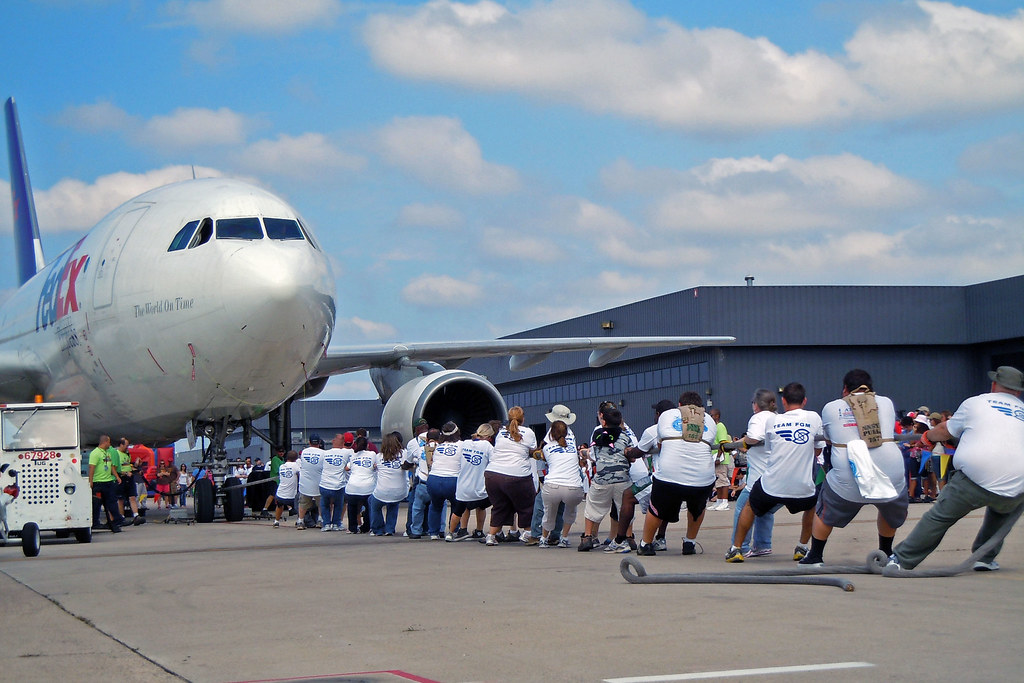
“Barrage of Records” Causing Problems

People pulling a jetplaneDear Ancestry Insider,

Could you report on the recent dumping of duplicate records into the FamilySearch Family Tree? Where did they come from? Why can't we merge them? Why does FamilySearch continue to dump duplicate data into a tree while at the same time begging us to stop doing the same?

In case you're wondering what I'm talking about, see https://getsatisfaction.com/familysearch/topics/barrage-of-records-attributed-to-lds-membership-creating-problematic-situations [titled “Barrage of Records Attributed to LDS Membership Creating Problematic Situations”] and other issues linked in the comments.

Some say the data came from Ancestral File or other data sets FamilySearch has (and that they might dump even more duplicate data). I don't understand why they would keep dumping that into nFS. I thought nFS was pre-populated with that data from the beginning?

Please enlighten us.

Signed,
Justin York

PS. It would also be nice to know when nFS is really going to die. It's been slated to be disconnected "in the next 6-12 months" for years now.

Dear Justin,

I’ve searched around and can’t find any public comment by FamilySearch about the events you’re referring to. But I think I can answer your question with information FamilySearch has previously made public.

First, it helps to understand some history.

The New FamilySearch tree (NFS) had a unique, advanced architecture. The architecture allowed you to extract information about a person from an historical record. That extract was called an inner person. The architecture allowed these historical extracts to be combined into what was called an outer person. Brilliant architecture: one inner person per historical record extract, one outer person per historical person. Inner persons could be compared and contrasted as required in the genealogical proof standard before reaching a conclusion. It was both a research tree and a conclusion tree.

Special inner persons were created and linked to records in a database kept by the Membership Department of The Church of Jesus Christ of Latter-Day Saints. (These database records are not membership records, although they are commonly called that. But I digress…) When changes are made to that database, the changes are reflected in the inner person. It is as though you are looking at a church record, glance away, and the writing has changed when you look back. The effects of this unusual source behavior are mitigated by the separation of inner and outer persons.

While the NFS architecture was brilliant, the implementation was not. FamilySearch didn’t distinguish between inner and outer persons in the user interface. They created inner persons from low-quality records like Ancestral File and Pedigree Resource Files. They didn’t require sources in an architecture that required sources (how do you create an inner person when there is no source to extract?), so they had to blur the distinction between inner and outer persons. Everything went downhill from there. The implementation of NFS proved unstable.

FamilySearch decided to abandon it in favor of a more traditional conclusion tree, FamilySearch Family Tree. There are no inner persons. Sources are handled in the usual way as attachments.

Ron Tanner talks about replacing an airplane’s engine while inflight. The analogy should be extended. FamilySearch has rebuilt the entire aircraft inflight, with the final step being the replacement of the engine. The problem is that the new aircraft is designed for the new engine. An elaborate set of springs, pulleys, cables, gears, bailing wire, and a lot of duct tape are required to synchronize the old engine with the new aircraft. The synchronization has unfortunate consequences. Luggage is sporadically soiled, crushed, torn open, mashed together, destroyed, or sucked out of holes in the fuselage.

Most of the changes have been attributed to LDS Church Membership.With that history in mind, let me come back to your questions. Most of the deluge reports I’m reading attribute the added and changed persons to “LDS Church Membership.” The unorthodox behavior of the LDS Membership inner person, the blurring of inner and outer persons, and the jury-rigging of the old engine to the new aircraft cause the changes and additions you see in Family Tree that are attributed to “LDS Church Membership.”

In most of the cases I’m reading about, persons created by “LDS Church Membership” cannot be merged into other duplicates. That would delete the ones created by LDS Church Membership. However, those duplicates can be merged into the LDS Church Membership persons. If they can’t be merged either way, see “Cannot Merge Duplicate Records in Family Tree” in the FamilySearch help system.

I think even the FamilySearch software engineers would like to know when NFS will be shut down. Software engineering time estimates are famously wrong. The last official pronouncement I remember seeing said the shutdown will occur “in 2016.” New people keep appearing on the plane and the old engine is barely keeping it in the air. Each Sunday the plane is clipping the trees. Family Tree will either switch over to the new engine soon, or it will crash and burn.


Airplane image copyright 2011, Joe Loong. Used under license.

Tuesday, June 14, 2016

RootsWeb Hardware Upgrade

image“We are currently working to move the entirety of RootsWeb to new machinery that can handle the load and be backed up in a consistent and reliable manner,” says Ancestry.com’s Anne Mitchell. Ancestry is making the switchover this week. During that time, you may notice short periods when RootsWeb is unavailable.

This is great news. There’s a good chance that the advertisements shown on RootsWeb are not generating enough revenue to pay for this upgrade. Certainly it is not generating the profit margin that Ancestry’s DNA business is generating. From a good business standpoint, it doesn’t make sense to update RootsWeb. I believe they are making this upgrade to generate good will. After the RootsWeb crash back in February, you, the RootsWeb community, expressed yourselves effectively and they are responding. When they gobbled up RootsWeb, they said they would keep it running. No one should expect that means forever. But thanks to them and thanks to you, they are making good on that statement.

Users are complaining that new additions to RootsWeb are not being index. This includes GEDCOMs uploaded to WorldConnect, Obituary Daily Times, and mail archives. Once this upgrade is finished, Ancestry will work to fix that.

You may have experienced some data loss the last time RootsWeb went down. That will not be happening during the outages this week, as these are planned, controlled, outages.

Monday, June 13, 2016

Monday Mailbox: BillionGraves

The Ancestry Insider's Monday MailboxHi Ancestry Insider,

I want to help with some gravestones as I have many, but they weren't done on a cell phone.  I have them as jpgs.  Does billiongraves use them as well or only with my cell app?

Sonja

Dear Sonja,

I checked the BillionGraves FAQ (Frequently Asked Questions) page and found this:

If I have pictures on my computer of a cemetery, can I upload them to BillionGraves?

One of the core ideas of the BillionGraves project is to record these pictures with their GPS location so that others will be able to find it again and so that researchers can search for others buried nearby. Pictures with a digital camera won't have the GPS location attached so we recommend simply retaking those pictures the next time you are in the cemetery.

On rare occasions we will accommodate photos of headstones from other devices. If you have pictures of cemeteries that are difficult to locate, travel to, or of headstones that have since been damaged, destroyed, or removed, please contact us at support@billiongraves.com and we are happy to review your request and make appropriate arrangements.

Hope that helps,

Signed,
---The Ancestry Insider

Friday, June 10, 2016

Basketball versus Serendipity

Several years ago David Rencher was on business in Atlanta, Georgia and took the opportunity to drive to Montgomery, Alabama where he hoped to visit some cemeteries the following day. The Utah Jazz were doing exceptionally well in the play-offs that year. When he checked into the hotel he checked that they had the right television station to watch the game. He turned on the TV and, lo and behold, the game had already started. He stood there with the remote in his hand when the feeling came: “Go to the cemeteries now.”

“I was impressed and had the TV turned off before, I think, I consciously had finished the thought,” David says. “I put the remote down, left the hotel and headed for the cemetery.”

On the way to the cemetery he passed another cemetery and felt like he should stop. He canvassed that cemetery and found a child of his family that he didn’t know was buried there.

Just getting back to his car, David suddenly heard a pickup truck with very loud pipes zooming down the back-country road. As the dual wheel, double axle pickup truck went flying past the cemetery, the driver looked up, saw David, and came to a screeching halt.

“Hi. What family are you looking for?” David told him and he said, “Oh, they’re not buried here. They’re buried over in Bethel. Why don’t you follow me over there. It’s kind of hard to find.” David gratefully accepted his invitation, not realizing just how fast he would need to drive to keep up.

At the cemetery, his guide knew right where the graves were, so we strode off in that direction.

The Bates family plot“I’m just trying to keep up,” David says. “But I stopped dead in my tracks on the way through the gate.” There, in a huge family plot, was a family he had sought for some time. “I had completely lost them,” David says. “I couldn’t find where they had gone. I couldn’t find them in the census. I couldn’t find what happened to them. Nothing was working. And here they were!”

Meanwhile, his guide was marching through the cemetery, talking as he went, unaware David had stopped. Only when he reached their destination did he turn. He came back and David told him this was a family he was looking for. He said, “Oh, are you related to the Bates? Well, then you’ll need to call Bill Bates.”

This gentleman waited while David captured photos and transcriptions at the cemetery and then took him over to his home. He had a complete transcription of the cemetery that he found David in, which he graciously provided. And then he called Bill Bates. They made arrangements to meet at 10:00 the next morning.

David visited Bill Bates the next morning and, of course, he knew all about the family. David was taking notes as madly as he possibly could. Bill stood up and said, “You know, the old homestead is here?” His sister had made a painting of it. Bill pulled a print of the painting off the shelf and gave it to him. Then Bill loaded him up in the truck and took me down to the old homestead.

Pictures of William Thomas and Emily (Rencher) Bates on the wall of the Bates homesteadThey walked in and there on the wall were the pictures of Emily Bates, Emily Rencher Bates, and her husband. Bill said, “Well you know, the Renchers married into the Harrises. You really ought to contact Martha Ray Harris.” They called Martha Ray who happened to be attending a genealogical society meeting in Greenville that afternoon at 2:00.

David met her at the meeting and she, of course, had with her enormous amounts of information about the Renchers and the Harrises. While they visited the society president walked over and introduced herself.

“This is our president, Mrs. Raybon,” said Martha Ray. “And this is David Rencher.”

“Rencher? Well, you know, the Raybons married into the Renchers,” Mrs. Raybon said. She had all the information and was willing to share it.

In just a couple of days, the wealth of material that came to David was overwhelming.

“I think many times how I stood there with that remote in my hand,” David says. “Had I not gone at that very moment, I wouldn’t have been in the cemetery when the truck drove by. I would have been sitting in Montgomery watching the Jazz lose a game.”

We call that Serendipity in Genealogy.


Adapted from “Faith in Finding,” David E. Rencher (fireside presentation, The Center for Family History and Genealogy, Brigham Young University, Provo, Utah, 12 November 2004); online transcript (https://cfhg.byu.edu/Pages/Firesides.aspx : accessed 5 March 2016). Thank you, David, for permission to share your story and photographs.

Thursday, June 9, 2016

AncestryDNA New Ancestor Discoveries

Many view Ancestry.com’s “New Ancestor Discoveries” as so much bunk. I’m one of them, or was one. Ancestry has presented me with 22 Discoveries that aren’t in my tree. Trouble is, my tree is full for 6+ generations. Granted, there could be some non-paternal events hiding in there somewhere. But 22 out of 31? Not a single one of the 22 shares a surname with anyone in my pedigree! Like I say; I have my doubts about New Ancestor Discoveries.

One of the New Ancestor Discoveries that has shown up since last I checked is Joseph F. Smith, president of The Church of Jesus Christ of Latter-day Saints from 1901 until his death in 1918.

Four of the Ancestry Insider's 22 New Ancestor Discoveries

While I don’t think I am his descendant, I do happen to know we’re related. I’ve always known I’m a 2nd cousin of the mother of Joseph Smith, prophet and founder of the Church. That makes Joseph F. Smith my 4th cousin (5-times removed).

Relationship chart for The Ancestry Insider and Joseph F. Smith
This chart was produced by BYU’s Relative Finder.

I started to entertain the notion that Ancestry’s New Ancestor Discoveries was confusing cousins with ancestors. Then it hit me: read the fine print. Sure enough, the fine print reads, “These are potential new ancestors or relatives who are not already in your family tree.” (Emphasis added.)

Ancestry has found 18 Joseph F. Smith descendants (or tightly related family groups of descendants) who share enough DNA that Ancestry has called them a DNA Circle. As a cousin, I share significant amounts of DNA with 3 of the 18. But that doesn’t make me a descendant. I have a feeling the same thing applies to my other 21 “Ancestors.”

The Ancestry Insider and the Joseph F. Smith DNA Circle

Ancestry knows they have a problem.

“As DNA Circles get larger and more DNA matches are delivered, more people are connecting into the DNA Circles, which results in more New Ancestor Discoveries, but with a decrease in accuracy,” Ancestry said in a statement. “We are updating the criteria to make it more conservative and increase the accuracy of New Ancestor Discoveries.” The changes are said to “significantly decrease” the number of Discoveries while increasing the accuracy. Before, you had to match just two members of a DNA circle to be considered a “Descendant.” Now, you must match at least three. And for circles with more than 15 members, you must match 20% of them.

For more information, see “AncestryDNA: Improving Accuracy of New Ancestor Discoveries” on the Ancestry Blog.

Wednesday, June 8, 2016

FHL Block Party This Saturday Ends at 2:00 PM

Family History Library Block PartyLooks like a case of my right hand not knowing what my left hand was doing. My article yesterday gave the wrong end time for the Family History Library block party. The correct hours are this Saturday from 9am to 2pm.

Sorry about that. Here is the corrected story:

The FamilySearch Family History Library is having a block party in Salt Lake City and you’re invited! They are blocking off the street in front of the library on 11 June 2016 from 10 AM to 2 PM. There will be free activities, live entertainment, Family Discovery activities, and Family history classes.

Free activities include face painting, a rock climbing wall and bounce houses. Snow cones are included on the list of freebies, but food trucks will charge as normal. Entertainment includes pioneers playing pioneer games, bagpipers, and Polynesian dancers. Family Discover activities include photo scanning (bring your photos with you), green screen photos, photos of you in your ancestors’ clothing, and the My Family Booklet, If you’ve added your relatives to FamilySearch Family Tree, you can see photos and stories you and your relatives have uploaded; you can see a map showing your ancestors migrations; and you can see what famous people you are related to (assuming there are no errors in Family Tree—hmmm). The two classes for the general public are Getting Started and Exploring FamilySearch apps.

More information can be found on a page in the FamilySearch Wiki.

AncestryDNA and Momundo Contest

Travel search website momundo contest: "Let's Open Our World"Travel search website momundo.com has teamed up with Ancestry.com (and 23andMe for Germany, Spain, and France) for an interesting two-phase contest. The first phase is a chance to win one of 500 free DNA test kits. Winners of the 500 kits are then eligible to enter the second phase: win a trip to all your ancestral countries.

To enter the first phase, submit a description in 250 characters or less how you will “open the world through travel.” Twenty or more winners will be selected from each of these countries: Australia, Austria, Canada, Denmark, Finland, France, Germany, Ireland, Netherlands, New Zealand, Norway, Portugal, Romania, Spain, Sweden, United Kingdom, and USA.

The deadline for the first phase is 16 August 2016. There will be a minimum of 9 winners per country awarded on 16 June, another 9 or more on 16 July, and another 5 or more on 16 August. So if you want three chances to win, enter before 16 June. You need enter only once to be eligible for subsequent awards. To increase your chances of winning, it also helps if you’re living in a small country. <smile>

The 500 winners of phase one then move on to phase two. They must record on video the first moments of learning their DNA test results. And they must post the video online. To be eligible, this must be the first time you’ve seen your results. A first prize winner will receive up to 15,000 EUR with which to fly to all their ancestral countries. Second prize is a return airline ticket from a destination of the winner’s choice. One person from each of the countries listed above will win a second prize. Third prize is another DNA test kit. There will be 85 to 90 kits evenly distributed among the countries.

Momundo is an interesting venture. While you can search for flights and accommodations on momundo.com, it is not a travel agency and does not sell tickets. I’m not certain how they pay their bills. Their website says, “momondo was founded on the belief that everybody should be able to travel the world, to meet other people, and experience other cultures and religions. Travel opens our minds: when we experience something different, we begin to see things differently.” Of this DNA promotion they say, “Most of us are far more diverse and have much more in common with people from other countries than we would ever have thought. We have started The DNA Journey because we want people to understand that there are more things uniting us, than dividing us.”

You can read more about the DNA promotion, “Let’s Open Our World,” on the momundo website. You can enter the contest here. Ancestry has also posted a blog article, “The DNA Journey: powered by AncestryDNA.”

Tuesday, June 7, 2016

FamilySearch 2016 Summer Events

imageFamilySearch has announced two events for later this summer.

FamilySearch Indexing has announced their 2016 event is to be held 15 July at 12 AM to 17 July at 11:59 PM. Tapping into the concept of the Summer Olympics, the goal is not setting records, but preserving records. The goal is to involve 72,000 people—teammates—in a 72 hour period.

A promotion page for the event can be found on the FamilySearch website and on Facebook.


Family History Library Block Party

The FamilySearch Family History Library is having a block party in Salt Lake City and you’re invited! They are blocking off the street in front of the library on 11 June 2016 from 10 AM to 2 PM. There will be free activities, live entertainment, Family Discovery activities, and Family history classes.

Free activities include face painting, a rock climbing wall and bounce houses. Snow cones are included on the list of freebies, but food trucks will charge as normal. Entertainment includes pioneers playing pioneer games, bagpipers, and Polynesian dancers. Family Discover activities include photo scanning (bring your photos with you), green screen photos, photos of you in your ancestors’ clothing, and the My Family Booklet, If you’ve added your relatives to FamilySearch Family Tree, you can see photos and stories you and your relatives have uploaded; you can see a map showing your ancestors migrations; and you can see what famous people you are related to (assuming there are no errors in Family Tree—hmmm). The two classes for the general public are Getting Started and Exploring FamilySearch apps.

More information can be found on a page in the FamilySearch Wiki.

Monday, June 6, 2016

Monday Mailbox: Ancestry.com’s Crista Cowan Podcasts

The Ancestry Insider's Monday MailboxDear Ancestry Insider,

I love Crista Cowan and used to listen to her via podcast when I’d walk in the morning.  Then all of a sudden I couldn’t find her in my strings any more.  What happened?  Do you know?  Is there a way to get her YouTube videos back into my podcast list on my phone?   So sad….

Marg

Dear Marg,

I asked Ancestry.com about this. Ancestry says Crista’s podcasts are only on YouTube now. YouTube used to allow automatic cross-posting to iTunes, but they had a fight and that is no longer possible. You could watch them using the YouTube iPhone app, but if you do that out walking, it will use up a considerable amount of data. If you pay for a YouTube Red subscription, some videos can be downloaded for viewing offline. However, not all videos can be downloaded and I don’t know if Ancestry allows theirs to be. In any case, using YouTube will not be as straightforward as iTunes podcasts.

There are other genealogy related podcasts to consider. Some iTunes general interest genealogy podcasts that I know about are:

Signed,
---The Ancestry Insider